


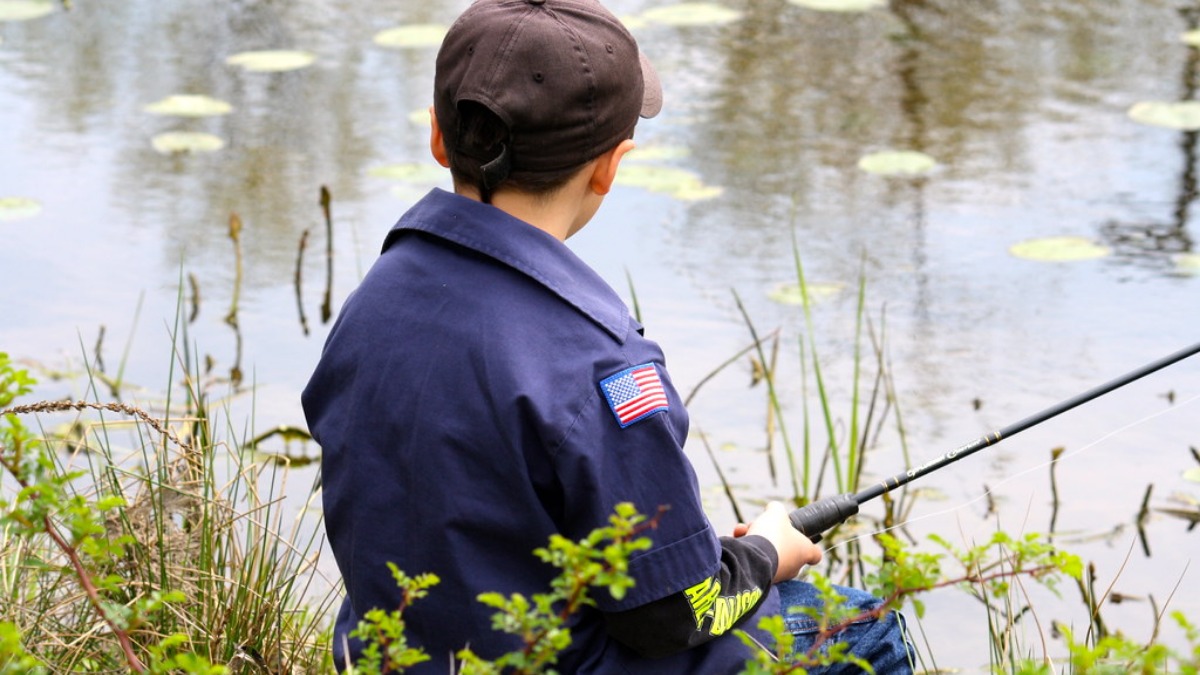

An 8-year-old boy fishing in a lake near Philadelphia recently reeled in a creature that was definitely not the bass he was hoping for. During a Saturday morning fishing trip, young Seamus Coffey felt a tug on his line and assumed he had caught a standard fish, but the reality was much more exotic.
According to ABC News, Seamus quickly realized the fish on his hook was actually a piranha. His father, Michael Coffey, described the moment of discovery, telling the outlet, “I was like, ‘Oh, this is a bluegill, I don’t know what this is.'” He then noted that his son immediately identified the predator, saying, “It’s a piranha!” When asked how he knew what the fish was, the young fisherman simply replied, “Because I watch YouTube!”
Mike Parker, a spokesperson for the Pennsylvania Fish and Boat Commission, confirmed the identity of the fish after biologists examined the catch. Parker explained that the presence of a South American tropical fish in Pennsylvania waters is a sign that owners are struggling with the responsibilities of exotic pet ownership.
A growing and concerning trend
Parker told ABC, “I think a lot of times people do, you know, they have a dream: I want to own an exotic fish or a snake or an alligator, and it’s cute when it’s small. But maybe they can’t afford that or house it anymore, and they decide maybe this is someone else’s problem.”
The issue of exotic pets being released into the wild is not just limited to Pennsylvania. An article by Spectrum 13 News from late last year reported that Florida wildlife experts are witnessing a sharp rise in surrendered exotic pets and the illegal release of nonnative species.
Per Spectrum, Christin Burford, a caretaker at the C.A.R.E. Foundation sanctuary in Apopka, stated, “It’s the newest fad pet. Unfortunately, social media does kind of spur this on.” However, she also noted that it creates unrealistic expectations for potential owners. “There’s a lot to it that most people cannot handle,” she claimed. This then leads to owners releasing the pets, which in turn has devastating environmental consequences.
According to One Green Planet, when exotic pets are released into non-native ecosystems, they can become invasive species that disrupt the natural balance. Whether it is Burmese pythons in the Everglades or lionfish off the coast, these animals often compete with native species for resources or prey on them entirely. They can also completely disrupt lives for locals, as the town of Punta Marina has found, courtesy of an ostentation of armorous peacocks.
In the case of the Everglades, python elimination specialist Donna Kalil noted the severe impact on local wildlife, telling Spectrum 13, “There is literally nearly 100% elimination of all small mammals — rabbits, raccoons, possums. There are none in Everglades National Park.” In fact, to combat this growing problem, the government has been deploying robotic prey to ensnare the snakes.
It should be noted that in Pennsylvania, ABC noted that the piranha caught by Seamus probably wouldn’t have survived for long, as it was far from its natural habitat and lacked the necessary survival skills for the wild. Despite that, Parker emphasized that releasing these animals is not only harmful to the environment but also illegal.
“Even if the law says that you’re allowed to own an exotic pet, whether that be a fish or a reptile, you’re not allowed to introduce that species into the wilds of Pennsylvania. So that is unlawful. You can be fined, prosecuted,” Parker warned. Per the outlet, he also noted that these animals require specialized care, expensive habitats, and specific diets, making them a long-term commitment that many owners are unprepared for.
According to ABC, the Piranha was handled responsibly. Michael Coffey confirmed that they disposed of the fish humanely after the encounter. As for Seamus, the experience has not dampened his enthusiasm for his favorite hobby. “Fishing is my favorite thing,” he said. His father agreed, noting that while they have had many interesting experiences on the water, catching a piranha is certainly the most memorable one.
Experts stress that the best course of action for owners who can no longer care for their exotic pets is to surrender them to legitimate sanctuaries or participate in amnesty programs, rather than dumping them into local ponds or rivers. As One Green Planet points out, the exotic pet trade creates a cycle of abandonment that is difficult to stop.
Raising awareness about the reality of these animals is the first step in curbing the trend that leads to such strange and dangerous discoveries in our local lakes. While it is unlikely that more piranhas are lurking in the Pennsylvania lake, officials are asking the public to report any further sightings to the Fish and Boat Commission immediately.








Published: Aug 13, 2026 06:40 am