


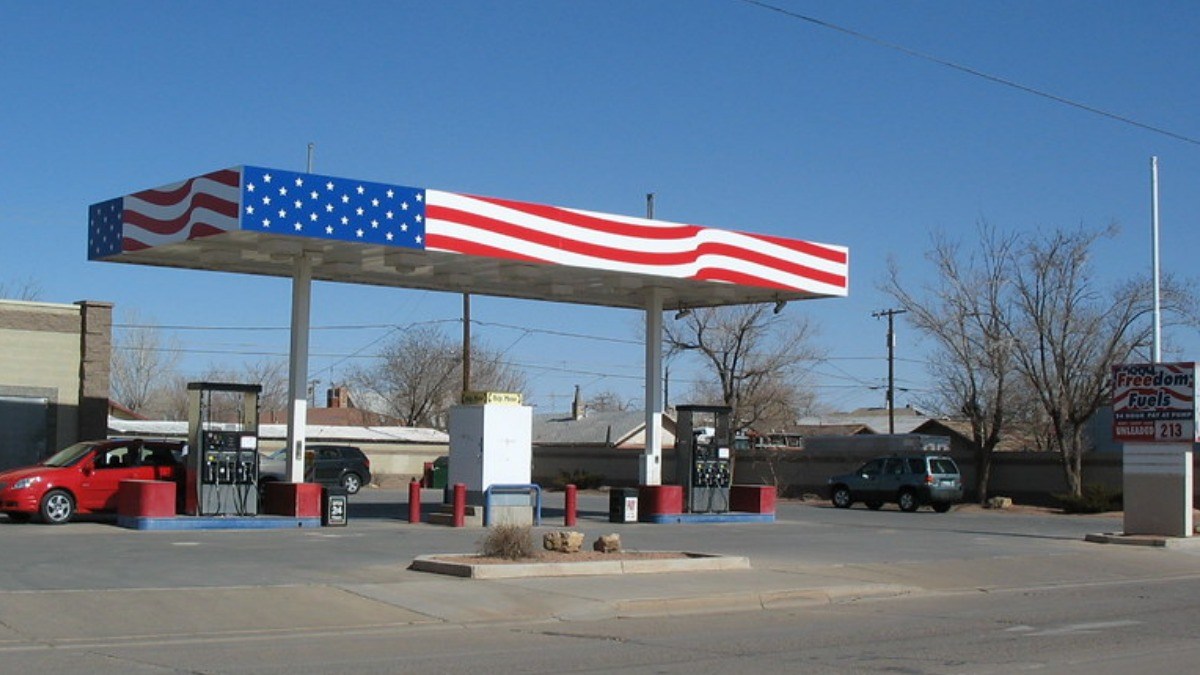

A federal lawsuit has revealed that a fuel supplier is seeking nearly $4 million in payment for gasoline that was allegedly never paid for, casting a new light on the Freedom Fuel Network. The chain of gas stations recently gained significant attention for offering heavily discounted fuel in response to a call from President Donald Trump.
According to The Washington Post, Mansfield Oil Company of Gainesville, Inc. filed the lawsuit this month in the U.S. District Court for the Eastern District of Pennsylvania. The suit claimed that New Jersey businessman Syed Kazmi and his company, KRSM, Inc., took more than 1.1 million gallons of fuel from a Pennsylvania terminal between late May and early July.
The lawsuit reportedly provides a potential explanation for how the network managed to undercut local market prices so aggressively. As noted in the lawsuit, “KRSM was able to sell such fuel for such low prices and garner such publicity because it never paid Plaintiff for such fuel.” Urs Broderick Furrer, a lawyer representing the Georgia-based Mansfield, told The Post that some of the fuel was supplied to at least 10 Pennsylvania gas stations listed on the official Freedom Fuel Network website.
A history of legal trouble
The situation has sparked widespread questions about the business model behind these stations. NBC10 pointed out that the Freedom Fuel Network emerged in the region offering prices notably lower than competitors, a move that earned public praise from the White House.
On July 1, Trump wrote on his Truth Social platform, “I am pleased to announce that a VERY smart Retailer, located throughout the Northeast, is stepping up.” The President further stated, “America has never been stronger than it is now, and Gas Prices will soon be back to the Record Low Prices Americans enjoyed at the pump before our very successful ‘excursion’ in Iran.” Interestingly, not long before that, he had asked Americans to “suck up” rising gas prices.
According to POLITICO, the August 19 lawsuit alleges that the fuel provided to these stations was effectively unpaid for. While KRSM, Inc. has denied the allegations, calling the matter an accounting dispute, the court has already taken action. A district judge recently ordered Kazmi and KRSM to maintain at least $2.75 million in a bank account as the legal proceedings continue.
The background of the individuals involved adds another layer to this story. NBC10 reported that Syed Kazmi and his brother, Shamikh Kazmi, have faced numerous legal challenges regarding financial misconduct in the past. In February, a federal judge in New Jersey ordered the brothers to pay over $600,000 to a fuel supplier after finding they had unlawfully taken more than 200,000 gallons of fuel.
The court records in that case reportedly highlighted a pattern of behavior where the brothers allegedly exploited security lapses to access fuel depots. Furthermore, a 2024 judgment saw 7-Eleven successfully sue KRSM over allegations involving the theft of tens of thousands of dollars in cigarettes.
Despite the controversy, POLITICO reported that the Freedom Fuel Network has continued to expand. It initially launched with 25 stations in Pennsylvania and New Jersey, pricing gas at $3.47 per gallon to honor President Trump, the 47th president. The network has since grown to 29 locations. One pump in New York offered a 20% gas discount for another reason, though.
A source familiar with the Freedom Fuel business told POLITICO that “KRSM Inc and Sayed Kazmi are not associated with the Freedom Fuel Network in any capacity.” However, the lawsuit filed by Mansfield paints a different picture, linking the fuel taken from the Twin Oaks terminal directly to the stations — and separate reporting has found that at least six of the network’s New Jersey locations are managed by Syed’s own brother, Shamikh Kazmi.
The White House has distanced itself from the specific entities named in the lawsuit. A White House official told The Washington Post that the administration has had “zero contact or dealings” with Kazmi and KRSM Inc. Meanwhile, the legal battle over the unpaid $3,998,868.46 continues to unfold. In a declaration filed August 25, Syed Kazmi argued that he “did not agree that the amounts Mansfield demanded were correct or owing,” citing discrepancies in the invoices.
It’s certainly a strange development for a chain that positioned itself as a patriotic answer to high gas prices. As the case moves forward in the U.S. District Court, it remains to be seen how the network will reconcile its rapid growth with these serious allegations of unpaid debt and operational misconduct. For now, the story of the Freedom Fuel Network serves as a reminder that when a retail price looks too good to be true, there might be a much more complicated story behind the scenes.


Published: Aug 30, 2026 01:50 pm