


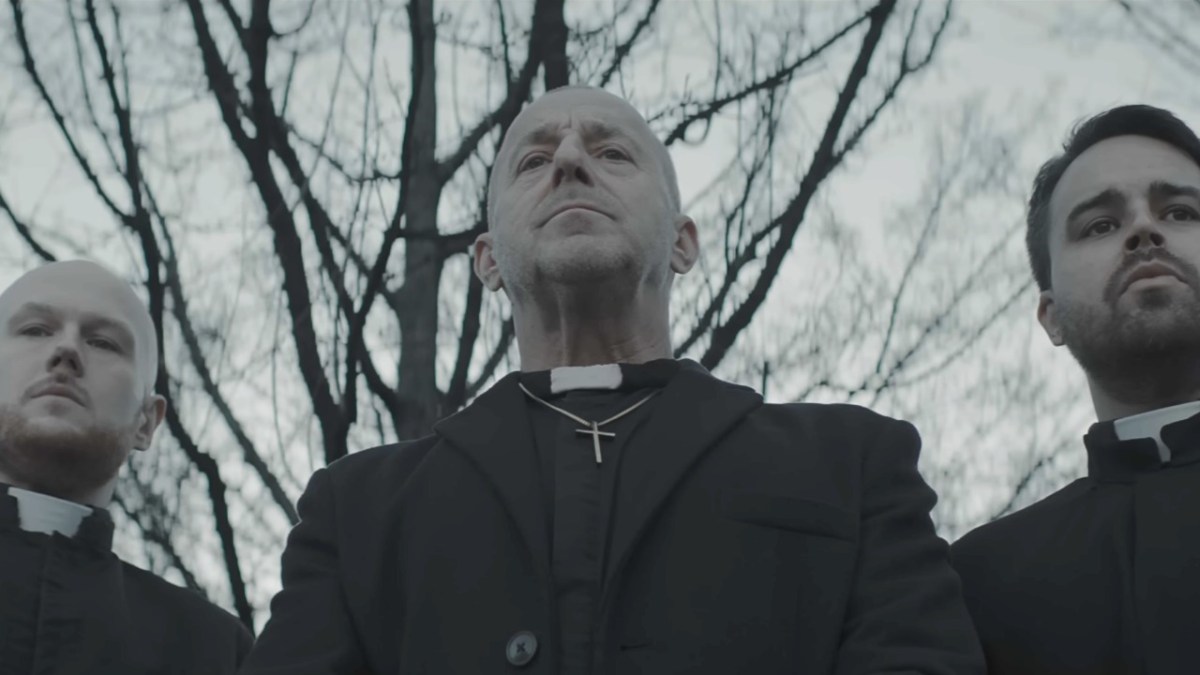

Conspiracies, secret societies, and cults operating in the shadows. These are just some of the subjects the film Manipulation touches on. The second feature-length film from up-and-coming director David Balda, this tense and twisty thriller plunges audiences into the dark world of an underground society that pulls the strings from the shadows and threatens and intimidates all who stand in its way.
The story of manipulation follows Matteo, a young initiate whose father operates in the upper echelons of this cult, whose leader, the master, seeks the treasures of the Holy Roman Emperor, Rudolf II. We also get to see the shadowy group attempt to infiltrate the church and the attempt by church members to fight back against this manipulation.
WGTC got the chance to sit down and discuss the film, which is set to hit UK theaters on Friday, with director David Balda, who shared his thoughts on conspiracies, international cinema, and how manipulation is everywhere in modern society.
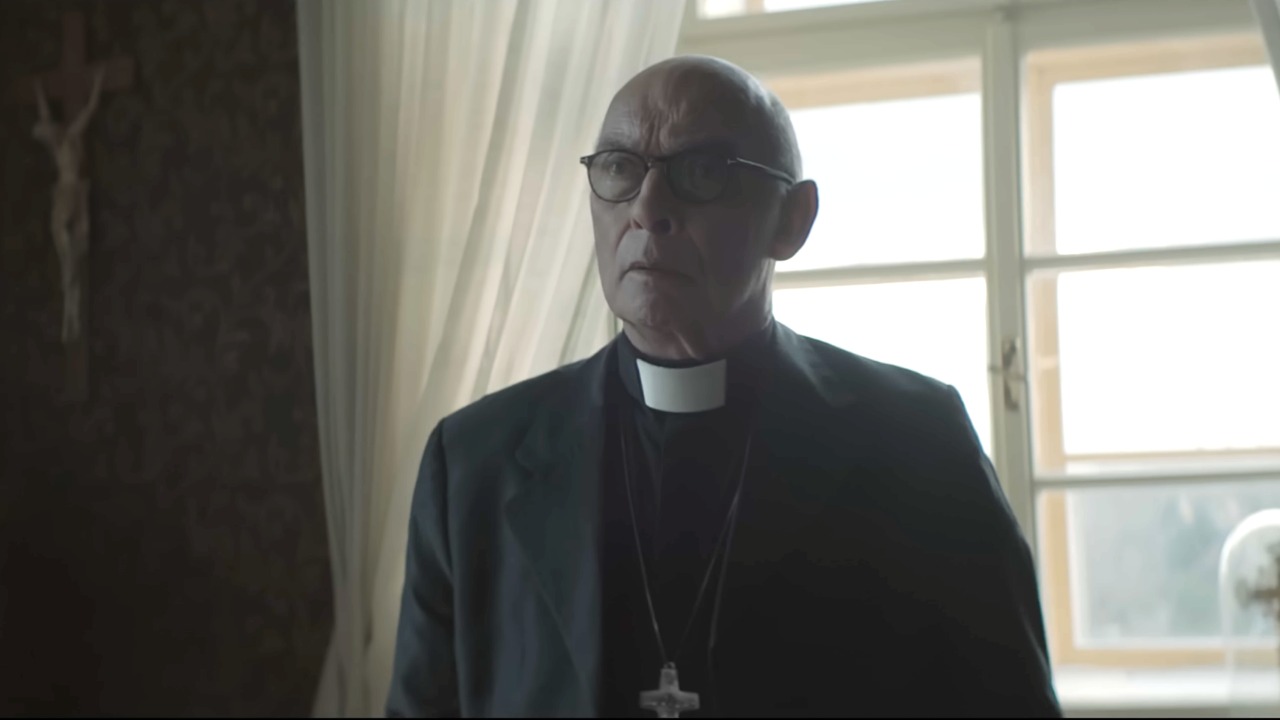
WGTC: How are you, David?
David: Very nice, very nice. How are you?
WGTC: Thank you for taking the time to sit down with us and talk about your film, Manipulation. It’s very tense, a very twisty kind of thriller, and it’s got a lot of complex ideas in it. How did you plan those out when you were coming up with the ideas for the film? How did those ideas come to you?
David: Well, first of all, thank you for having me as well. It’s a pleasure. Basically, I introduced my debut film when I was 18 or 19. It was 2019, I was 18. And there was, I would say, a lot of… I was told not to say this too many times, but there was a lot of manipulation around the result. You can imagine, a young director with a feature film in cinemas. So I somehow understood that manipulation is something that is everywhere, but it’s such a rich term. It’s not black and white; it’s a very colourful thing.
We started meeting people from secret societies and strange groups, and they were telling us their stories, what they had experienced. So we started putting together a story that would tell what manipulation is about, because we could have chosen politics or media or something like that, but that’s a bit different in every country. The basis is the same, but it’s a little bit different. So this gives us some space to show it in, I would say, an omnipresent way.
I have to say I used only part of the real things I was told, because if I had used everything, nobody would have believed the film. What I found happening in Europe is sometimes very strange with these people: kidnapping priests, ritual murders, these kinds of things. So we tried to avoid that in the film.
WGTC: Very interesting. Obviously the film mentions the Holy Roman Emperor Rudolf II. Were there any historical stories or facts that informed you when you came to make the film?
David: Yes. As you know, we use the symbol of the ouroboros a lot, the idea that the same thing keeps repeating. And I feel that everything is still repeating, in a way, because we are still making the same mistakes as we did centuries ago, and we are still not able to learn from it. So with this film, and in my life, I’m trying to look at things and how they work.
If you had asked me about manipulation 20 or 30 years ago, of course, we didn’t have social media, we didn’t have so much internet media; we had the printed press. But the scheme of how it works has always been the same: somebody wants you to do something. That’s manipulation. We wanted to try to use history somehow, not to be boring and not to make it a documentary. So we tried to take the history just to give it some kind of voice in the film.
That’s why we are shooting on historic locations, real locations, no studio set-up. It’s all real. The symbolism is there, because we are all using symbols that were made centuries ago, and sometimes we don’t even know what they mean. Somebody has 666 on their neck; you can explain that symbol from dozens of angles. So it’s a sort of manipulation coming from history as well. And I don’t want to use the word manipulation too much, actually. It shouldn’t be used that much. That’s why the film is called Manipulation.
Social media, AI, and the relevance of ‘Manipulation’
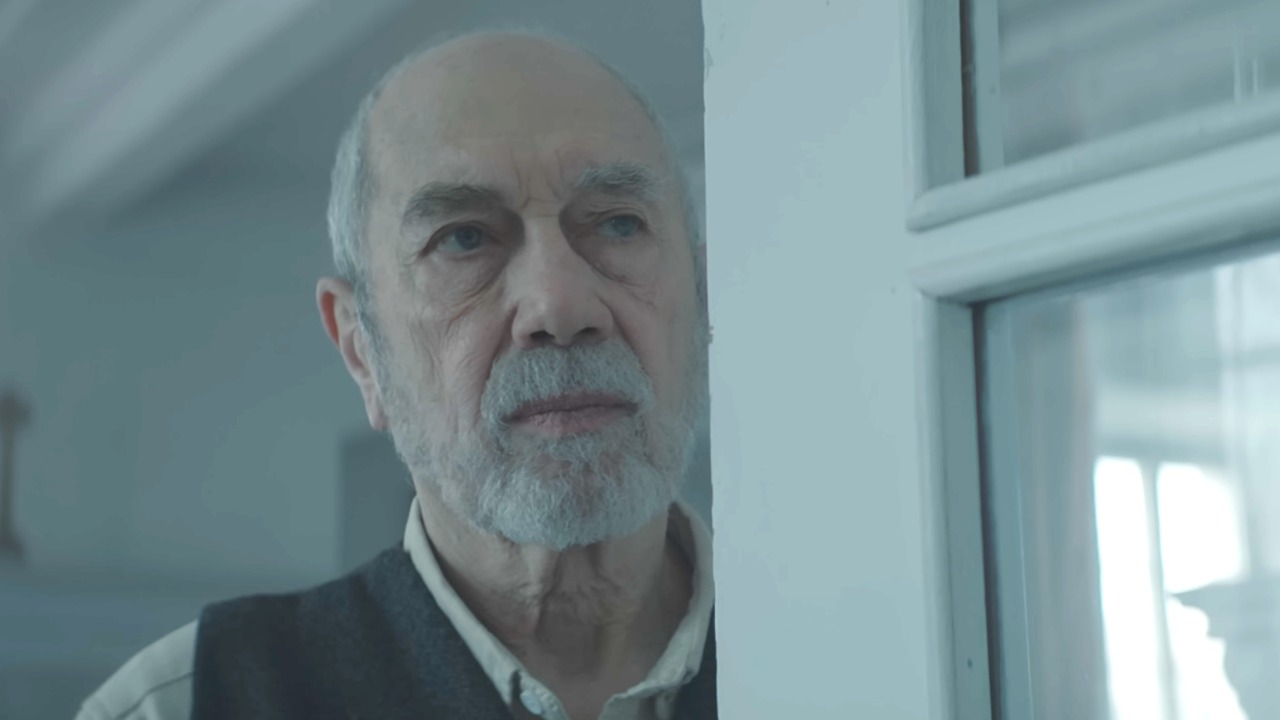
WGTC: With the rise of social media and AI, do you think the masses are becoming easier to manipulate with those tools?
David: Well, that’s a very hard question. It’s very hard to describe manipulation. What I usually say is that I feel manipulation has moved a little bit more into fog; it’s not that easy to recognise, even for me sometimes. Of course, social media is great. I can promote the film through social media; I can stay in touch with people I meet somewhere. It’s beautiful. But on the other hand, some people are posting, you know, “I’m in London, whatever, and I’m having a beautiful time,” and it’s not true. You know what I mean. So sometimes a fake happiness is created, and other people who are not happy feel more and more depressed, if I can say so.
And also AI. I consider AI to be very, very dangerous, from two points of view. You are young, I am young; we can recognise what was made by AI on Instagram, mostly. The older generation can’t. And what I think is very strange is that lots of friends of our age use AI to help them, to advise them. I believe you should create your own opinion. Before this interview, you could have just read reviews of my movie, but you watched the film to create your own opinion. That’s what people should do in every area, not only in filmmaking. That’s what I think.
WGTC: You spoke about the historical, cyclical nature of manipulation. Do you think the film will become more relevant as time passes, or stay about the same?
David: I tried to make this film in a way that it will work, I don’t want to say forever, but let’s say for two or three decades. What I’m a little bit afraid of is that maybe it will work more and more.
It was interesting: tomorrow we have the British release, and we already had the Italian and German releases in May and June. I was going through Italy and Germany, we had Q&As, and I was talking with people after they had watched the film about what they know and think about manipulation in general. Even though Italy, Germany, and the Czech Republic are like neighbours here in Europe, you couldn’t understand how different the point of view is. The Germans understand manipulation and influence absolutely differently from the Italians, and I’m not saying better or worse. So I think people see manipulation, they see influence, they see that the world is not going in a really beautiful way. But there is still such a big group that sees it otherwise, I would say.
I think our generation has to change it. I like it when people of our generation work, when they want to achieve something. But on the other hand, there is such pressure on them from advertising, from Instagram, how everybody is successful, and it’s not true. It’s overload. So I think our young generation can easily get into some kind of wrong attitude because of the world. But we have to be strong enough. We are all trying, in our own way, somehow.
Past and future projects
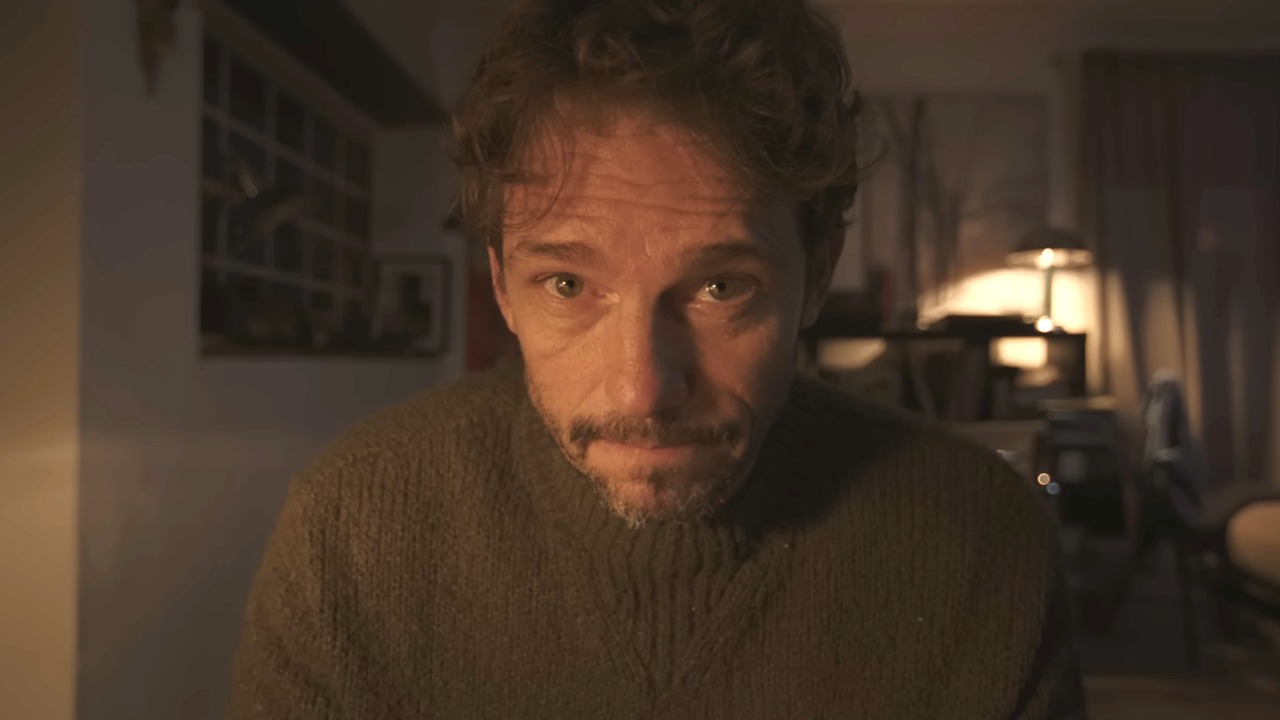
WGTC: How does this project compare to your past projects? Obviously it’s quite a big step up: this film is getting an international release; it’s coming in the UK. How does the scale of this film compare to your past projects?
David: I did some short movies, or let’s say mid-length movies, when I was fifteen. And then I did my debut, which was called Narušitel, The Intruder in translation. It was about freedom, because it was about fighter pilots during socialism in Czechoslovakia, before 1989, and how they wanted to achieve some kind of freedom even though they were locked inside socialist, communist Czechoslovakia. That was partly about my grandfather.
And of course, I’m not the kind of guy who says, “I want an Oscar and I want to be in Hollywood.” Not at all. I wouldn’t be against it, but it’s not my goal. I want to open people’s eyes, and I want to influence people. That’s my intention as well, but in a good way. So I thought, manipulation and this kind of thing is not regional. While writing the script I said, well, it’s not only in the Czech Republic and Slovakia, it’s everywhere. So that’s why we tried to do it in an international way. Of course it wasn’t easy to achieve and it took some years, but I’m happy we did it this way, because otherwise we wouldn’t be talking. It would be a Czech movie only, in the Czech language.
So I think I want to do, sort of European movies. I understand the mentality, I would say. The thing is, I’m not coming from the US, I’m not coming from the UK, I’m coming from the Czech Republic, with all due respect to the Czech Republic, but you don’t have the connections, you don’t have the opportunities, so you have to fight for it somehow.
WGTC: That’s very interesting. So do you think you’ll continue with this international approach?
David: Yes. I have no intention of going back to Czech movies.
WGTC: It’s a good trajectory.
David: Thank you. I like these kinds of topics as well. I’m already writing my next project, and I want to do a film about how, if you want to be successful, you can choose the longer but clean way, or the faster but not-so-clean way. It’s about your moral borders. You have to decide, and you have the choice to decide. Or maybe sometimes you don’t have the choice. So let’s see where it takes me. I have dozens of pages of material, and over Christmas I want to put it together.
I want to do it in a similar way, because we had actors from eight or nine countries, something like that, European countries, and most of them are very famous in their own territory. Heino Ferch, for example, is very famous in Germany. On the shoot, in creating the film, it’s a beautiful connection of cultures. Having so many nations on one set is very interesting for me. So I like this.
WGTC: What was it like working with so many different actors from all over the place?
David: I was very lucky, I have to say. I didn’t have any actor who was like, “You have to send a caravan, you have to do this.” I think I was lucky to have actors who had all achieved something in their lives. They were satisfied, and they had only one goal: to make good movies.
I remember Arnaud Binard, the French actor. We had done a ninth or tenth take, because there was something with the light, with the camera, whatever. And I said, “Arnaud, can we do another take?” And he said, and this is important for a young director to hear, “David, for the film, everything.” That’s important, because I actually learned a lot from these people. They are masters and they can give you the best in the first take.
I don’t like it when actors just learn the text and follow the director’s idea. Yes, the director has to marry everybody together and keep it within certain borders, not to turn a drama into a comedy. But actors of this kind build the character inside themselves; they build the background which is not in the script. Let’s say Heino plays Father Vitus. In the script you have Father Vitus, what he does. But you don’t have his childhood there, and they build it; they create the character. That’s such an interesting thing, to talk with actors on set: “How do you feel about this?” And he would say, “Well, I think the character should do this now.” If there is no ego, if there is a healthy debate, then you can have a nice scene coming out of it. So I was very lucky, and it was a joy with everybody. I can imagine there are actors who are not that friendly, but I have to say I was really lucky.
Balda on conspiracy theories
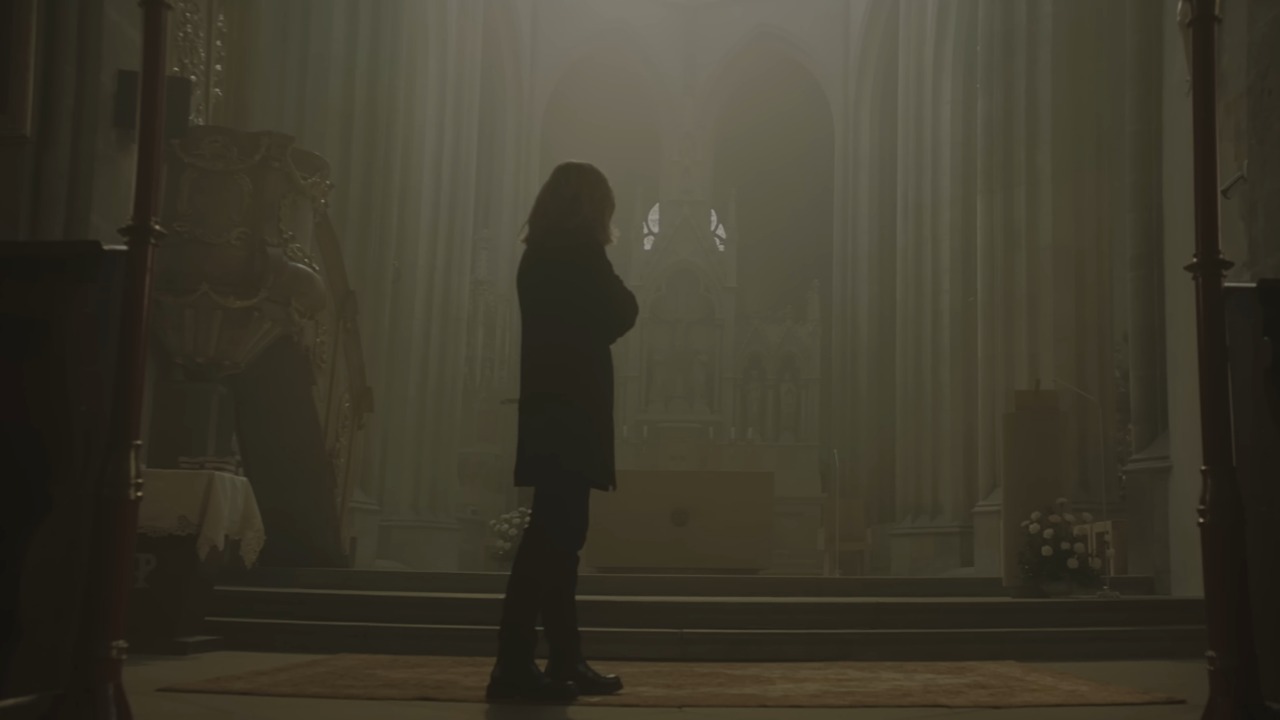
WGTC: Do you have any real-life conspiracy theories that you’ve heard, or that you find interesting?
David: Well, that’s very interesting, because you said “conspiracy theories that are in the film,” and the film is on the edge of this. But I can assure you there is not a single conspiracy, because the manipulation is here. Of course, we created our own secret society. We didn’t want to use the Freemasons or whatever, and I’m not saying they are a sect, but we didn’t want to use any existing one, because then everybody would be judging: “Well, this is different, the symbol is different.” We wanted to create our own, just to pass on the message of manipulation.
Of course, in the public space there are lots of conspiracy theories. Some of them may be based on some bit of truth, some of them not. But basically I think we have to think that manipulation is not conspiracy. It is around, yes. But you can see in all these places you mentioned, Bologna for example, that they are all mysterious, but each in a slightly different way. Bologna has been the centre of several historical moments that can be understood in a conspiratorial way. And also Prague, because of Rudolf II. Everybody says he was a lunatic; he wanted to find the lapis, the Philosopher’s Stone. Okay, you can say that, but on the other hand, he gathered in Prague the best scientists and artists of the time. So was he a lunatic or not?
I’m always trying not to present or show a conspiracy theory, but to look at things from several different points of view. You’ll remember there is a line in the film: “History is written by the victors.” And it’s true. So of course they have a part of the truth in it, but there is always another part as well, in everything.


Published: Nov 6, 2026 09:30 am