


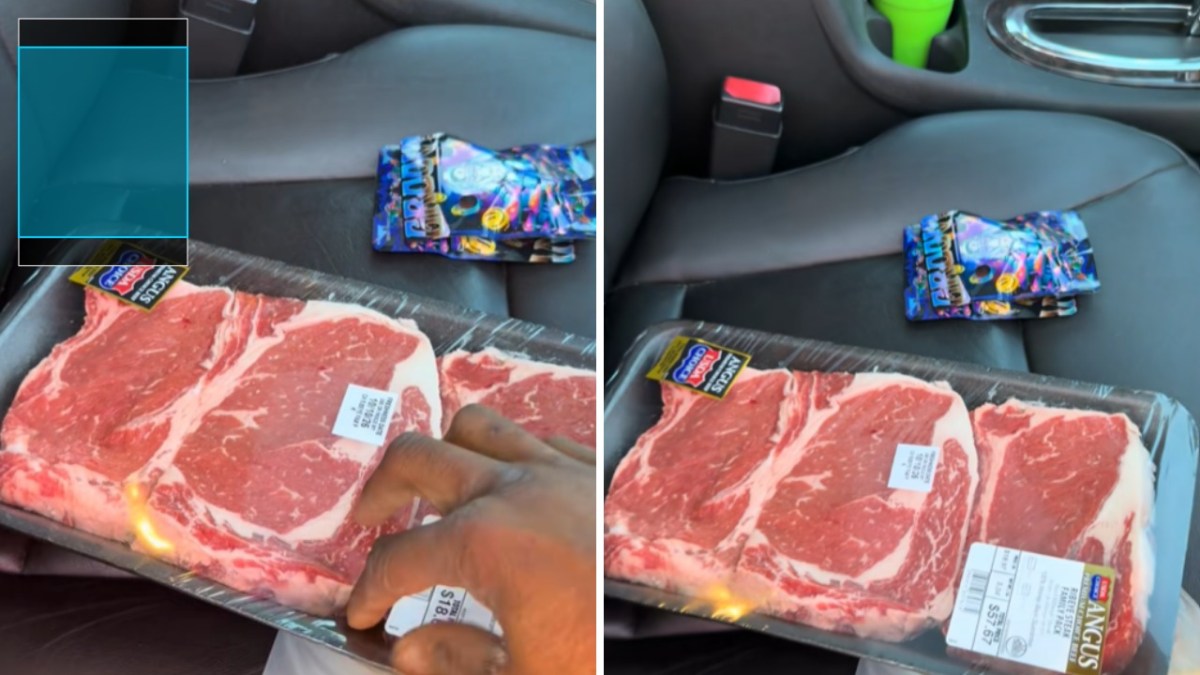

Grocery prices continue to rise across America, and cuts of beef and fresh steak are taking a hard hit, too. In response to rising costs, a Chicago content creator went viral on TikTok after allegedly revealing this Walmart trick.
TikTok user Turbo (@spank_washedit) posted a clip showing how people claimed to use label-swapping tricks to save money at self-checkout. In a video recorded from his car right after leaving a store, Turbo showed off a thick three-pack of Angus steaks marked for just $18.67. He then peeled back that price tag to reveal the real tag hidden underneath, which is actually priced at $57.67.
However, he later admitted to BroBible that the entire video was a skit meant to show Walmart how shoppers pull off those tricks. Turbo said: “It’s to raise awareness to Walmart so people don’t do these things. You have to pay the higher price for the steak. But also buy a cheaper pack and just make a cool skit.” Walmart has not responded to the video as of this writing.
Commenters aren’t happy about getting snitched on
Viewers in the comments section couldn’t believe the Chicago man exposed the trick, confessing that they have also swapped stickers at other grocery stores. “Why you post that,” one TikTok commenter wrote. “Telling on yourself is crazy,” one added.
Other viewers admitted that they do the same, and for that reason, he needs to delete the post. “Ayo, that’s my move. You shouldn’t have told the internet. Now they going to be on our a- smh,” one shared. “Bro, delete it. Can’t give out the cheese,” one suggested.
The comments reflect the feelings of many people living with rising expenses. As families struggle to cover even necessities, unconventional tactics are gaining popularity online, even if they break the law. According to Rabb Wilkerson Law, tag swapping is another type of shoplifting that is punishable by law.
The price of steak and beef continues to soar across America, with NerdWallet reporting that beef prices have risen about 6% in the last year, with steak up 4%. The U.S. cattle inventory is the smallest it’s been since 1951, driven by drought, high grain prices, inflation, and rising interest rates that have made cattle farming unsustainable. To deal with rising operating costs, many U.S. cattle farmers reduced their herd sizes, and some left the business altogether. Unfortunately, prices will likely keep rising because of strong consumer demand, tariffs, and limited beef supply.
Published: Oct 14, 2026 03:00 pm