


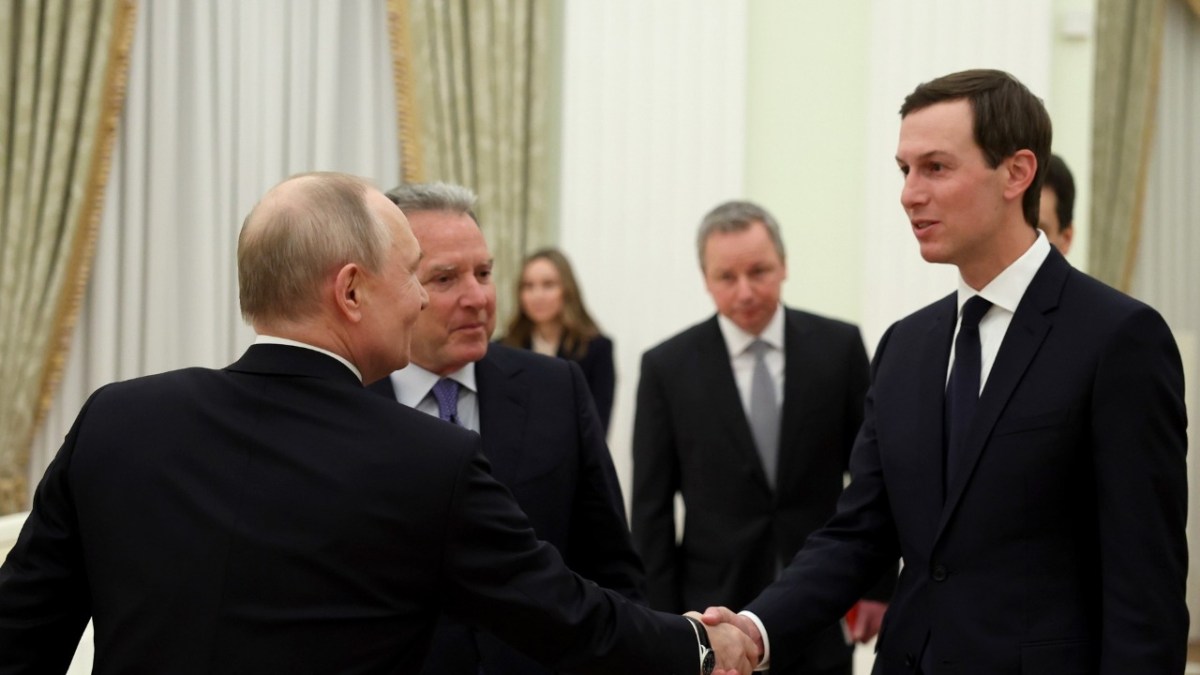

European leaders have pushed back against a new proposal from the United States to unfreeze Russian sovereign assets that were immobilised following the invasion of Ukraine in February 2022. During discussions in Miami last week, US special envoy Steve Witkoff and Jared Kushner presented a plan that would transfer a portion of these frozen funds into a special-purpose financial vehicle under Washington’s oversight, the Financial Times reported.
This move is part of an effort to revive peace negotiations, but it has met with significant resistance from officials representing France, Germany, Britain, the European Union, and the North Atlantic Treaty Organization (NATO).
The vast majority of these funds are currently held within the European Union. These assets were originally locked away as part of a G7 and EU strategy to block Russia from its foreign exchange reserves, which effectively weakens its financial system and limits its capacity to fund the war.
European nations have already been using the proceeds generated by these assets to support Ukraine, including a 45 billion euro loan
The current consensus among these nations is that the underlying principal should remain frozen, with a commitment to eventually use those funds for Ukraine’s reconstruction if Russia refuses to pay war reparations. Any change to this stance would require unanimous agreement among all 27 EU member states, which makes the US proposal a very difficult sell.
Beyond the asset issue, the US has also been pushing for other economic concessions to get Russia back to the table. According to reports, Witkoff and Kushner told Ukrainian officials in Miami that a separate agreement allowing for the export of more than 2.25 million barrels of Russian diesel was designed to encourage Moscow to return to negotiations. As part of this broader strategy, the US envoys requested that Ukraine stop striking Russian oil refineries, with the hope that Washington could then leverage these steps to press Moscow for peace.
These initiatives have been met with deep skepticism from those on the ground. Ukrainian officials are concerned that these proposals provide Russia with tangible economic benefits without securing any actual concessions to end the fighting. On Wednesday, Ukrainian President Volodymyr Zelenskyy noted that it was painful when President Donald Trump appeared to take Russia’s side, and he expressed that Ukraine was losing a strong partner.
Italian Prime Minister Giorgia Meloni also voiced her disagreement with the arrangement, telling parliament that it risked legitimising Moscow and generating revenue to finance its war, all while weakening the existing sanctions framework.
The US has also asked Ukraine to submit a detailed plan regarding how any funds would be spent, while pushing for reforms through the World Bank to improve accountability and combat corruption. Despite these requests, the core of the disagreement remains the approach to pressuring Russian President Vladimir Putin.
European leaders have made it clear that they view this as their matter, and they are not interested in shifting the current economic pressure that they have worked so hard to maintain since 2022.



Published: Oct 16, 2026 08:30 am