


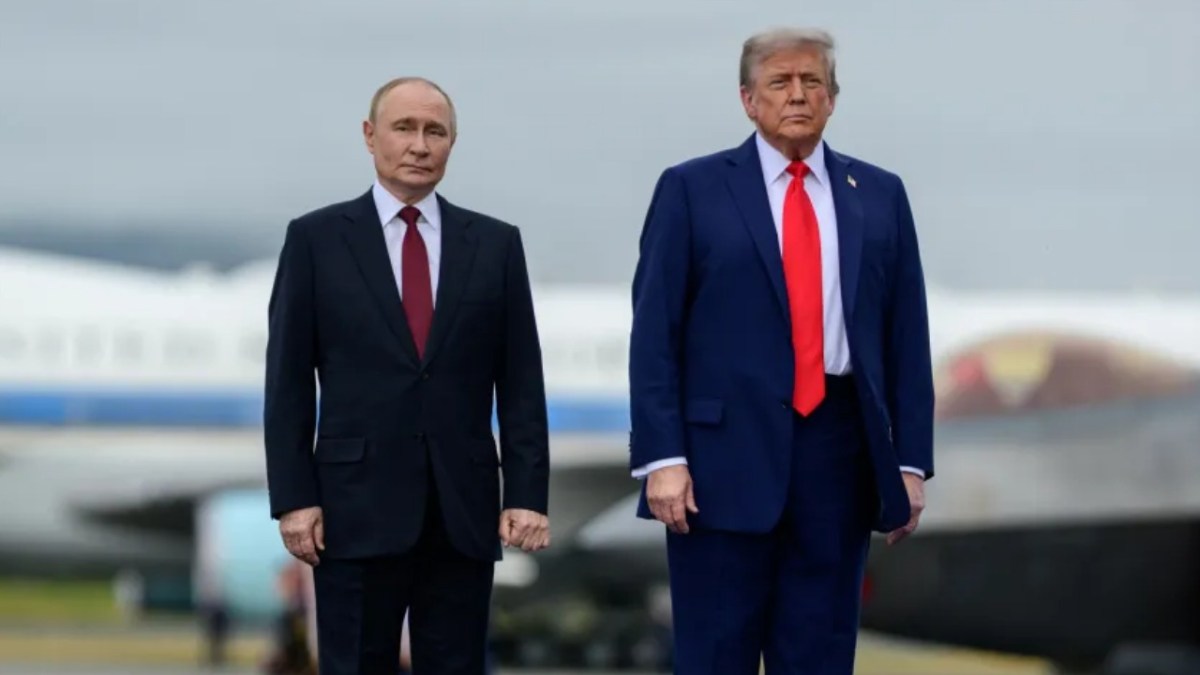

President Donald Trump announced an energy ceasefire between Russia and Ukraine on Sunday, but the situation remains highly unstable as attacks continue, the Telegraph reports. The president used his social media platform, Truth Social, to declare that both sides had reached an agreement to stop targeting energy infrastructure.
He posted a blunt warning to the parties involved, stating, “Do not break it!” This announcement followed a separate development on Friday when the president stated he had reached an agreement to purchase hundreds of thousands of tons of diesel from Russia.
The validity of this ceasefire is currently in question because the announcement appeared to surprise both Russia and Ukraine. Only hours after the declaration, the city of Kharkiv experienced significant strikes. President Volodymyr Zelensky reported that a major power facility in the city was targeted by drones and glide bombs.
On Monday, President Zelensky issued a firm response regarding the status of the agreement
Zelensky stated, “If Russia does not agree to an energy ceasefire, we will respond. If Russia wants us to stop our long-range strikes against its oil refineries and oil exports, then Russia must stop its strikes against our energy system and critical infrastructure and stop killing our people.”
The Kremlin has avoided confirming whether a formal agreement exists. Dmitry Peskov, the Kremlin spokesman, mentioned on Monday that contacts are continuing and that the government would provide updates when there is more to share. When specifically questioned about a potential 60-day ceasefire to facilitate elections in Ukraine, Peskov stated, “We don’t want a ceasefire, we want long-term peace.”
The Trump administration has been actively pressuring Kyiv to halt long-range strikes on Russian oil refineries, as these operations have impacted global energy prices. President Trump has expressed frustration over these strikes, going as far as to say, “He better damn well stop. I suggest they get a new leader who can make a deal.”
To enforce this position, the White House has reportedly threatened to cut off intelligence sharing and suspend the Prioritised Ukraine Requirements List, which is a mechanism used to procure US weapons. European officials noted that the US has been lobbying various capitals to end the refinery attacks. If these threats are carried out, the impact on Ukraine would be immediate, particularly regarding the supply of Patriot interceptor missiles.
Market reactions were mixed following the news. Brent crude prices dipped 0.6 per cent to roughly $104 a barrel on Monday morning as the market responded to the prospect of eased sanctions on Russian oil. The FTSE 100 also saw a modest rise of 0.5 per cent. However, analysts remain cautious about the long-term viability of the arrangement. Jim Reid, an analyst at Deutsche Bank, noted that the situation currently looks like an untested proposal rather than a functioning ceasefire, especially given that a similar attempt last month failed to hold.
Kaja Kallas, the European Union foreign policy chief, noted that the bloc would welcome a truce if it actually holds. She emphasized that the EU has not yet seen evidence that Russia intends to stick to the agreement. She also pointed out that any equitable deal must cover more than just oil refineries, noting that the current focus on refineries specifically benefits Russia, which possesses a larger number of such facilities compared to Ukraine.
The White House has declined to provide comments regarding these reported threats to withhold military and intelligence support.






Published: Oct 12, 2026 04:49 pm