


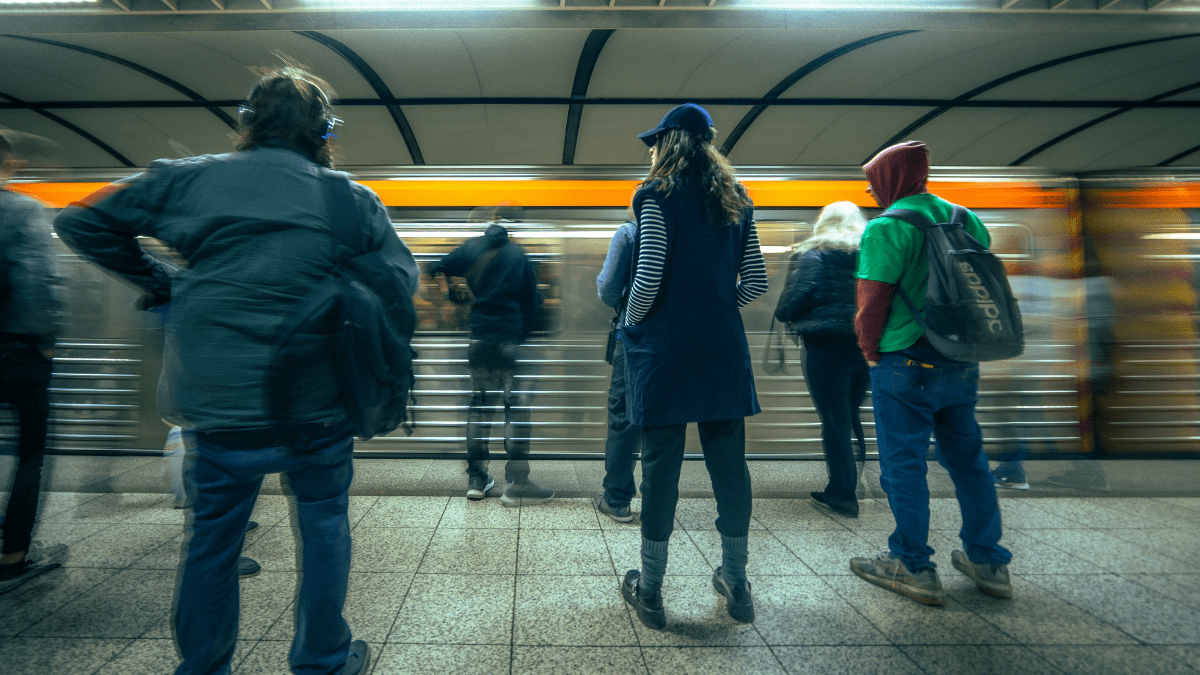

A federal judge has officially cleared the way for a major civil lawsuit to proceed after the family of an adult with Down syndrome, Rashawn Williams, filed a complaint against the Washington Metropolitan Area Transit Authority (WMATA). When the incident happened in October 2023, Williams was staying at a temporary hotel in Silver Spring, Maryland, that required 24-hour supervision and was operated by WeAchieve.
On Oct. 20, Williams managed to walk out of the hotel without supervision. According to People, the vulnerable adult boarded a local bus before eventually making his way into a WMATA train station. He rode the train until around 12:30 a.m. before getting off at the Glenmont Metro station.
Surveillance footage from the facility shows the special needs adult approaching a standard fare gate, where he stood waiting for assistance. Crucially, the lawsuit alleges that a WMATA employee ignored Williams for more than 30 minutes while remaining occupied with a personal phone call.
The family was waiting for the worst possible news
As the days passed, Williams’ parents, Jimmy and Christina Hall, grew increasingly desperate. By Oct. 25, Jimmy had entered what was described as a painful psychological state, expanding his search to dangerous areas, including local woods and commercial dumpsters. With so much time having passed, the family was preparing for the worst possible news.
The break in the case finally came on Oct. 26. An officer with the Montgomery County Police Department was searching around the Glenmont Metro station when they began checking a series of emergency exits. These particular doors were designed to lock automatically from the inside once they closed, effectively creating a trap.
Behind those doors, officers discovered Williams alive but in horrific condition. He had spent six days in complete darkness, was severely dehydrated and physically depleted, and was covered in his own bodily waste.
The lawsuit paints a tragic picture of his confinement, including the profound psychological toll of losing all connection to the outside world. The trauma continues to affect Williams today.
In the aftermath of the incident, Jimmy and Christina filed a civil negligence lawsuit naming both WMATA and WeAchieve as co-defendants. WMATA’s legal team later filed a motion seeking to dismiss the entire case, presenting a controversial defense that characterized the disabled man as a “trespasser” inside its facility.
However, U.S. District Judge Paula Xinis firmly rejected the transit authority’s arguments in a 10-page memorandum opinion. Judge Xinis strongly criticized the agency’s position, writing that providing even a basic level of communication to ensure a passenger safely exits a station could hardly be considered a burdensome requirement for a public transit network.
Darkness still triggers panic episodes
WMATA representatives have said they will not comment on the case while it remains before the courts. WeAchieve, meanwhile, has denied allegations of intentional negligence or misconduct. The nonprofit organization argued in legal documents that responsibility for the injuries and trauma suffered during Williams’ six-day confinement should instead be placed on WMATA.
The Hall family is seeking a jury trial and unspecified financial damages. The lawsuit states: “Since the incident, complete darkness has become intolerable for Rashawn, as it triggers panic episodes during which he wakes up in distress, frantically running into rooms to find someone for reassurance.”




Published: Aug 18, 2026 11:02 am