


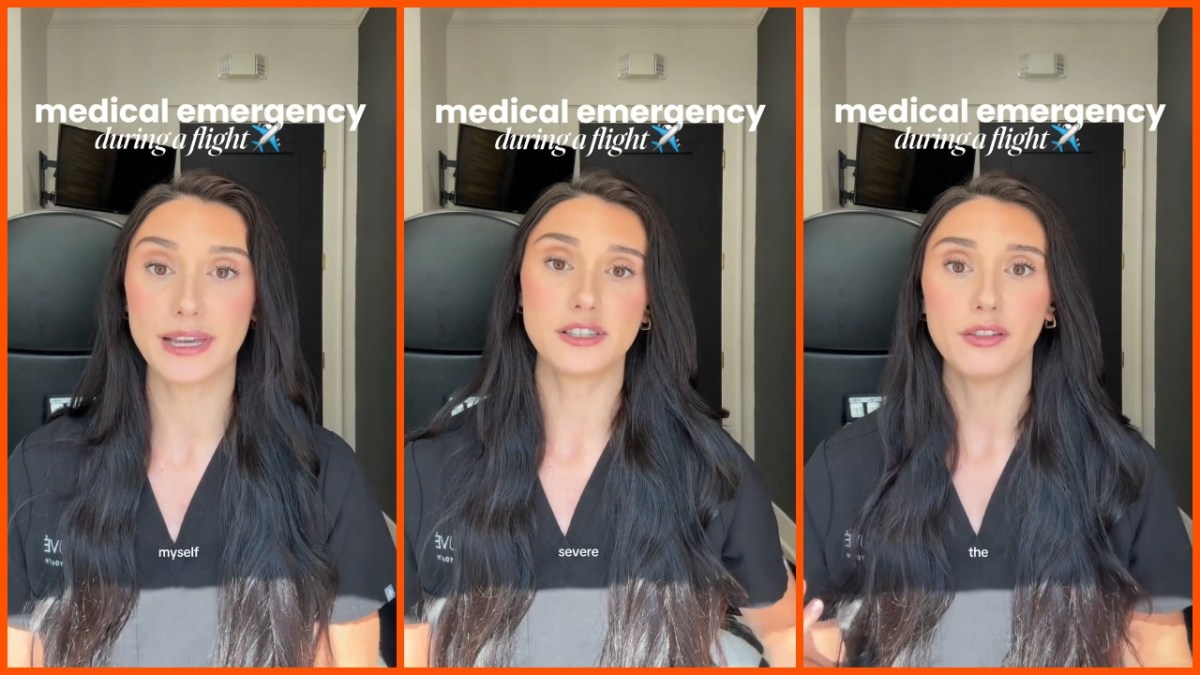

An aesthetic nurse practitioner said she was the only person with medical training available when a passenger had a medical emergency on her American Airlines flight. She claimed she told the pilots the plane needed to divert, and the airline later gifted her 25,000 miles for stepping in.
The nurse shared the story in a TikTok video, saying she usually spends her days performing cosmetic injections rather than working in a hospital. She said she was worried her background would not be enough to handle a serious inflight crisis. She claimed she had to quickly shift gears and rely on her fundamental training to assess the passenger.
After evaluating the situation, she said she decided the passenger needed more help than she could provide in the air. She claimed she told the pilots they needed to reroute the plane and make an emergency landing. According to her account, the flight crew followed her recommendation, and the plane landed so the passenger could get the care they needed.
Not every nurse on board works in an ER
The nurse said in a follow-up video that American Airlines reached out to her after the incident. She added the airline gifted her 25,000 miles as a thank you, the same number of bonus miles it included in letters thanking a doctor couple after another inflight emergency.
Medical emergencies in the air, which occasionally strike the pilot midflight rather than a passenger, are more common than many travelers realize. A study published in the New England Journal of Medicine reviewed nearly 12,000 inflight medical emergency calls from five airlines and found they happen on about one in every 604 flights. Fainting or lightheadedness made up 37.4% of cases, and respiratory problems made up 12.1%. Physician passengers helped in nearly half of those emergencies, and about 26% of the passengers involved were taken to a hospital after landing.
The final decision to land belongs to the pilot. Airlines also often have medical consultants on the ground who advise on whether a diversion is needed, and those consultants can steer pilots away from a diversion that a medical volunteer on board recommends.
Volunteers like her are protected by the Aviation Medical Assistance Act of 1998. The law shields medical professionals who help during an inflight emergency from liability unless they are guilty of gross negligence or willful misconduct. Its definition of a qualified volunteer specifically names nurses, along with physicians, physician assistants, paramedics, and emergency medical technicians.







Published: Nov 12, 2026 04:30 pm