


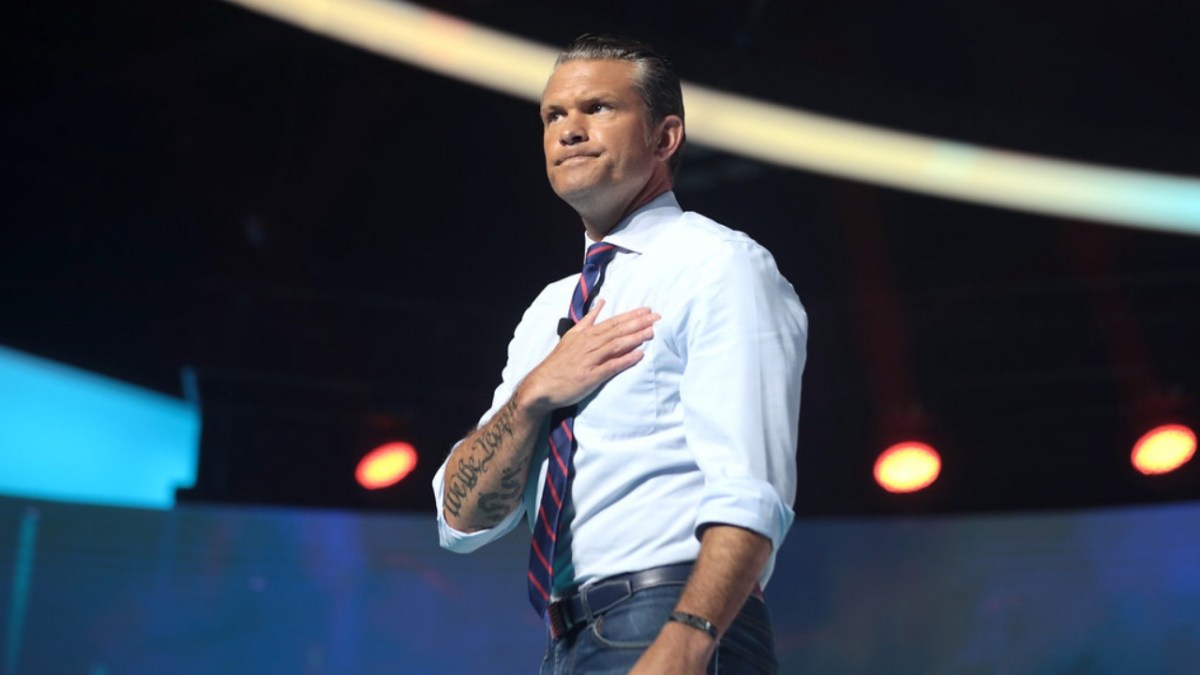

Defense Secretary Pete Hegseth is launching a new office of religious affairs at the Pentagon, marking the latest shift in his faith-related reforms, the Associated Press reports. He announced the initiative during a speech on Wednesday at Marine Corps Base Quantico in Virginia, where he explained that the office will provide first-class religious support and report directly to his office.
Hegseth has already hosted Christian worship services for employees and frequently describes the United States as a Christian nation. During his address, he leaned into this perspective, telling his audience, “Our department is, you might say, putting on the full armor of God, because while we wage physical war, we all know the real battle is spiritual.”
The new Office of Religious Affairs, or ORA, is designed to advocate for military chaplains and religious support at the highest level of the Department. According to a Pentagon statement, the office will not compel religious participation, favor one faith, or diminish the rights of personnel of any faith or lack thereof.
Hegseth has been very vocal about infusing his evangelical Christianity into his leadership style
While the leader of this office hasn’t been named yet, a Pentagon memo notes that the director will coordinate spiritual resources, including faith-based homeschool support for military families. Hegseth has also been pushing for the military school system to incorporate more coursework that draws from conservative and Christian influences.
This isn’t the first time federal agencies have seen faith-based offices. They were established under President George W. Bush and continued in various forms under the Obama and Biden administrations. President Donald Trump also established a White House Faith Office and pursued a similar effort during his first term.
However, some experts note a shift in purpose. Shaun Casey, who led the State Department’s Office of Religion and Global Affairs during the Obama administration, pointed out that his office was focused on understanding the political implications of religion in global hot spots, rather than promoting spiritual well-being.
The announcement has already drawn criticism. Rachel Laser, who heads Americans United for Separation of Church, argued that the Pentagon owes it to service members to defend religious freedom. She stated, “Hegseth’s latest announcement violates that promise by elevating Christianity to an even higher role in shaping U.S. military policy.” Her organization has previously sued the Pentagon over its worship services.
Beyond the new office, Hegseth is making significant changes to the military’s chaplain corps. He has expressed a desire for chaplains to focus more on God and less on therapeutic self-help and self-care. To that end, he has ordered chaplains to stop wearing their military rank on their uniforms and instead be identified by religious insignia.
Furthermore, the Department of Defense has significantly reduced the number of officially recognized religious affiliations. The list has been cut from over 200 traditions down to 31, and it no longer includes atheists, Unitarian Universalists, pagans, or Wiccans.
The memo also highlights faith-based initiatives aimed at suicide reduction, as the military has been relying more on chaplains to handle the rising numbers of troops in mental health distress. During his speech, Hegseth encouraged the chaplains to lean into their roles, telling them, “Live your calling. Stand firm. Preach truth. Minister to the flock.” He concluded his remarks by quoting the Bible, saying, “The Lord is on my side; I will not fear. What can man do unto me?”







Published: Oct 4, 2026 03:26 pm