


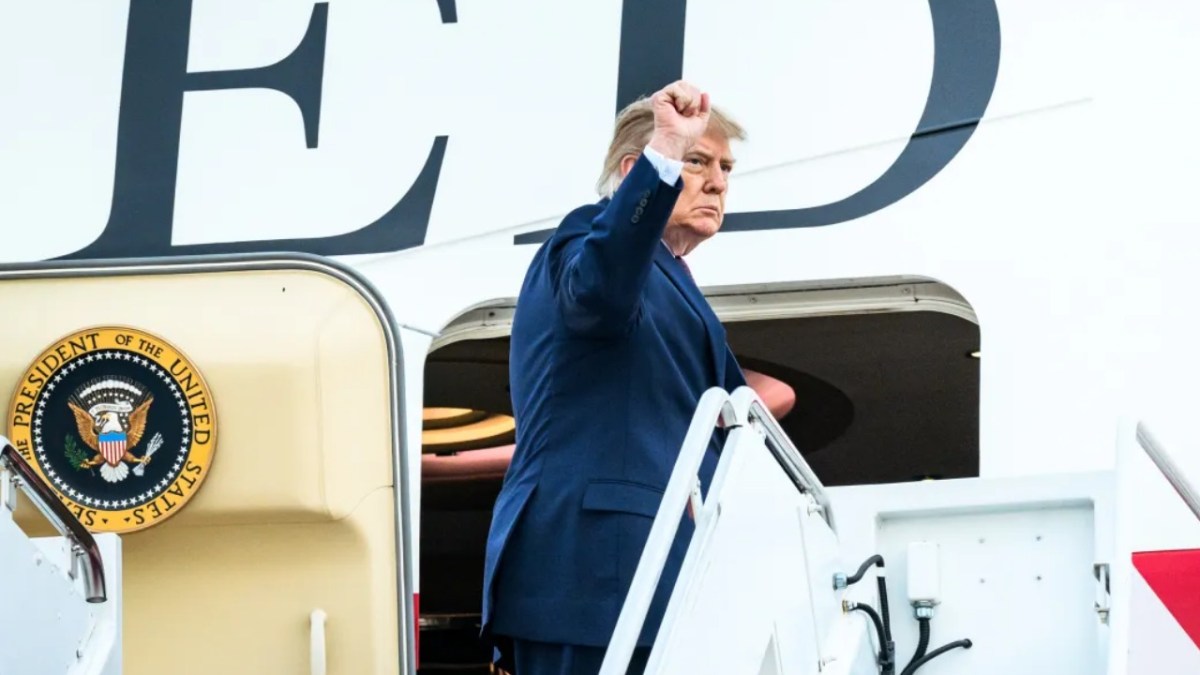

A New York appeals court hears arguments on Thursday regarding the request to throw out the 34 felony convictions against President Donald Trump, the Independent reports. This case, which involves the falsification of business records, made history in May 2024 when the verdict arrived. The ruling marked the first time a person who would later become the current president held a criminal conviction. Trump is not expected to be present for the court session on Thursday.
The core of the legal battle involves a payment of $130,000 made to adult film performer Stormy Daniels. Prosecutors claim this money was meant to hide its true purpose from the public. Trump denies any wrongdoing in the matter. He continues to pursue both state and federal courts in an effort to overturn the verdict.
Attorneys for Trump have attacked the legal theory used by the prosecution. They describe the case as “a house of cards” that relies on a shaky combination of alleged state and federal offenses. The defense team argues that the evidence presented was clearly insufficient and that the instructions given to the jury were problematic. One of the initial paragraphs in a court filing from the Trump team claims the case resulted from immense political pressure on a Democratic prosecutor to target him.
This language aligns with the claims Trump has often made in public
The appeal also touches on whether jurors should have listened to testimony regarding White House conversations and social media posts from his first term. Lawyers for the president point to presidential immunity for official acts. They argue that responding to the situation with Daniels in 2018 qualifies as an official act.
Lawyer Robert Giuffra Jr. wrote in an October filing, “When a president addresses the nation to defend himself from allegations of personal misconduct (as all presidents do), or discusses such communications with his aides, he is carrying out his constitutional duties and is protected by immunity.”
Manhattan District Attorney Alvin Bragg and his team disagree with this assessment. Steven Wu, the appeals chief for the office, wrote in a July filing that, “A president’s discussions about a purely private matter, even with a White House advisor, do not constitute ‘official acts for which the president is immune.’” Prosecutors maintain that the legal theory and jury instructions were legitimate. They argue that the evidence connected to the White House was fair game because some of it was public record or related to general office practices. Wu also noted that there was a mountain of other evidence against Trump.
The original trial focused on the $130,000 payment made by Michael Cohen, who served as a lawyer and fixer for Trump. This payment occurred weeks before the 2016 election to keep information about an alleged sexual encounter quiet. Trump states that nothing of a sexual nature took place. Prosecutors allege that Trump orchestrated a conspiracy that violated federal campaign finance laws. They point out that his company reimbursed Cohen in 2017 and logged the payments as legal expenses to hide the nature of the spending.
Trump’s legal team contends that there is only weak evidence that he knew about the dealings Cohen had at the time. They argue that the payments to Cohen were legitimate legal expenses. They also claim that the money was used to avoid embarrassing his family rather than to hide campaign spending. This distinction is vital because falsifying business records in New York is only a felony if it is done to commit or conceal another crime.
Trump is also trying to move the case to federal court to seek a dismissal based on immunity. A federal judge denied this request for the third time in August. His attorneys are appealing that decision, with arguments scheduled for November 16.



Published: Nov 5, 2026 05:45 pm