


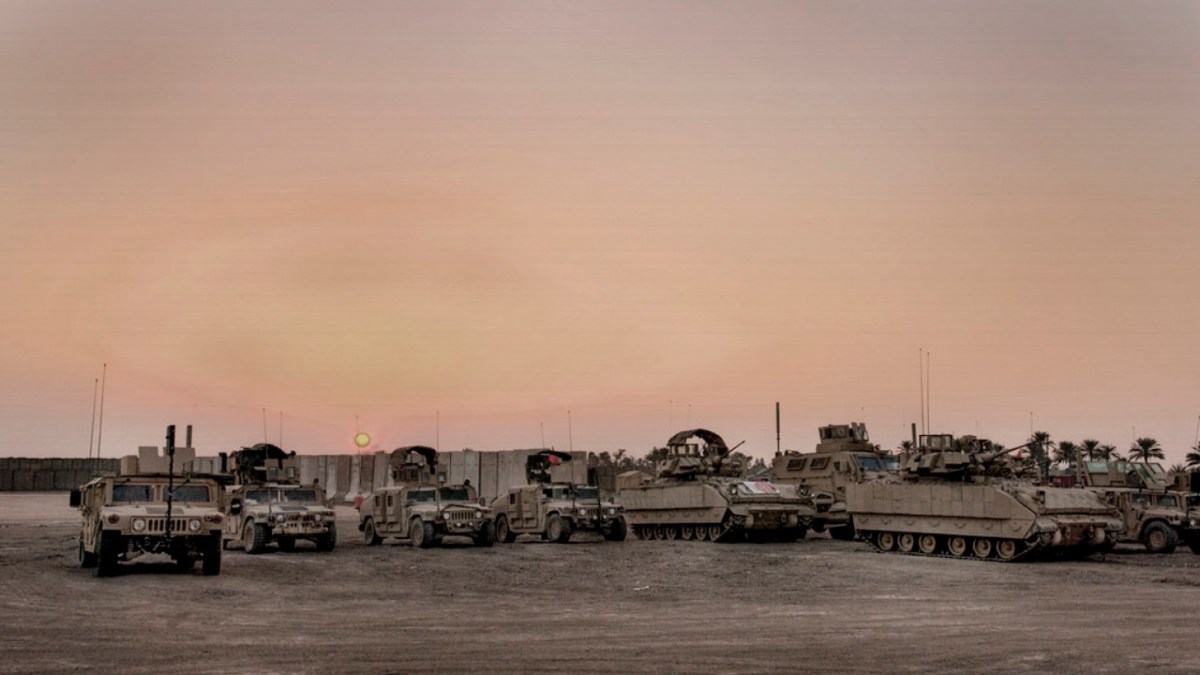

United States forces are set to pull out from their last bases in Iraq by Wednesday, Reuters reports, a departure that marks a major shift in the region. This exit follows an agreement reached in 2024 under President Joe Biden, and it is being carried out by the administration of President Donald Trump. While the move is being celebrated as a victory by Iran and its regional allies, it also leaves a significant power vacuum that has many observers concerned about the future stability of the country.
The departure follows more than two decades of conflict in Iraq, a period during which 4,500 Americans lost their lives. American forces first entered the country in 2003 to remove Saddam Hussein, later returning in 2014 to lead the fight against the Islamic State. Now, the landscape is changing again.
Jasim al-Bahadli, an Iraqi security analyst who studies armed Shiite groups, noted that the withdrawal removes a key military presence that served as a counterweight to Tehran. He said, “Iran stands to benefit strategically from the coalition’s departure because it removes a military presence that for years acted as a counterweight to Tehran’s influence in Iraq.”
Pro-Iranian factions are already framing this as a major success
Abu Mojtaba al-Yasiri, a commander in the Islamic Resistance in Iraq, described the withdrawal as “a historic victory for the Iraqi Islamic resistance groups and honorable Iraqis, and a crushing defeat for the American project.” He added, “On September 30, we will celebrate the turning of a black page in Iraq’s history and the failure of the occupation to impose its will on our country.” The group intends to leverage this momentum to exert more control over security and political decisions within Iraq.
Not everyone is optimistic about this transition. Many Iraqis worry that the country isn’t ready to handle its own security, especially with the potential for groups like the Islamic State to regroup. Abdulrahman al-Zobaie, a Sunni tribal leader in Fallujah, expressed his apprehension, saying, “We believe Iraq is still not fully ready to take over the security file at this time.” He continued, “All Iraqis aspire to full sovereignty, and no Iraqi would dispute that. But I believe that the (US-led coalition) leaving in this way and creating a vacuum is what all Iraqis fear.”
Kurdish commander Sirwan Barzani pointed out that the loss of American intelligence, drones, and logistical support will likely embolden sleeper cells. He has already observed increased movement from these fighters following the public announcement of the withdrawal.
Security officials have even identified a suspected Islamic State cell that was preparing suicide attacks to coincide with the pullout. Colonel Khalid al-Bayati, a senior official in Kirkuk, warned that the group is trying to prove it remains powerful and capable of launching bloody attacks.
For Iran, the goal of pushing American forces out of the Middle East remains a top priority. Amir Hayat Moqaddam, the deputy chairman of the National Security Commission of Iran’s Parliament, stated, “Lasting security will prevail in Iraq” once the Americans leave. He further noted that Iran “welcomes the withdrawal of American troops from Iraq and will undoubtedly support it.”






Published: Sep 29, 2026 02:48 pm