


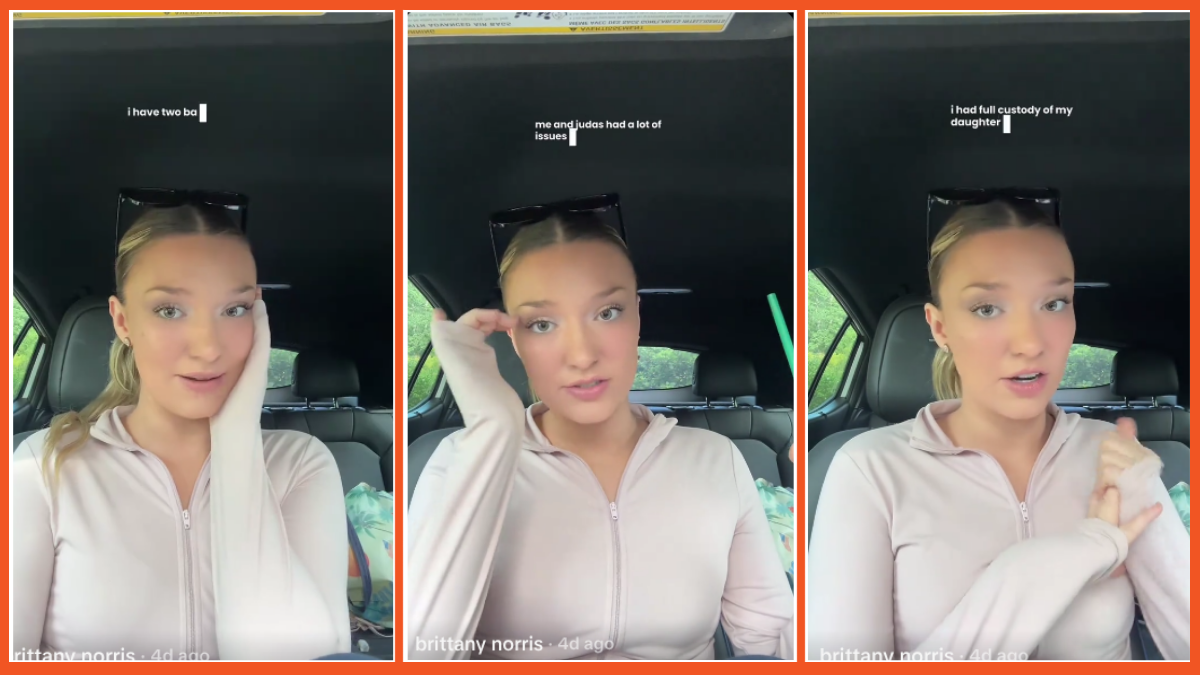

In the age of social media, the line between storytelling and legal liability is getting thinner with every passing day — a reality TikTok creator Brittany Norris says she learned the hard way after her online disclosures sparked a high-stakes defamation lawsuit.
Sharing the messy, intimate details of personal lives has become standard currency for content creators. However, as Norris’ viral saga demonstrates, when personal venting targets an ex-partner, the consequences can quickly shift from online comment sections to a court of law.
The conflict began far from the internet, rooted in the complicated dynamics of a blended family. Norris shared that she navigated co-parenting relationships with two different fathers. While one arrangement remained perfectly amicable and cooperative, the other — involving an ex she pseudonymously dubbed “Judas” — gradually disintegrated into bitter personal and legal animosity.
She now says she regrets her decision
According to Norris, early red flags in her relationship with “Judas” included his aggressive attempts to alienate her other child’s father. When the relationship inevitably ended, the battle lines were drawn entirely around the children. What initially started as an informal, alternating-weekly custody schedule collapsed when her ex allegedly took their shared son out of state and served her with legal papers, simultaneously reclaiming a vehicle she relied on.
Isolated, broke and stranded without a vehicle, Norris’ frustration peaked when she learned through her daughter’s father that the ex’s new wife, and her daughter’s former stepmother, were collaborating behind her back. They allegedly arranged to take her daughter out of school and fly her across state lines for her son’s birthday party without Norris’ consent or an invitation.
Driven by a friend’s advice that “once you take everything from someone, they have nothing left to lose,” Norris took to TikTok to air out her grievances to anyone with an account on the platform.
For many creators, filming a video feels like talking to a friend. But the legal system views broadcast statements through a much harsher lens. Norris was stunned when she received a fast-tracked court summons for defamation. Her baseline defense was simple, instinctive and incredibly common among people who post publicly: “I never thought about being sued for defamation, cause it wasn’t lies.”
Yet truth as a defense requires legal representation, evidence and court appearances — resources Norris sorely lacked at the time. With no money, no car and a court date scheduled for the following Monday, panic set in. The intimidating language of the legal system, which included standard warnings regarding potential jail time for noncompliance, left her terrified.
Unable to physically attend the out-of-state hearing, she was forced to notarize her statements and submit her response entirely by mail.
The lawsuit took an unexpected turn when the presiding judge reviewed the filings. The plaintiff had strategically bundled the defamation claim together with a formal co-parenting and custody plan. Recognizing that these were fundamentally distinct legal matters, the judge dismissed the joint action, noting that they had to be handled as two entirely separate cases.
She doesn’t believe she deserves this
Reflecting on the ordeal in her storytime, Norris admitted, “I was scared. I was stupid. I regret it.” However, she maintained, “I wasn’t the smartest, but do I deserve this? No, I don’t.”
The idea that legal action can now be sought when settling social media disputes has only become more common, and this will certainly not be the final scenario where an online grievance ends up in court.









Published: Sep 4, 2026 11:59 am