


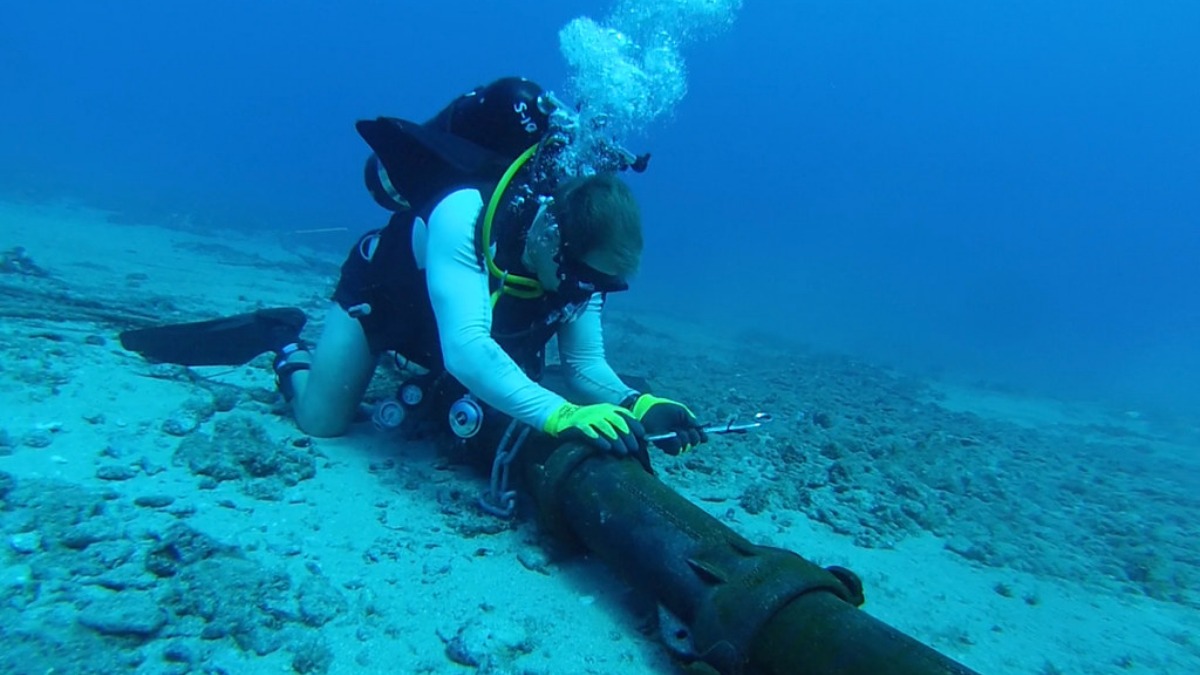

Iran is currently eyeing a major point of economic leverage by targeting the subsea internet cables that run beneath the Strait of Hormuz. Emboldened by its successful blockade, Iran is now looking to expand its defensive strategy by putting pressure on global data transmission.
The plan involves charging the world’s largest tech companies for the use of these cables, which carry essential internet and financial traffic between Europe, Asia, and the Persian Gulf.
State-linked media outlets have issued vague but pointed threats suggesting that traffic could be disrupted if these firms do not comply with Iranian law. This initiative would require major tech giants like Google, Microsoft, Meta, and Amazon to pay licensing fees for cable passage.
Furthermore, the plan mandates that all repair and maintenance rights for these cables be given exclusively to Iranian firms. As reported by CNN, the regime is signaling that it has powerful tools beyond military force as fears of a renewed war continue to grow.
It isn’t just leverage against the war resuming, it is also a warning for the future
It is easy to underestimate the importance of these cables because they remain out of sight. However, according to the Internet Society Foundation, subsea cables are the true workhorses of our digital lives, carrying over 99% of all international internet traffic. These powerful lines stretching across the seafloor are essentially the backbone of the global internet.
When you send an email or hop on a video call, your data is almost certainly traveling across the ocean floor. While the industry is often less public-facing than other tech sectors, these networks are critical to everything from banking systems and military communications to AI cloud infrastructure and streaming services.
The potential for disruption is significant. Several major intercontinental cables pass through the Strait of Hormuz, and while international operators have historically clustered most cables along the Omani side of the waterway to avoid risks, some cables, like Falcon and Gulf Bridge International, run directly through Iranian territorial waters.
Experts warn that any large-scale attack on this infrastructure could trigger a cascading digital catastrophe. Such an event would affect far more than just internet speeds, potentially impacting oil and gas exports, financial trading, and cross-border transactions.
Dina Esfandiary, the Middle East lead at Bloomberg Economics, noted that these threats are part of a broader strategy to ensure the survival of the regime. She stated, “It aims to impose such a hefty cost on the global economy that no one will dare attack Iran again.”
While the regime has not explicitly declared that it will sabotage the cables, the threat remains a core component of its asymmetric warfare technique. The Islamic Revolutionary Guard Corps is already equipped with combat divers, small submarines, and underwater drones, all of which could pose a direct risk to the infrastructure.
Iranian officials have pointed to the 1982 United Nations Convention on the Law of the Sea as a framework for their demands, comparing their situation to the fees generated by the Suez Canal in Egypt. However, legal experts point out that the Suez Canal is an artificial waterway, whereas the Strait of Hormuz is a naturally occurring strait with a different legal standing.
Irini Papanicolopulu, a professor of international law at SOAS University of London, stated, “Of course, for existing cables, Iran has to abide by the contract that had been made when the cable was laid. But for new ones, any state, including Iran, can decide if and under what conditions, cables can be laid in its territorial sea.”
There is still plenty of uncertainty regarding whether this plan will actually materialize. Tech giants are currently barred from making payments to Iran due to strict US sanctions, which may lead many to view these statements as mere posturing rather than serious policy. Then again, considering that Trump wanted to hop onto the Hormuz toll, he might open things up here if he gets a cut too.
Additionally, the impact of damage to these cables could be high for specific regions in the Middle East and Asia. On the other hand, TeleGeography has noted that cables traversing the Strait of Hormuz account for less than 1% of global international bandwidth as of 2025.
Nevertheless, the risk of a disruption remains a reality for the region. If Iran’s proxies decide to employ similar tactics as those seen in the Red Sea, where a vessel struck by Houthi militants dragged an anchor and severed three cables in 2024, the consequences could be severe.







Published: May 18, 2026 08:28 am