


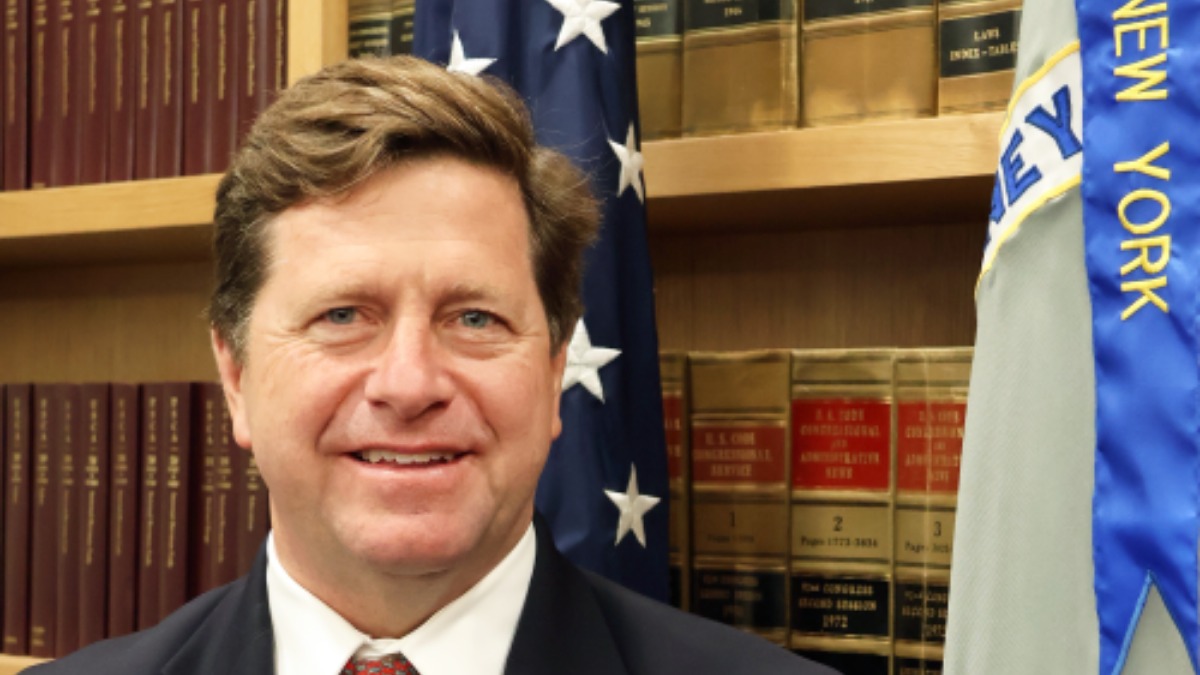

Donald Trump has officially nominated Jay Clayton, the current U.S. attorney for the Southern District of New York and former Securities and Exchange Commission chairman, to serve as the Director of National Intelligence. This follows mounting pushback from lawmakers from both sides of the aisle regarding the previous acting nominee, Bill Pulte.
Trump announced the nomination on Truth Social on Thursday after friction in Washington reached a breaking point as Democrats signaled they would refuse to renew essential foreign intelligence powers unless the president replaced Pulte with a permanent nominee.
The reaction to Clayton’s nomination has been notably positive. Connecticut Rep. Jim Himes, the top Democrat on the House Intelligence Committee, expressed that he has “known and respected” Clayton for decades. Himes suggested that if the president had named Clayton as the nominee last week, “lots of pain might have been avoided.” He further noted, “His intelligence, temperament and deep commitment to public service will make him a terrific DNI.”
Trump has replaced the businessman with a lawyer who has worked terrorism cases
The previous choice of Bill Pulte, who currently heads the Federal Housing Finance Agency, had reportedly sparked widespread bewilderment, as the Director of National Intelligence oversees the coordination of 18 separate intelligence agencies. Per The Hill, Republican senators were concerned about Pulte’s qualifications, noting his lack of national security and intelligence experience. Prior to his nomination, Pulte had never even had security clearance.
During the initial fallout, Senate Majority Leader John Thune, R-S.D., emphasized the need for stability, stating, “We don’t need a weaponized DNI, we need professionals there.” Thune also warned that Pulte would face a “lengthy road” to confirmation if he were ever put forward for a permanent role. Sen. Mark Warner, D-Va., the vice chair of the Senate Intelligence Committee, had opposed Pulte’s interim appointment in a statement.
Warner said, “Americans have already seen Mr. Pulte use the powers of his office at the Federal Housing Finance Agency to pursue the president’s grievances and lend credibility to dubious prosecutions of President Trump’s perceived political opponents.” Warner argued that the move suggested the administration was not seeking an intelligence leader who would “follow the facts or speak truth to power.”
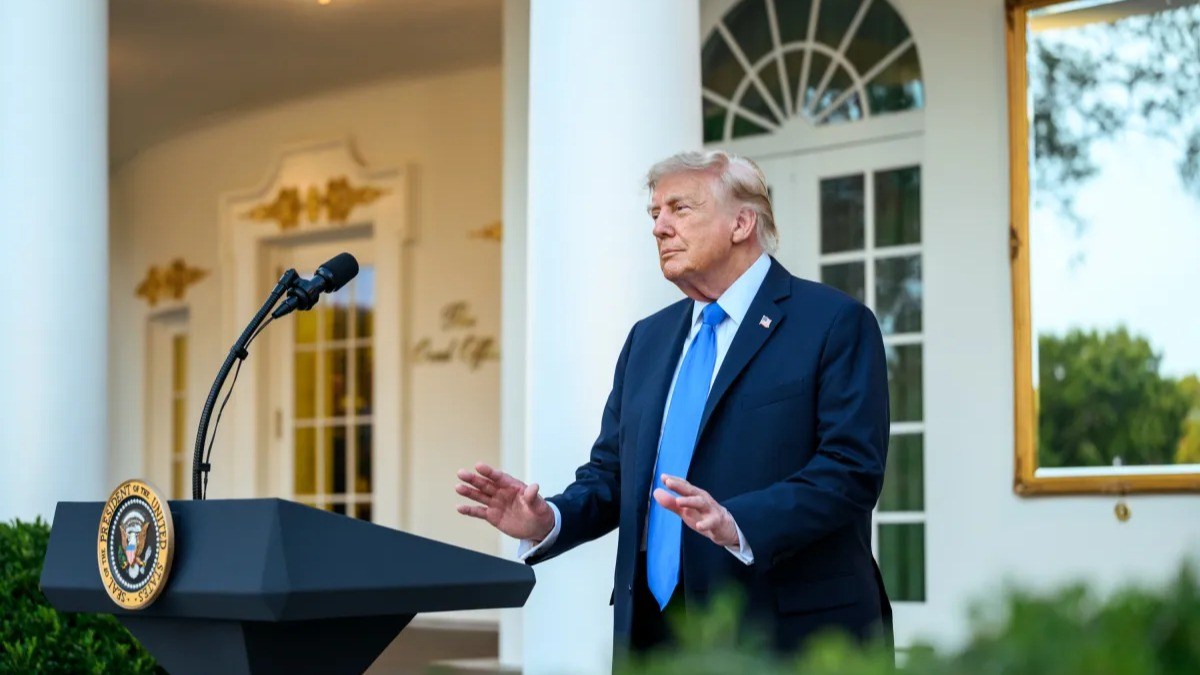
Trump has spoken highly of his new pick. During an appearance in the Oval Office, Trump described Clayton as an “incredible talent,” adding, “Nobody has better credentials.” On Truth Social, the president stated, “Few people anywhere in the Legal Community are respected at the level of Jay,” and encouraged the Senate to confirm him as quickly as possible.
Senate Majority Leader Thune confirmed that the Senate intends to move quickly, noting that they hope to receive the necessary paperwork immediately. When asked about the timeline, Thune said, “I don’t know what realistic is, but we’re gonna probe the limits of it.”
AP News reported that Clayton’s background as the U.S. attorney in Manhattan puts him in charge of one of the most powerful prosecution offices in the country. His portfolio has included everything from terrorism and espionage cases to public corruption and security fraud.
Notably, his office facilitated the release of thousands of court records related to Jeffrey Epstein and Ghislaine Maxwell. Furthermore, he has overseen high-profile national security cases, including the May arrest of Mohammad Baqer Saad Dawood al-Saadi, who was accused of plotting numerous attacks across Europe, Canada, and the United States.
“There are foreign nations and terrorist organizations that see our success as a threat. A threat that they want eliminated,” Clayton stated at a recent briefing, per AP News. “That is a stark truth.” He continued, “And don’t take my word for it. Take their words and their actions. When your enemies tell you something, and when they act, you should know that they mean it.”
The Senate will now prepare for a confirmation hearing. However, the clock is ticking as the Foreign Intelligence Surveillance Act has expired. According to the New York Times, this doesn’t mean surveillance will go completely dark, since there are contingencies.
Democrats have maintained that they won’t support an extension until the president formally withdraws Pulte’s appointment. All while Trump mentioned that he intends to keep Pulte in the role “for a little while” to help downsize the office. Now, the question is whether the Senate can confirm Clayton in time to resolve the broader legislative gridlock.







Published: Jun 15, 2026 05:27 am