


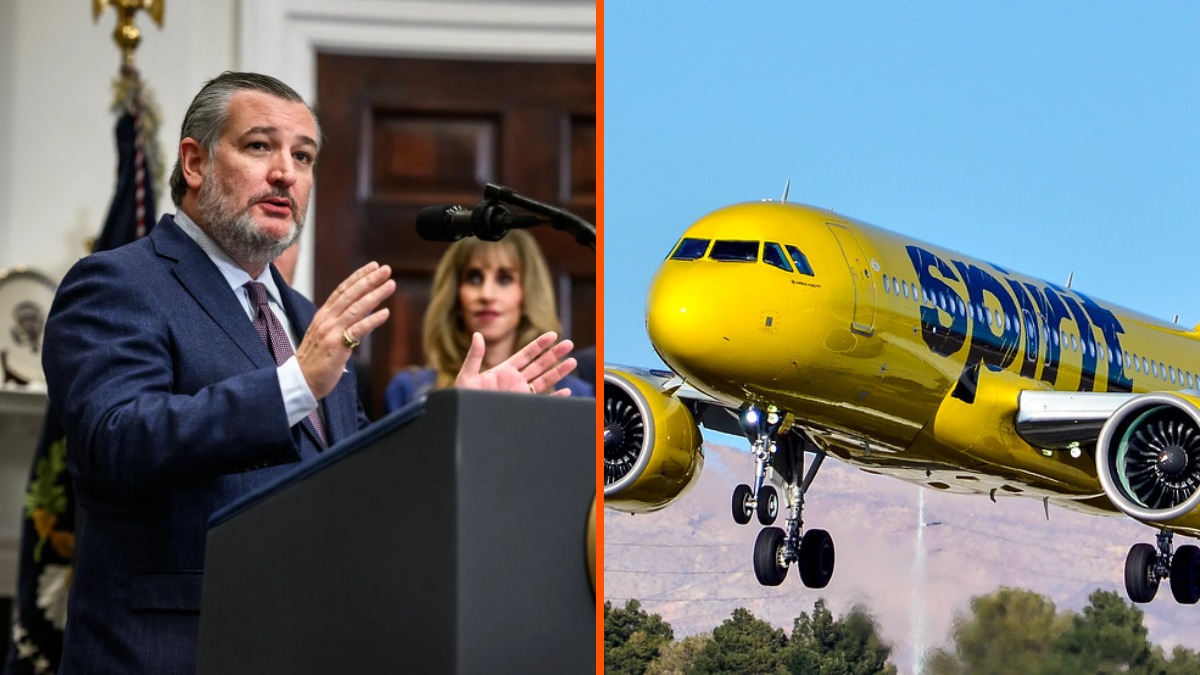

The potential government bailout of Spirit Airlines is sparking significant backlash on Capitol Hill. Multiple high-profile lawmakers are questioning the wisdom of using taxpayer dollars to rescue a carrier that has struggled through two bankruptcies in just two years. Per The Hill, the administration is currently weighing a rescue package of potentially $500 million in financing, which could leave the federal government owning up to 90% of the airline.
Senator Ted Cruz, who serves as the chair of the Senate Commerce, Science, and Transportation Committee, immediately hit out on X: “This is an absolutely TERRIBLE idea.” He drew a direct comparison to the Troubled Asset Relief Program established during the 2008 financial crisis, where the government purchased billions in assets from financial institutions.
While the government eventually recovered a significant portion of those funds, Cruz dismissed such efforts as a “huge mistake” and characterized them as “corporate bailouts.” His frustration, however, doesn’t stop at the financial risks. Cruz argued that the federal government “doesn’t know a damn thing about running a failed budget airline.”
Trump doesn’t have the best track record with any business, either
The urgency for a potential rescue stems from a perfect storm of economic pressures. According to Reuters, the administration is exploring this loan to keep the carrier operational through its bankruptcy process, with the debt potentially transitioning into a long-term loan upon exit.
The crisis is largely tied to a massive spike in jet fuel prices, which have roughly doubled due to the U.S.-Israeli war on Iran and the resulting disruptions to oil flows through the Strait of Hormuz. Spirit had based its turnaround strategy on much lower fuel costs, but the current reality has left the airline in a precarious position.
Even within the administration, there is hesitation. Transportation Secretary Sean Duffy expressed deep reservations about the plan. He noted that the airline has struggled to find a path to profitability despite previous infusions of cash.
“What we don’t want to do is put good money after bad, and there’s been a lot of money thrown at Spirit, and they haven’t found their way into profitability. And so would we just forestall the inevitable and then own that?” Duffy remarked. He added, “We can’t make dumb investments.” When pressed on the logic of the government stepping in where private buyers have not, he asked, “If no one else wants to buy them, why would we buy them?”
President Trump himself has offered mixed signals. During a recent interview on CNBC’s “Squawk Box,” he expressed that he would “love somebody to buy” the airline, noting the importance of the 14,000 jobs at stake. However, he also signaled that government involvement was a possibility, stating, “Maybe the federal government should help that one out. I told my people.”
The skepticism is also shared by other members of Congress. Senator Tom Cotton took to X to express his opposition, “If Spirit’s creditors or other potential investors don’t think they can run it profitably coming out of its second bankruptcy in under two years, I doubt the US Government can either. Not the best use of taxpayer dollars.”
Senator Elizabeth Warren also utilized X to weigh in. “Donald Trump’s war with Iran caused the sky-high fuel prices that finally did Spirit Airlines in. What do the American people get out of this taxpayer bailout? Will the failed airline executives be held accountable?”
The broader industry is watching these developments with interest. Analysts at J.P. Morgan have warned that any government intervention could set a difficult precedent, potentially prompting other carriers like JetBlue or Frontier to seek similar assistance. Furthermore, industry experts suggest that if Spirit were to disappear, it could actually benefit surviving competitors by reducing capacity and allowing them to increase fares in key markets.
With White House press secretary Karoline Leavitt stating that the administration is monitoring the situation but has no official announcements, the future of this low-cost carrier remains a major point of contention in Washington.






Published: Apr 24, 2026 10:33 am