


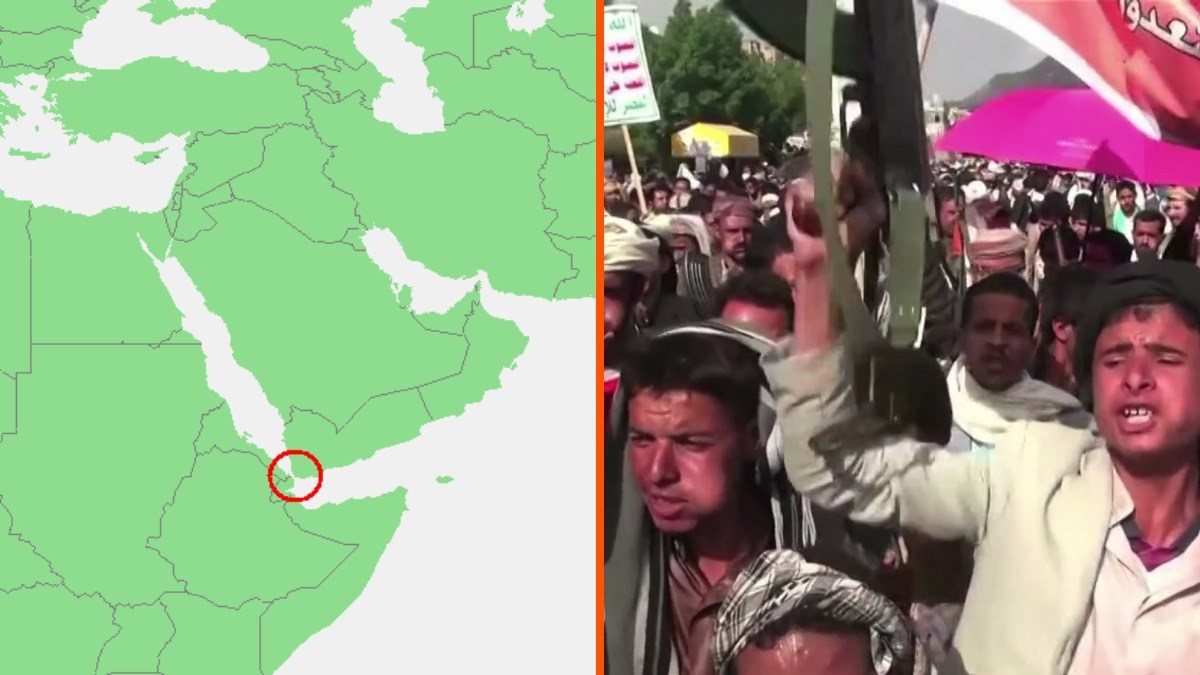

The world was just taken by surprise after Iran-aligned Houthis conducted a lightning offensive, raising new concerns for gas prices. Per Reuters, it is also a major new problem for President Donald Trump as his war with Iran drags into its seventh month. By advancing south along the coast of Yemen, Houthi fighters are now in a strong position to capture the Bab el-Mandeb Strait, which is known as the “Gate of Tears” at the mouth of the Red Sea.
Per the outlet, things escalated quickly when the militants reached the island of Perim on Friday. This island sits right in the middle of the strait between Yemen and Africa. It’s particularly bad news for Saudi Arabia, which has been relying on Red Sea ports to ship much of its oil since the war closed the Strait of Hormuz on the other side of the Arabian Peninsula. Now, the Houthis’ position gives Tehran potential leverage over both of the region’s main oil-shipping corridors.
Desperate pleas for air cover from Yemeni generals started coming mid-morning on Thursday. That is when an advance by the Houthis toward Yemen’s strategic port city of Mocha was in full swing, and backup support from chief ally Saudi Arabia was nowhere in sight. “The Houthis committed everything they had – waves upon waves of fighters … along with their available ballistic missiles and weapons,” a senior Yemeni military source told CNN.
Giving the enemy an advantage
The source told CNN that he contacted the United States Central Command and was assured the US was “watching the situation closely and that Saudi air support was coming.” “But the air support never came,” the source said. “And Mocha has now fallen.”
This rapid advance reportedly amounts to an extraordinary 36 hours in a conflict that had been largely on ice for years. Now, Yemen and the Red Sea can potentially become a true second front in the Iran war. The outlet noted that Iran’s effective control of the Strait of Hormuz, along with its tightening grip on the Bab el-Mandeb Strait, threatens to push oil prices even higher despite the President’s recent promises of $2 a gallon.
Unfortunately, this is happening just weeks before the November midterm elections in the United States. CNN noted that the Bab el-Mandeb Strait is a key chokepoint on the route to the Suez Canal and is less critical to global energy markets than Hormuz. However, it still channels essential goods worldwide, including millions of barrels of oil every day.
“(The Houthis) don’t need to use advanced weapons to close Bab el-Mandeb. They can just use a cannon on a car,” said Amr Al-Bidh. An official of Yemen’s Southern Transitional Council, he told CNN that “It’s a leverage that they have without using advanced weapons. And they will keep it.”
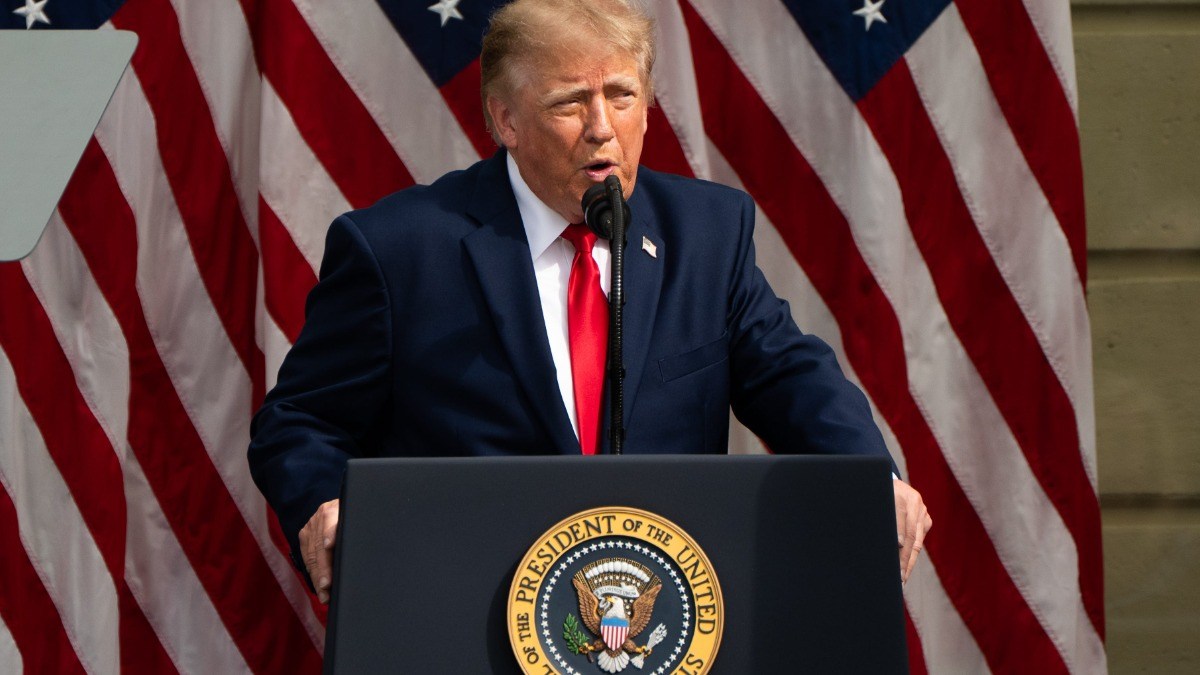
Based on information from a source in the White House, CNN reported that Saudi Crown Prince Mohammed bin Salman spoke with Trump twice on Thursday and urged him to strike the Houthis. Trump, however, declined to intervene.
“The United States is focused on protecting our core national security interests—such as ensuring freedom of navigation in the Red Sea—while empowering our regional partners to take the lead in managing and resolving regional security challenges. We are in continuous dialogue with Saudi Arabia and the Republic of Yemen Government regarding regional stability,” the White House told CNN.
The regional sources who spoke to CNN had nothing good to say about the lack of action from the US and Riyadh. One characterized it by saying, “It’s a Saudi-American f**k up of epic proportions.”
Reuters noted that this development has come at a difficult time for Trump. He is already grappling with record-low approval ratings. As Stephen Wertheim, a senior fellow at Carnegie Endowment for International Peace noted, “Just weeks ago, Trump adopted a strategy of squeezing Iran’s economy while keeping military conflict at levels too low to squeeze the American economy. The Houthis have shattered Trump’s plan.”
Analysts and former officials tell Reuters that Trump now faces a difficult choice. He can devote U.S. forces and scarce air-defense munitions to pushing back the Houthis, or he can leave Saudi Arabia and its allies to confront them alone. Taking on the Houthis would effectively end a deal Trump struck last year in which the U.S. would stop bombing the group in exchange for a halt to strikes on Red Sea shipping.
David Schenker, the Assistant Secretary of State for Near East Affairs during Trump’s first term had a grim analysis. “This was always the worst-case scenario, that the Iranians exert control not only of Strait of Hormuz but Bab el-Mandeb, two of the leading energy choke points in the world. It’s an enormous amount of leverage that [the Iranians] have in hand.”





Published: Sep 13, 2026 11:30 am