



The national debt officially surged past a record $40 trillion on Wednesday. Per AP News, this staggering figure comes just five months after the United States reached the $39 trillion debt level in March. Additionally, the debt had reached $38 trillion only five months before that, in October. This rapid accumulation arrives as the federal government balances heavy defense spending, social programs like Medicare and Social Security, and the rising interest on the deficit itself.
This fiscal situation is unfolding against the backdrop of the U.S. conflict with Iran, which is now nearing its six-month mark. As peace talks have failed, The Hill noted that the government is looking to increase economic pressure on Iran to open up the Strait of Hormuz, which has been closed since March. To that end, President Donald Trump took to Truth Social to announce new economic actions against Iran.
In his post, the President wrote, “No one has given the Islamic Republic of Iran a greater opportunity to make a Deal than me. TRAGICALLY, for them, they have failed to take it. Therefore, today, I am announcing the MOST CRUSHING ECONOMIC OPERATION EVER TAKEN AGAINST ANY COUNTRY! This will be Economic Warfare and Isolation on an unprecedented scale.”
A balancing act
Per The Hill, Trump made it clear that any country providing a lifeline to Iran would face consequences, writing, “Oil smuggling, swap lines, cash transfers, exchange houses, ship registries, front companies — It all needs to stop NOW. You know who you are.” He further declared, “This will be an ECONOMIC D-DAY, and we need all of our Allies to stand with the United States of America to isolate, and defeat, the Iran threat.”
Treasury Secretary Scott Bessent has been echoing these sentiments, reportedly telling Newsmax’s “Rob Schmitt Tonight” that the goal is to “apply maximum pressure to the Iranian regime.” Bessent explained that the strategy is a blend of extreme economic isolation and the ongoing naval blockade in the Strait of Hormuz.
The Hill noted that some traffic has started to trickle back into the waterway, with Kpler reporting 12 and 10 successful crossings on Monday and Tuesday, respectively. However, these numbers remain well below the levels seen before the conflict.
The situation is becoming quite complex on the global stage. The Hill reported that Trump has signaled his intent to declare the Strait of Hormuz a U.S. territory. However, he has not provided specifics on how he plans to manage that alongside the shared jurisdiction held by Oman and Iran. Tensions are clearly running high, as the President recently threatened to “bomb the s— out of them” if Oman interfered with the ongoing talks.
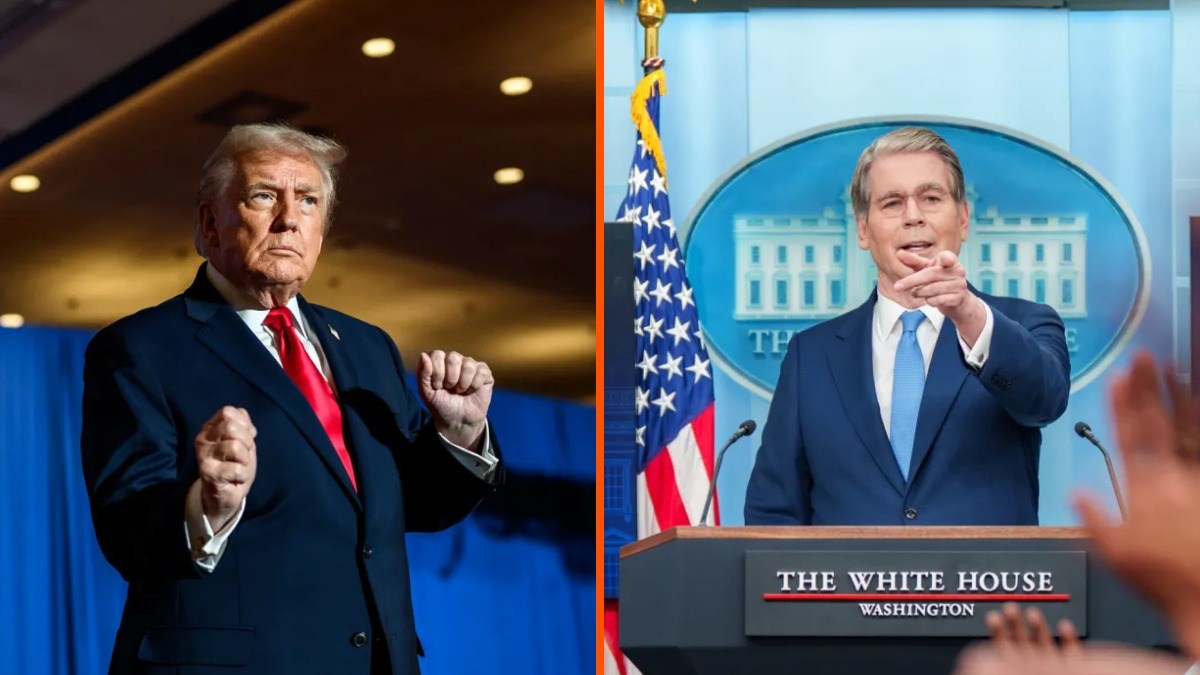
AP News reported that domestically, Kush Desai, a White House spokesman, stated that the Trump administration “has been focused on slashing waste, fraud, and abuse in federal spending while accelerating economic growth to get America’s debt-to-GDP ratio trending in the right direction.” Interestingly, earlier this year, Stephen Miller tried to associate the debt with “people who don’t belong here.”
Despite administration efforts, the debt has increased, and experts have noted that it is having tangible effects on the average person. Per the outlet, escalating costs are pushing up borrowing rates for essential purchases like cars and mortgages, while potentially lowering wages as businesses face tighter capital constraints.
Michael A. Peterson, CEO of the Peter G. Peterson Foundation, emphasized the urgency of the situation, noting. He noted, “If we want to improve our living standards, today and for the next generation, now is the time for lawmakers to put our nation on a more affordable and sustainable path.” Margaret Spellings, president and CEO of the Bipartisan Policy Center, also had a warning.
She reportedly stated, “The federal debt is already raising the cost of living and choking out other spending and investment, threatening our economy and Americans’ long-term prosperity.” She added, “Our current fiscal trajectory is plainly unsustainable, and that’s the best-case scenario. AI disruption, a recession, global war, or any number of other events could quickly push us over the edge from a challenge into a full-blown crisis.”
The debt limit of $41.1 trillion is projected to be hit by late winter or the coming summer of 2027. AP News noted that Congress will need to vote on whether to raise the limit or suspend it. It should be noted that the US’s fiscal position is currently the worst amongst other developed countries.








Published: Aug 20, 2026 11:22 am