


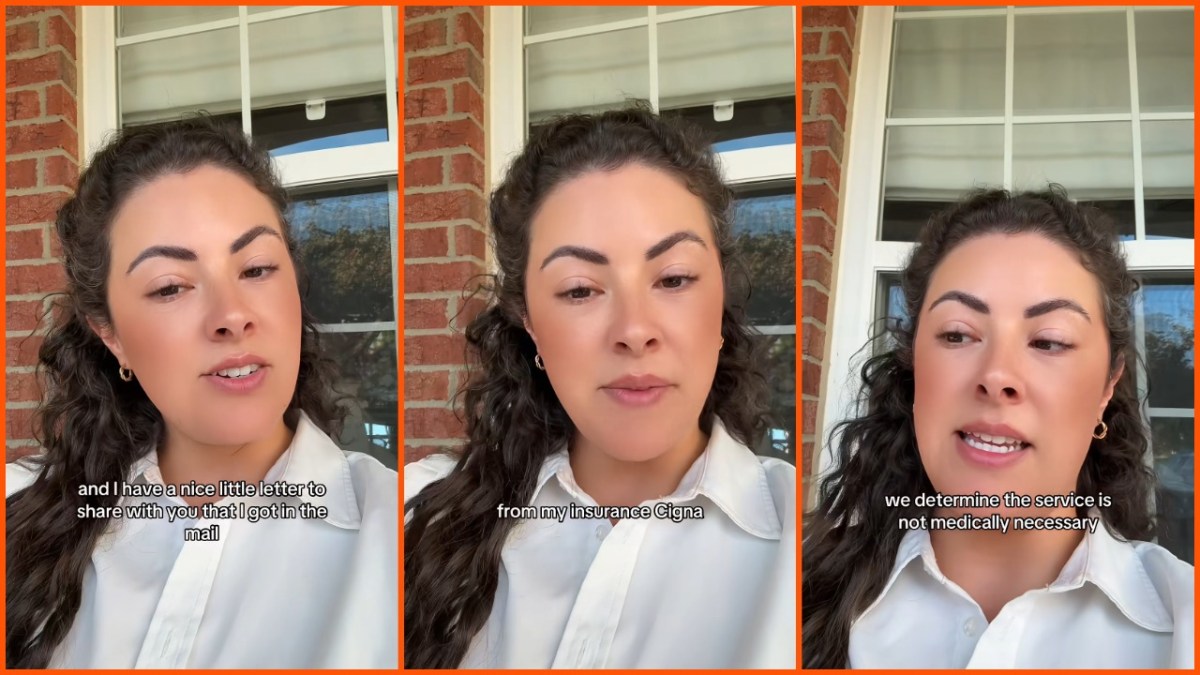

A 37-year-old realtor shared a TikTok video about receiving a letter from her health insurer after a recent heart attack. Maria Simpson, who posts as @maresimpson, said she had the heart attack two weeks earlier and held up an envelope bearing the Cigna logo. The video has gained 875,200 views, 94,100 likes, and 7,180 comments.
Simpson stated in the video that the letter informed her, after carefully reviewing the information, “we determined the service is not medically necessary.” She described the determination as meaning the company did not think saving her life was medically necessary.
She said her total bill so far stood at $110,000 for a two-day hospital stay that included the ER and the cath lab. Simpson added that she expected more bills still to arrive and that Cigna did not think the treatment was medically necessary.
Cigna and HealthCare.gov outline steps members can take to challenge medical necessity denials
According to Cigna’s guidance for many employer-sponsored plans, members generally have 180 calendar days from the date of the initial payment or denial notice to begin an appeal.
The company describes a process in which a member can call customer service at the number on the ID card, explain why the initial decision should be reconsidered, and submit supporting documentation. Reviews are handled by someone not involved in the original decision, and a physician takes part in any review related to medical necessity, according to Cigna’s information.
HealthCare.gov states that people can file an internal appeal if a plan will not pay for services they believe should be covered, including when the requested service or treatment is “not medically necessary.” The site notes that members generally must file the internal appeal within 180 days of receiving the denial notice.
Internal appeals must typically be completed within 30 days for services not yet received or within 60 days for services already received, and the insurer must provide a written decision at the end of the process. If the internal appeal is denied, an independent external review may be available for issues involving medical judgment, per the federal guidance.
In urgent situations, a person can request an external review at the same time as the internal appeal, and a final decision must come as quickly as the medical condition requires and at least within four business days. State law and individual plan terms can differ from the general descriptions, as both Cigna and HealthCare.gov note. Simpson’s situation is not unique, as seen when a woman was denied heart surgery coverage by her insurer.
Viewers reacted to the bill amount and the denial language in a range of ways. One commenter focused on the dollar figure and wrote, “110,000 dollars!!! do they want you to have another heart attack!?!?!?!” Another highlighted the age of the heart attack and stated, “Heart attack at 37?! That’s scary. Agreed though, insurance is a scam.”
A third commenter suggested an alternative approach to such bills: “I usually just take those kinds of bills and file them in the shredder and move on with my life…” Someone who said they had 13 years in billing advised contacting the hospital about coding and wrote, “You need to call the hospital and ask them to code it correctly. They will send it back with a medical necessity diagnosis. 13 years in billing here. Let me know if you need anything else.”
Another commenter argued for broader action and wrote, “Insurance companies need to be sued for the stress and emotional distress they cause.” Insurer decisions on cardiac care have drawn similar anger elsewhere online, including a case where AI denied anesthesia for life-saving heart surgery.









Published: Oct 14, 2026 09:30 am