


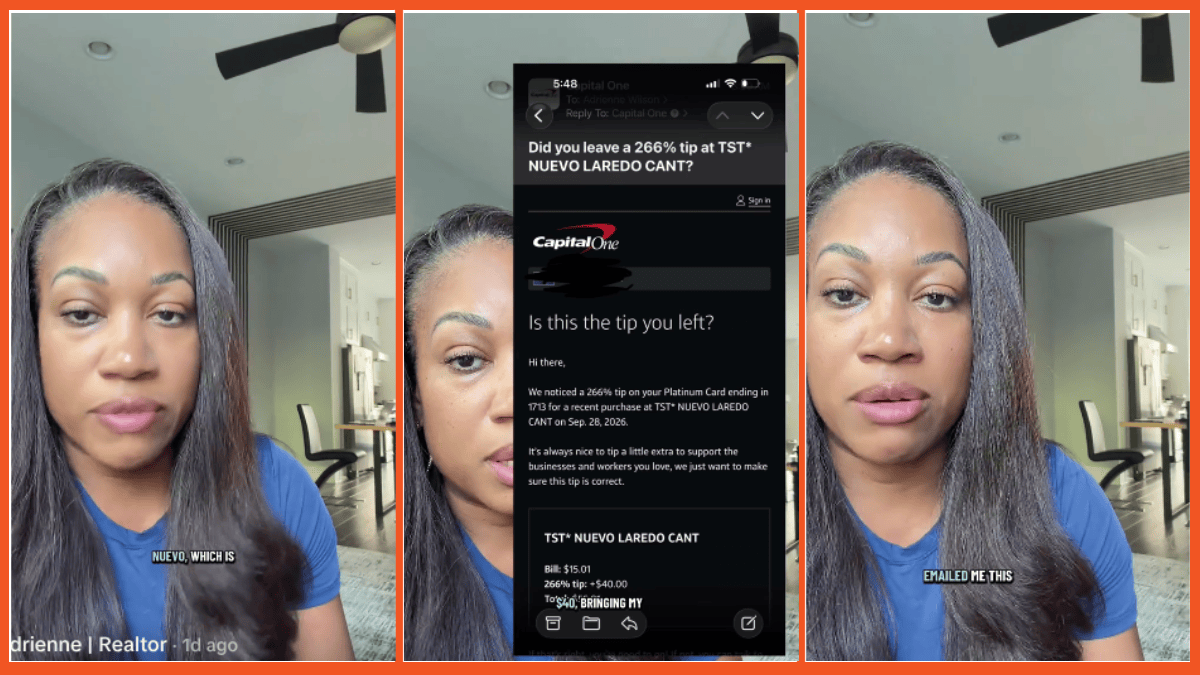

An Atlanta woman’s quick trip to pick up takeout turned into a viral controversy after her bank flagged what appeared to be a 266% tip on a meal she never sat down to eat.
The alleged incident, shared on TikTok by user @yoadriennesellshomes (Adrienne), has attracted more than 133,000 views and sparked a wider debate about tipping, payment processing, and what happens when a customer spots an unexpected charge.
The ordeal began when Adrienne received a transaction alert from Capital One. The bank asked whether she had intentionally authorized a $40 tip on a $15 purchase, bringing the total bill to $55.
She got a full refund
Adrienne says she knew that was not what she had intended. She had ordered soup to go from Nuevo Laredo Cantina, an Atlanta Mexican restaurant that has been operating since 1992. According to her account, she had crossed out the gratuity line with an “X” on her copy of the receipt.
After receiving the alert, Adrienne returned to the restaurant looking for an explanation. She said she showed the transaction information to a female employee and asked to see the restaurant’s copy of the receipt.
According to Adrienne, she then overheard the employee quietly repeating the name “Lindsay,” which she appeared to understand as the name of the person who had handled the transaction.
The situation became more complicated when Adrienne spoke with the restaurant owner by phone. The owner reportedly arranged a full refund for the disputed amount but maintained that the $40 gratuity was the result of a clerical mistake.
He allegedly explained that the server had misread what Adrienne wrote on the physical receipt. Adrienne was not convinced, arguing that the “X” she had written could not reasonably be mistaken for the number 40.
The video quickly drew reactions from viewers, many of whom questioned how the additional tip could have appeared on the final transaction. Some commenters speculated that the restaurant may have been trying to protect the employee involved, while others wondered whether the “Lindsay” mentioned in the video had any connection to the restaurant’s ownership. There is no verified evidence in the video establishing either claim.
Other viewers raised questions about whether changing a customer’s payment amount without authorization could have legal consequences. While the exact legal implications can depend on the circumstances and jurisdiction, an unauthorized alteration of a payment transaction could potentially raise issues beyond an ordinary tipping dispute.
The alleged incident also reignited the familiar debate over tipping culture and the growing number of fees customers encounter when paying for food and services.
Keep an eye on your bank account
While confirming the authenticity of the incident and whether it really happened isn’t possible, many commenters encouraged Adrienne to report the incident she described rather than accepting the refund as the end of the matter. Others focused on preventing similar disputes, suggesting customers clearly mark the tip line with a zero or otherwise make it difficult for the space to be altered after signing.
For Adrienne, the alleged experience appears to have reinforced one simple lesson: keep an eye on your bank account.
Checking transaction alerts immediately and reviewing monthly statements can help customers catch unfamiliar charges before they become harder to dispute.


Published: Oct 2, 2026 06:44 am