


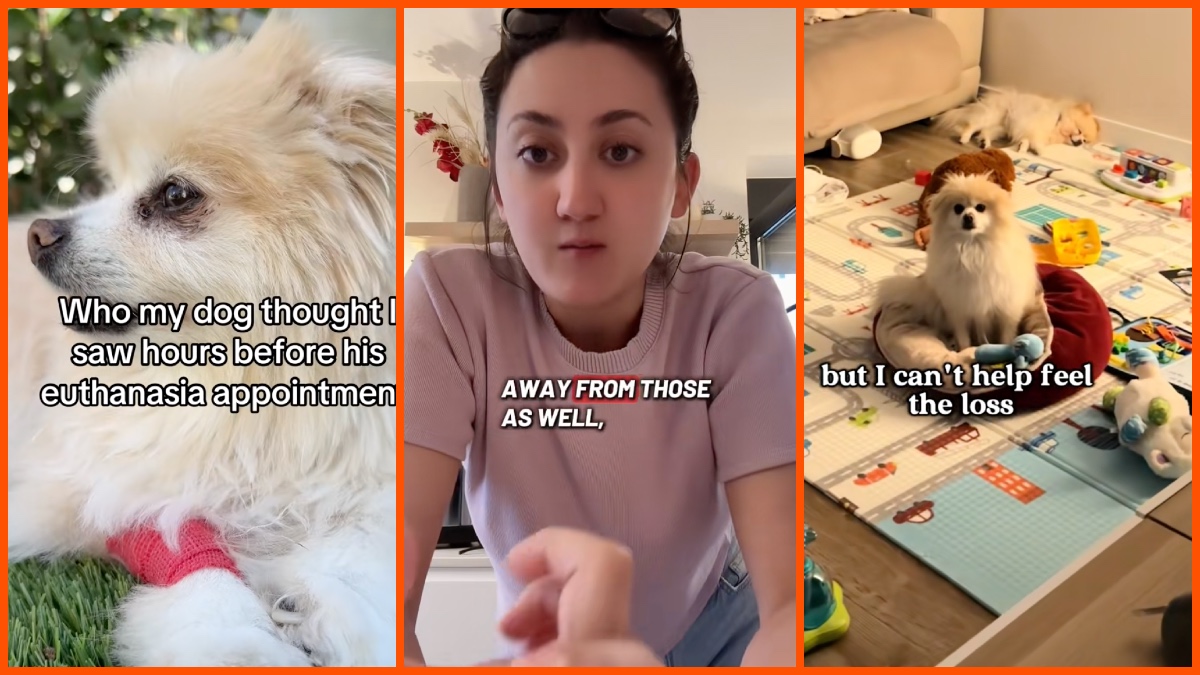

A California woman is warning pet owners about the risks she associates with raw pet food after sharing the emotional story of her dog Natsu on TikTok.
She says the dog battled multiple serious health conditions for years before his death, and it all started when she fed the animal raw pet food, a growing trend promoted by some owners for perceived health benefits but remains controversial among veterinarians and public health officials.
The woman, who posts under KELS|Life on social media, documented Natsu’s medical journey in a series of posts. In one widely shared video, she is seen cutting a braided section of the dog’s fur.
A text overlay on the clip reads, “Getting my dog ready to cross the rainbow bridge thanks to raw dog food,” reflecting her belief that diet may have played a role in his decline, though this has not been medically confirmed in the case.
In written updates, she said Natsu “fought so hard for the last 2.5 years.” She described a long and difficult health battle that included episodes of paralysis lasting several weeks, followed by recovery and relearning how to walk.
Natsu was later diagnosed with immune-mediated hemolytic anemia, often abbreviated as IMHA, a serious autoimmune condition in which the body attacks its own red blood cells.
He also developed kidney disease, which she attributed to complications from medications used to treat his condition.
She wrote that there were many moments when she believed it might be the end for the animal. But she said that Natsu kept fighting for more time with his family until his health ultimately deteriorated beyond recovery.
Risks of raw dog food
In her posts, KELS|Life urged caution about raw feeding practices, saying she was sharing Natsu’s story in hopes it would make others reconsider. She acknowledged that her experience may be debated by other pet owners but emphasized her perspective as someone caring for a dog with complex autoimmune disease. She suggested that bacterial exposure may have been a factor in his illness, noting that Natsu switched to a raw poultry-based diet shortly before his initial paralysis.
Supporting her claims, veterinary and public health authorities caution that while raw pet food diets are popular in some communities, they carry documented risks. According to the U.S. Food and Drug Administration, raw meat products for pets can be contaminated with harmful bacteria such as Salmonella and Listeria, which can affect both animals and humans in the household.
The Centers for Disease Control and Prevention also warns that handling raw pet food can increase the risk of foodborne illness, especially in homes with young children or immunocompromised individuals. The American Veterinary Medical Association similarly advises against feeding raw diets due to contamination risks and lack of consistent nutritional safety standards.
The pros of raw dog food
Supporters of raw pet food diets, however, claim several benefits, including shinier coats, smaller and firmer stools, improved appetite, and higher energy levels. Some also argue that raw meat and bones are more “natural” for dogs and may better reflect their ancestral diet. Others say picky eaters are more likely to eat raw food and that chewing raw bones can support dental health.
Veterinarians caution that many reported improvements are anecdotal and may stem from moving off lower-quality processed diets rather than from raw feeding specifically. They also emphasize that raw pet food diets carry well-documented risks, including bacterial contamination and the potential for serious nutritional imbalances if meals are not carefully formulated.
Veterinarians also note that there is no scientific consensus linking raw diets directly to autoimmune diseases such as IMHA. In many cases, IMHA is considered idiopathic, meaning the exact cause is unknown, though infections, medications, or underlying immune dysfunction may be involved.
The story of Natsu continues to circulate online as part of a broader conversation about pet nutrition and the emotional weight of caring for chronically ill animals. For KELS|Life, the focus remains on remembrance and caution, as she wrote, “I’ll keep sharing your story, Natsu. Thank you for teaching us so many great things.”









Published: Apr 29, 2026 10:57 am