


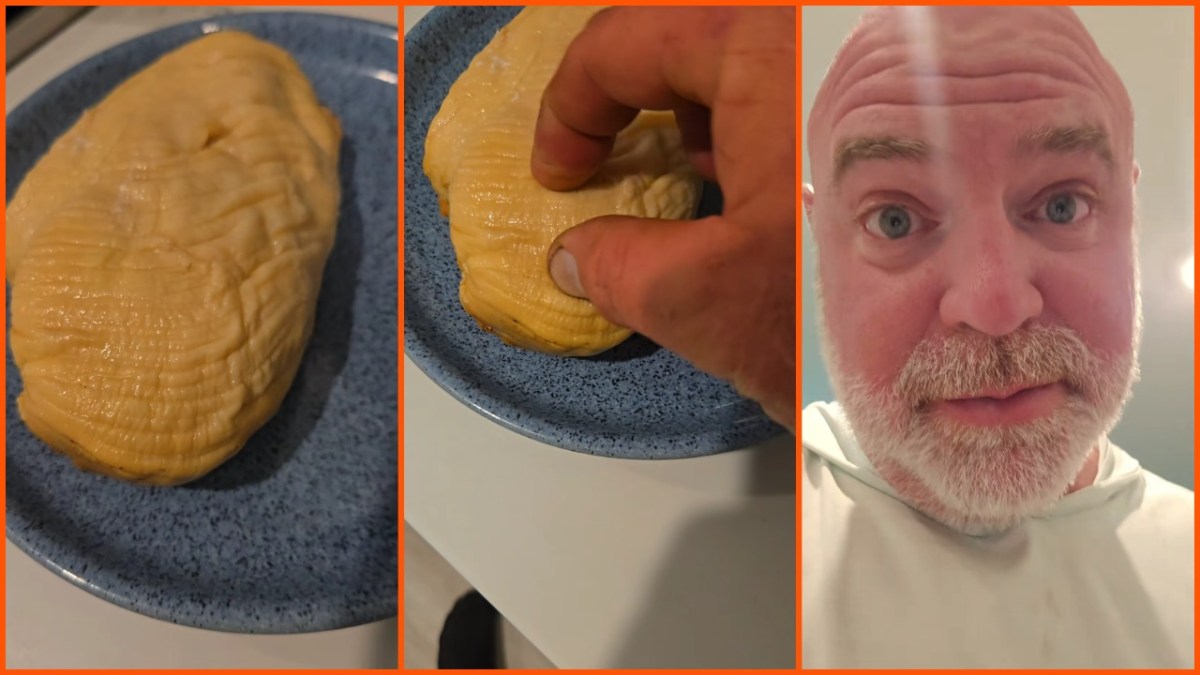

Fraser Morse, who posts on TikTok as @frasermorse, shared a video showing a chicken breast he said came from Aldi. He described taking it out of an air fryer and said it looked undercooked. Morse told viewers that the meat looked gross and claimed it had to be 3D-printed.
In the video, the camera showed a pale, yellowish chicken breast on a blue speckled plate. Morse pointed to horizontal ridges on the surface and said the meat looked layered. He stated that chicken does not cook like that and insisted the ridges matched what happens when something is 3D printed.
Morse then picked up the chicken breast and briefly showed the underside, which appeared more typical of cooked chicken. He placed it back on the plate and focused again on the top surface. The video has gained 88,200 views and more than 900 comments at the time of writing.
Built In details the lab process used to create 3D-printed meat
According to Built In, 3D-printed meat is lab-grown from animal stem cells or plant proteins. The article described it as an edible product built layer by layer through an additive manufacturing process. It said scientists use a bio-ink extruded from a 3D printer nozzle to scaffold the meat. For Aldi, the complaints don’t stop at what’s inside the food, as one woman found something moving in a jar of chili powder she had bought.
The article stated that the process begins with a biopsy of animal stem cells, which multiply in a nutrient-dense serum inside a bioreactor. After several weeks, the cells form fat and muscle tissue used as bio-ink. A robotic arm then dispenses the material in fine layers following a digital file to shape the cut.
Built In noted that the printed product goes through another incubation phase so the cells can mature and form muscle fibers. The article said some printers use lasers to cook the food during printing. It added that 3D-printed meat can be considered genuine meat by the Good Food Institute because it aims to match conventional meat at the cellular level.
The piece explained that availability remains limited. It said Singapore became the first country to approve the sale of cultivated meat in 2020 and remains the only place where it can be purchased in a grocery store. The article stated that products are otherwise mostly restricted to select restaurants or stores in the United States, Europe, and Israel.
Built In reported that producing cultured meat has been estimated at about $700 per kilogram by a lab at Konkuk University. The article said a 3D-printed steak can cost £20 to £30 at places like London’s Mr. White’s restaurant, or far more for Wagyu versions.
The outlet also noted that industrial printers and tissue engineering steps make the process more difficult than printing other foods. Shoppers can grow wary of odd-looking meat, as when a man buying a 26-pack of ribeyes at Price Chopper noticed something strange.
It wrote that plant-based versions also exist, including Revo Foods’ vegan salmon filet made from fungal protein and plant oils. The piece said regulatory frameworks in the United States are still developing, though UPSIDE Foods and GOOD Meat have received FDA and USDA approvals for cultivated chicken.
Viewers responded to Morse’s video with mixed reactions. One commenter wrote, “It absolutely looks 3D printed.” Another stated, “Chicken isn’t yellow.” A different viewer claimed, “It’s not cost effective to 3D print chicken so I’m willing to bet my paycheck that it’s not.” One person added, “No 3d printing of meat on the market. It’s been frozen and thawed too many times before you got it.” Another wrote, “Im going plant based diet or ill just fast.”









Published: Oct 11, 2026 08:00 am