


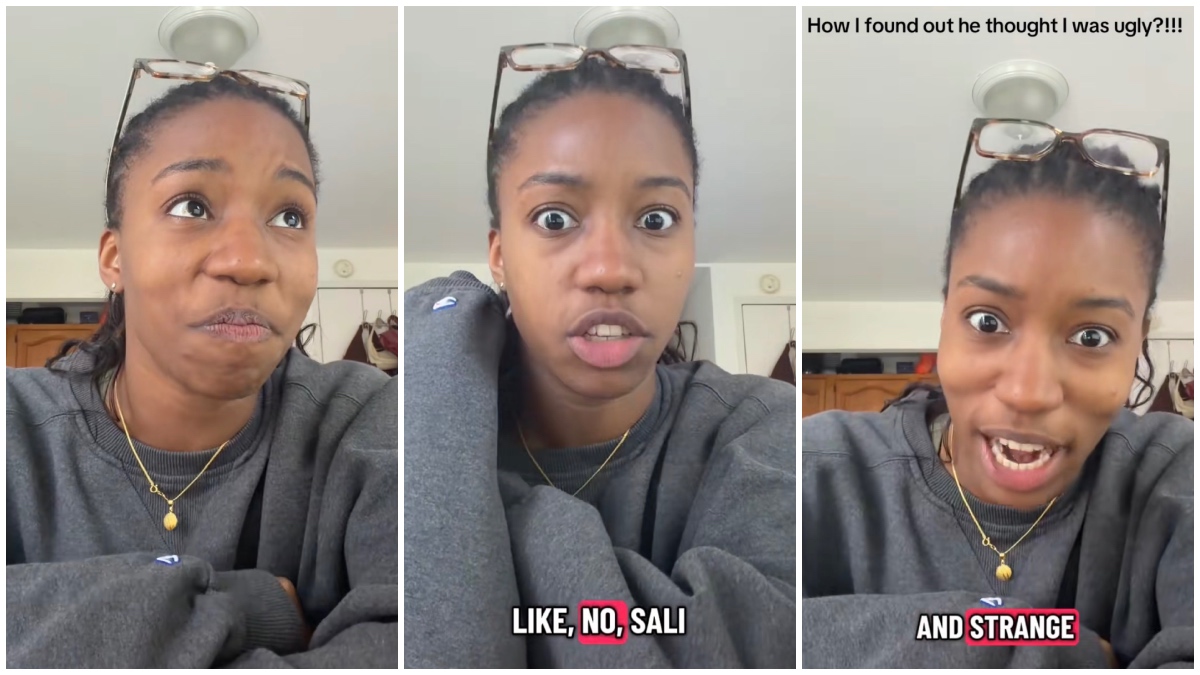

Receiving validation from a partner is a baseline expectation in most relationships. But New York City creator Sali’s (TikTok/@always.sali) casual conversation about her partner’s type shattered her self-perception of being conventionally attractive.
Sali’s recent internal reality check went far beyond typical relationship bickering. In a video that has quickly reached over 10,000 views, the NYC creator detailed an unbelievably awkward conversation. And it was with her partner about her own physical appearance.
The existential account highlights the unintended consequences of over-explaining your dating preferences. Because her partner’s unfiltered honesty proved that sometimes reassurance can feel like a direct insult.
Sali’s partner said his ‘type’ is someone not conventionally attractive and strange
The interaction began innocently enough when Sali casually mentioned to her partner that she didn’t believe she fit his usual physical type. Eager to reassure her, he immediately countered her insecurity. “No, Sali, you are my type,” he insisted. This prompted her to ask for a clearer definition of what that specific type looked like.
Awkwardly enough, his explanation bypassed traditional romantic flattery entirely. “You know, I don’t really like conventionally attractive girls,” he bluntly explained. Instead, he revealed that he is exclusively drawn to women who look “unique” or “a little strange, if you will.”
Sali was left to perform some painful mental math. Since her partner had firmly established that she was his type, his definition automatically categorized her as part of the “unique and strange” demographic.
The realization struck a nerve, as Sali had spent her entire life operating under a completely different assumption about her face. “In my mind, I’ve always been, like, you know, somewhat of a conventionally attractive person,” she explained. She just stared at the camera in a state of mild existential shock.
Well, that’s now at the top of her therapy list
The breakdown of the compliment turned a moment of reassurance into a sudden crisis of confidence. Sali joked that discovering your partner tracks your appearance under the “strange” sub-category is a heavy burden to process during a casual afternoon.
She concluded her viral video with a satirical note on mental health prioritization. She captioned the clip by admitting she has a lot to work through, but this specific conversation is sitting right at the peak of the queue. “We’re gonna have to work through that one eventually when I get a therapist,” she laughed.
In romantic dynamics, language processing can completely alter the intent of a statement. Sali’s partner was probably using “strange” and “unique” as synonyms for captivating or distinct. But the departure from standard affirmative language like “beautiful” or “pretty” created an immediate emotional disconnect.
Men often try to compliment women by telling them they aren’t like “other girls.” But this can accidentally insult the woman’s baseline desire to feel classic validation.
In a culture saturated with rigid beauty standards, being told your look is “strange” is easily interpreted as being called unattractive. And that is regardless of how much the partner emphasizes that they like it.
Sali’s conversation is a textbook example of a partner prioritizing their own niche aesthetic definitions over the actual emotional impact the words have on the person listening to them. So, be mindful.
Sali’s accidental reality check serves as a relatable warning about asking questions you might not actually want the full, unfiltered answers to. While her partner is likely completely oblivious to the existential spiral he initiated, she successfully reminded her audience that modern romance will always find a way to humble you.
We’re crossing our fingers that Sali finds a great specialist to unpack the “strange” designation very soon. Until then, keep your aesthetic definitions simple, your standards high, and your partners completely away from the word “unique.”








Published: May 26, 2026 05:37 am