


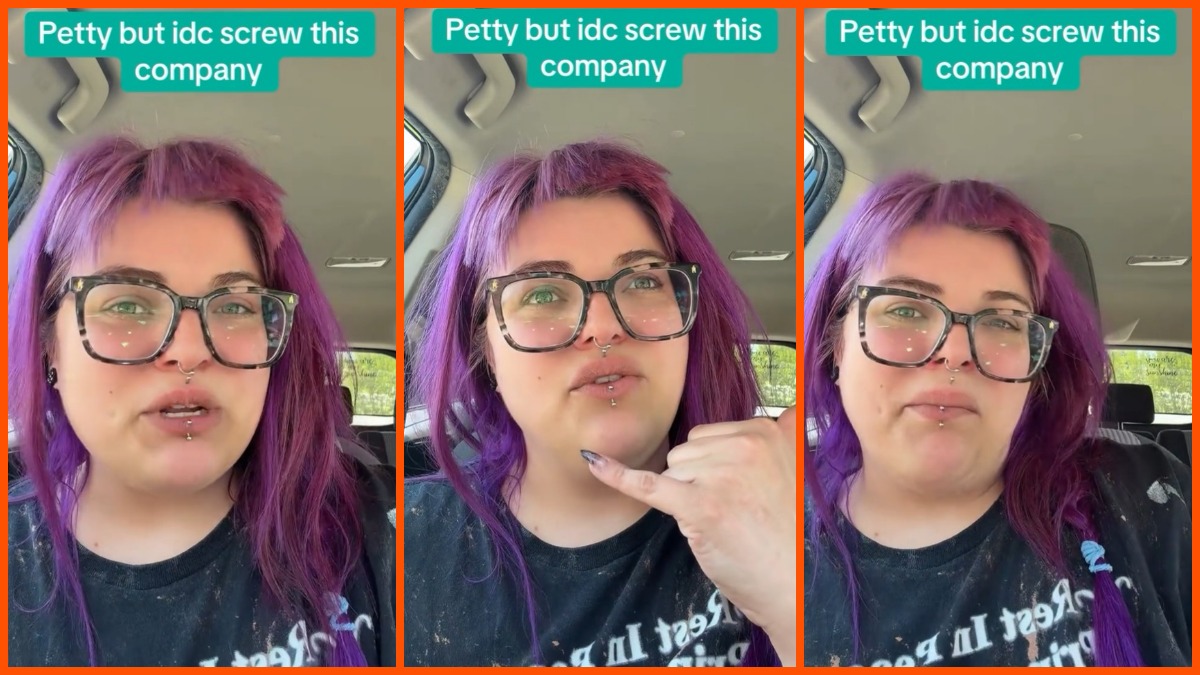

When struggling through the death of her pet, a Virginia-based TikToker just discovered that some pet companies handle customer care in hurtful ways. MuryClur, who posts under the handle lacroix_goth, took to TikTok to share her version of a horrible experience with her pet insurance provider, and the video has already amassed nearly 2 million views.
In her video, MuryClur detailed two very different phone calls she made shortly after her cat died. She first contacted Chewy to cancel her auto-renewing prescriptions. “Not only did they apologize, they refunded the recent prescriptions, canceled the new refills that were coming up, and offer to completely deactivate our account for us, so that way we don’t have to go and do that for our cat,” she explained. She noted that the company has always been kind and caring.
The experience with Banfield Pet Hospital, however, was a stark contrast. MuryClur alleged that after six years of being a loyal customer, she was met with a demand for payment. “They said, oh, you can’t just cancel. You gotta buy your way out of the plan. You owe us $100 for the next three months of care that you’re not gonna receive because your animal died. But f— you, we want our money,” she claimed in the video.
Allegedly, they refused to help with any of the account management steps
MuryClur further alleged that when she requested they delete her account to stop receiving automated emails about upcoming appointments, the company refused. “They said, no, double f— you, You have to delete the account so that way you don’t get emails about bringing your pet in for a visit,” she said angrily, her voice shaking. Now, it must be noted that we only have her perspective. We don’t have the company’s statement to hear their side.
Per the comments on TikTok, quite a few people had their share of troubles with Banfield. One user commented, “As a former employee with Banfield, I can attest to how money hungry this company is. We use to get bonuses based on how many plans we could get pets enrolled in. And were absolutely forced to push the plan options allllllll the time.” Another shared a similar experience regarding the contract, stating, “Yea I knew it was Banfield. it’s in their contract I remember seeing it. My dog passed in February, we had to pay until the end of April.”
Social media is filled with stories of people struggling with health insurance. For instance, recently, United Healthcare recommended a different treatment plan than every other doctor. If that wasn’t strange enough, a New York dad recently shared that United sent his newborn a letter to deny her NICU care. So, it shouldn’t be strange that pet parents struggle with this too.
The concerns about Banfield align with observations made by the Nebula Foundation. In their article, they collated customer feedback from across the internet to summarize the customer experience with Banfield. The foundation claimed that Banfield’s wellness programs are often perceived as a “financial trap.”
They note that unlike traditional pet insurance, these wellness plans are essentially prepaid service packages with strict contracts that mandate payments for the remainder of the term, regardless of the pet’s status. They advised that pet owners proceed with extreme caution and highlighted numerous reports of difficulties in canceling plans, even in the event of a pet’s death.
It should also be noted that Pet care is getting more expensive. Per CNBC, the average pet household now spends $1,700 on their animals, an increase of about $200 from previous years. While pet insurance can help with unexpected injuries or chronic diseases, the report notes that only 4% of pets are currently covered. They reported that premiums for accident-and-illness policies for dogs had reached $62 per month in 2024.
The community discussion on TikTok suggests a strong preference for companies that prioritize empathy. Chewy even weighed in on MuryClur’s video, writing, “Losing a pet, a member of the family, is always a heavy ordeal. We’re pet parents ourselves. We’re always here if you need us, even just to talk.”
One user offered practical advice for those dealing with similar situations. They wrote, “Y’all, I work at a bank: if they refuse to cancel and are going to charge you regardless of your pet dying, dispute it with your bank. it’s okay if you paid them before, say to your bank that you’re no longer using their services and attempts to cancel with them have not been productive.”




Published: Jul 21, 2026 11:11 am