



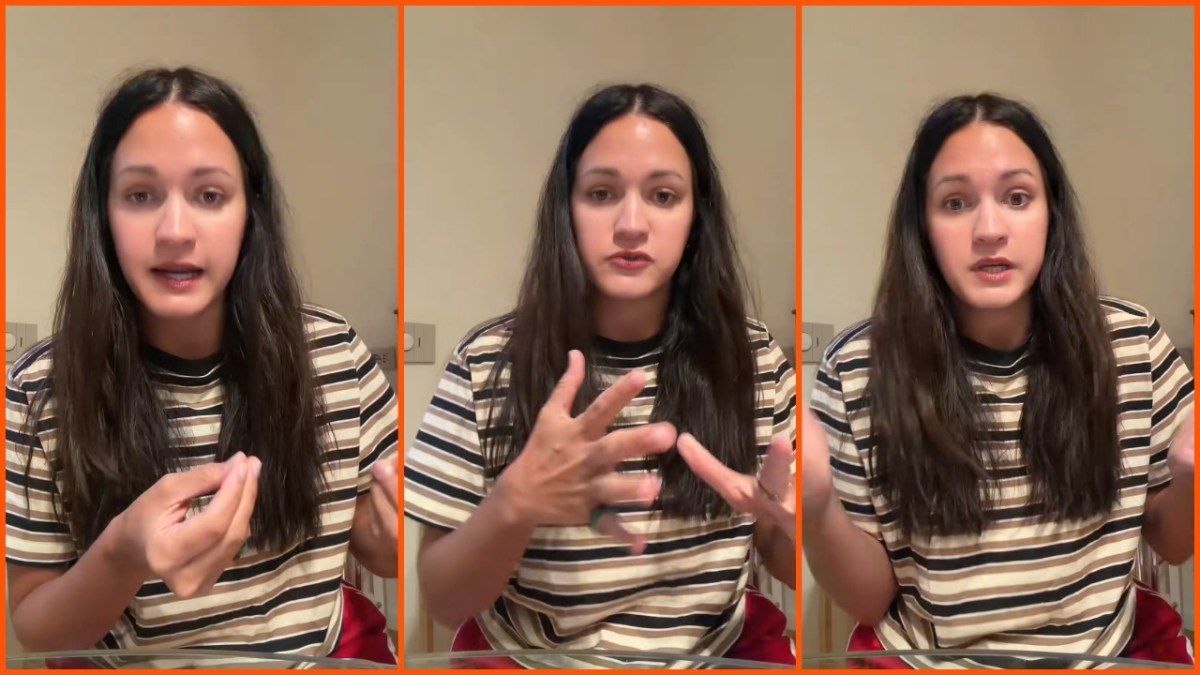
Lauren Spiezia is speaking out about a frustrating aspect of the American healthcare system. The New York resident recently took to Instagram to share that after being allegedly dismissed by a doctor, she pushed for answers and discovered she had stage 2 breast cancer. Now that she is in recovery, she is attempting to hold that initial physician accountable for his negligence, only to find that the legal system protects providers who dismiss patients.
In her video, Spiezia angrily summarized how her diagnosis process unfolded. It began when she felt a lump in her breast and sought advice from her OBGYN. She claimed, “He told me I could sleep fine that night. It was stage 2 breast cancer. Because I advocated for myself fast enough, the law says he did nothing wrong.” The doctor allegedly insisted that the lump did not present like a tumor, but Spiezia still felt uneasy.
She told her audience that she pushed for an ultrasound. She was told it was likely inflammation, which she associated with breastfeeding. Spiezia continued to dig deeper and eventually saw a breast surgeon who sent her for a mammogram, despite her young age. When the biopsy came back, it confirmed she had triple negative breast cancer that had already spread to a lymph node.
She found her cancer too fast
Spiezia’s legal hurdles stem from how medical malpractice laws are structured. Per The Moore Law firm, a medical malpractice lawsuit is a civil action filed by an injured patient against a healthcare provider whose substandard care caused harm. To win such a case, a plaintiff must prove four elements: duty, breach, causation, and damages. The problem for Spiezia is the requirement for “damages.”
Since she fought so hard to get her diagnosis quickly, the cancer did not have the time to progress to a point that the law recognizes as sufficient “harm.” As a result, the doctor’s insurance company allegedly stonewalled her claim. As she noted in her video, “The doctor who dismissed women are protected by a system that only counts harm after it’s too late. The women who fight back and save their own lives lose the right to hold anyone accountable.”
The reaction to her post has been intense. One user commented in shock, “In order for the doctor to be held accountable for negligence you’d have to basically… not be here anymore?? Absolutely backwards and infuriating! Thank you for sharing this.” Recently, an Oregon family filed for malpractice when a teen died from sepsis after treatment.
Another user shared a similar experience, stating, “Was also told I was too young for a mammogram. As a healthcare provider, I do my due diligence and take care of my patients. I trusted the same care would be extended to me. I was wrong. I truly believe if I had a mammogram, I wouldn’t have been diagnosed with stage 3, but maybe stage 2 or 1.” In another instance, a man died in the ICU when the only doctor on duty called in,
Spiezia noted that she is not letting the legal roadblock stop her from taking action. She told her viewers that she would be moving forward with a complaint to the state board of medical examiners, hoping to prevent other women from being treated the same way. In her caption, she wrote, “The law protects doctors who dismiss women. I’m filing my complaint anyway. It’s called medical gaslighting.”
She also emphasized the importance of self-advocacy, urging others not to take a doctor’s first word as the final authority. “To the doctors who took me seriously, who listened, who caught what others missed: thank you. You’re the reason I’m here. This isn’t about you. It’s about the ones who hide behind a system that lets them,” she added. It should, of course, be noted that this is just Spieza’s version of events and should be treated as verified fact.
The situation is a stark reminder of the challenges patients face when they suspect they have been misdiagnosed. The Moore Law firm notes that failure to diagnose or misdiagnosis is one of the most frequent bases for medical malpractice cases. However, as Spiezia’s experience demonstrates, the legal system often fails to account for the emotional and physical toll when a professional fails to do their job correctly.
Spiezia’s message to her followers is empowering. She wants everyone to know that if they feel something is wrong with their body, they should “Just investigate, ask questions, and don’t be afraid to challenge authority. You know your body best. Advocate for yourself. They’re counting on us to stay quiet, so don’t,” she said.







Published: Aug 9, 2026 09:10 am