


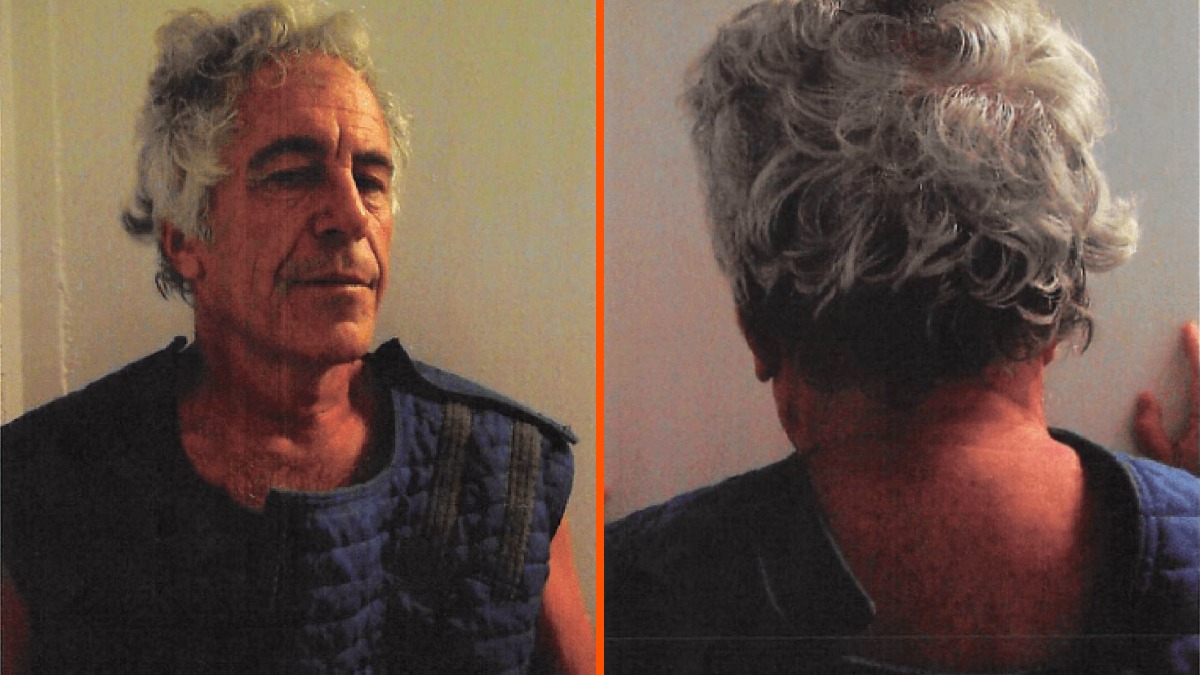

Jeffrey Epstein’s alleged suicide note has spent nearly seven years locked inside a New York courthouse, hidden from public view. The New York Times revealed that the note, reportedly found by Epstein’s cellmate Nicholas Tartaglione in July 2019, was sealed by a federal judge as part of Tartaglione’s own criminal case.
The suicide note’s existence only surfaced publicly last year when Tartaglione mentioned it on a podcast. According to him, the message read, in part, “What do you want me to do, bust out crying? Time to say goodbye.” If authentic, the note could reshape the murky narrative around Epstein’s death, which was officially ruled a suicide.
Now, the New York Times has formally petitioned the court to unseal it, arguing that the message could offer critical insight into Epstein’s mindset before his death. For years, the document has been buried under legal red tape, untouched even as the Justice Department released millions of pages of Epstein-related files. A Justice Department spokeswoman confirmed that the agency had never seen the note, despite an exhaustive search of its records.
The question is, why has it not been seen by anyone else
Tartaglione, a former police officer convicted in 2023 of a quadruple homicide, has long maintained that he didn’t write the note or have any involvement in Epstein’s death. His account of finding the message is straightforward: after Epstein was moved to a different part of the jail following a July 2019 incident where he was discovered with red marks on his neck, Tartaglione said he stumbled upon the note tucked inside a graphic novel.
“I opened the book to read and there it was,” he told the Times. At the time, Epstein had told jail officials that Tartaglione attacked him, a claim he later recanted, saying he felt safe with his cellmate.
The note’s journey through the legal system is extremely convoluted. According to a chronology buried in the Epstein files, Tartaglione handed the note to his lawyers shortly after finding it, just in case Epstein continued to accuse him of wrongdoing.
The lawyers attempted to authenticate the note twice in the days that followed. Tartaglione later told podcast host Jessica Reed Kraus that handwriting experts were brought in to confirm its origin. “My lawyers at the time wanted to make sure, you know, I didn’t write it,” he said.
The note then landed in the hands of Judge Kenneth M. Karas, who oversees Tartaglione’s case. However, when it got swept up in a bitter dispute among Tartaglione’s lawyers, it was sealed, along with all documents related to the dispute, to protect attorney-client privilege.
A court spokesman declined to confirm whether the note still exists, only noting that sealed records are stored in courthouse vaults. Interestingly, the Justice Department’s Office of the Inspector General never mentioned the note. They had conducted a 2023 review of Epstein’s death.
Epstein’s death in 2019 sent shockwaves through the legal system and the public. Newsweek reported at the time that he was found unresponsive in his cell at the Metropolitan Correctional Center in Manhattan, with signs of an apparent suicide attempt. Emergency responders rushed him to a nearby hospital, where he was pronounced dead.
The circumstances were immediately suspicious. Just weeks earlier, on July 24, Epstein had been discovered with red marks on his neck, curled in a fetal position. Jail officials initially believed it was a failed suicide attempt, which is when Epstein had claimed Tartaglione had attacked him.
The timing couldn’t have been more consequential. His trial would have been the first time the full scope of his alleged sex-trafficking operation was aired in federal court. The case had already exposed a web of powerful enablers, including a controversial 2008 plea deal that allowed Epstein to avoid federal charges. It was a deal negotiated by then-U.S. Attorney Alexander Acosta, who later became labor secretary.
Theories about Epstein’s death have swirled for years, fueled by revelations of gross negligence at the jail. Surveillance footage from the night of his death was either missing or unusable. Additionally, guards falsified logs to cover up their failure to check on him.
Tartaglione’s note could potentially put some of those theories to rest. The message he described is almost dismissive: “Investigators have looked into me for many months and found nothing.” That tone doesn’t scream despair, but it’s impossible to know what Epstein meant without seeing the full context.
The Times’ petition to unseal the note is the first real push to bring it into the public eye. However, the chances of success depend on whether the judge believes the note’s potential value to the public outweighs the reasons it was sealed in the first place.








Published: May 3, 2026 02:16 pm