


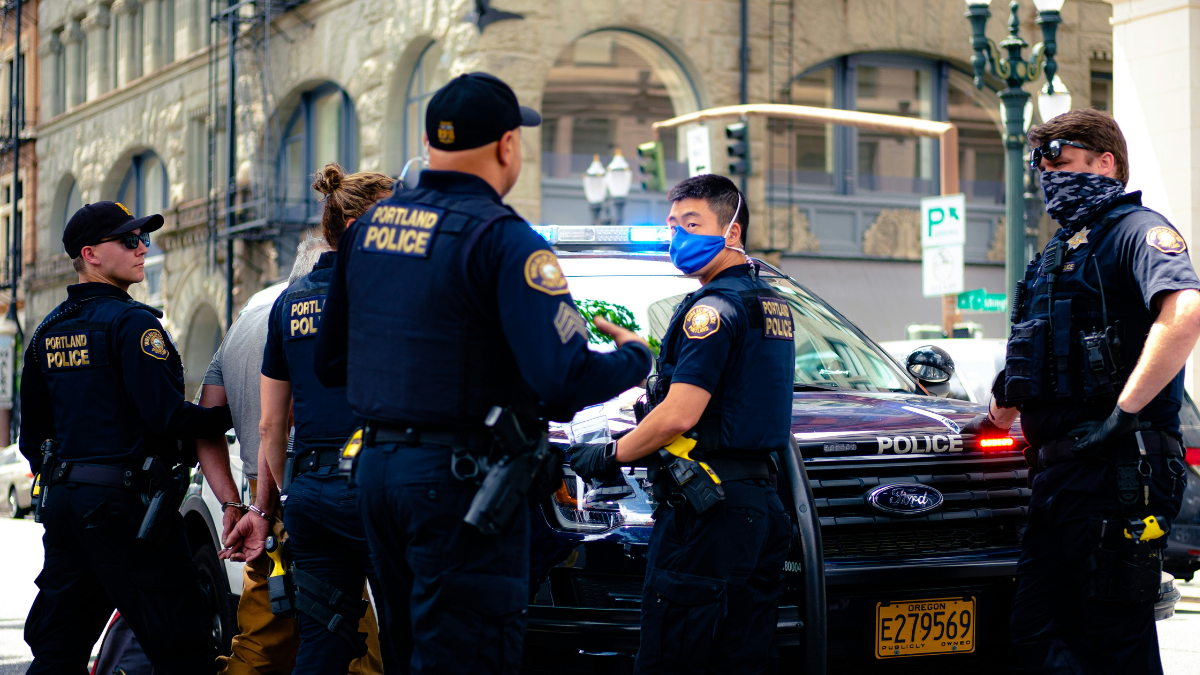

A Tennessee man who was subjected to a pre-dawn police raid by 8 officers after filming and criticizing a speeding law enforcement officer has made his civil rights lawsuit public after securing a major legal victory.
The plaintiff, Joshua Gibbons, successfully had his criminal conviction overturned and all remaining charges dismissed by the Tennessee Court of Criminal Appeals, clearing the way for his ongoing First Amendment lawsuit against the Kingsport Police Department.
According to Fox News, the lengthy legal battle began in October 2022 when Gibbons, who frequently documents on-duty police activity to promote law enforcement accountability, spotted a Kingsport Police Department SUV traveling at a high rate of speed without its headlights or sirens activated.
Trouble started when he posted the footage online
Believing the driver’s actions violated both state law and internal department regulations, Gibbons followed the vehicle to a fast-food drive-thru. He filmed himself briefly criticizing the officer for reckless driving. The officer initially ignored him and picked up his food without incident, but things changed after Gibbons posted more footage online, including a clip showing an officer giving him the middle finger.
According to a civil complaint filed by the Foundation for Individual Rights and Expression (FIRE), the department responded by investigating Gibbons’ social media activity, eventually leading to warrants for his arrest on traffic and disorderly conduct charges.
Detectives went through Gibbons’ social media accounts before securing warrants over minor traffic allegations and a disorderly conduct charge. Instead of issuing a standard citation or summons, authorities sent a heavily armed tactical team to his home just before dawn. The raid terrified Gibbons’ family and ended with him being taken into custody.
Gibbons then spent years fighting the case through the local court system. During his initial trial, a judge acquitted him of the alleged traffic violations but convicted him of disorderly conduct. Determined to challenge what he viewed as an unconstitutional ruling, Gibbons appealed to the county court, but the conviction was upheld. He then took the case all the way to the state level.
In a unanimous decision, the Tennessee Court of Criminal Appeals overturned the conviction. The appellate judges found that there was no evidence Gibbons’ speech had disrupted any lawful police activity.
The court also emphasized an important First Amendment principle: citizens have a right to criticize, and even insult, law enforcement officers. According to the ruling, such speech does not amount to disorderly conduct unless it crosses into face-to-face “fighting words” that are likely to provoke immediate violence.
He’s now moving forward with a civil lawsuit
With his criminal record cleared, Gibbons is now moving forward with his federal civil lawsuit, seeking damages and changes within the police department. Reflecting on the ordeal, Gibbons expressed relief but said the pre-dawn tactical raid had taken a severe emotional toll on his household.
Representatives from FIRE have argued that the case should serve as a warning to police departments over the constitutional protections surrounding the right to film and criticize public officials. The organization maintains that using police resources to retaliate against peaceful critics can amount to a serious violation of the First Amendment.





Published: Sep 24, 2026 11:05 am