


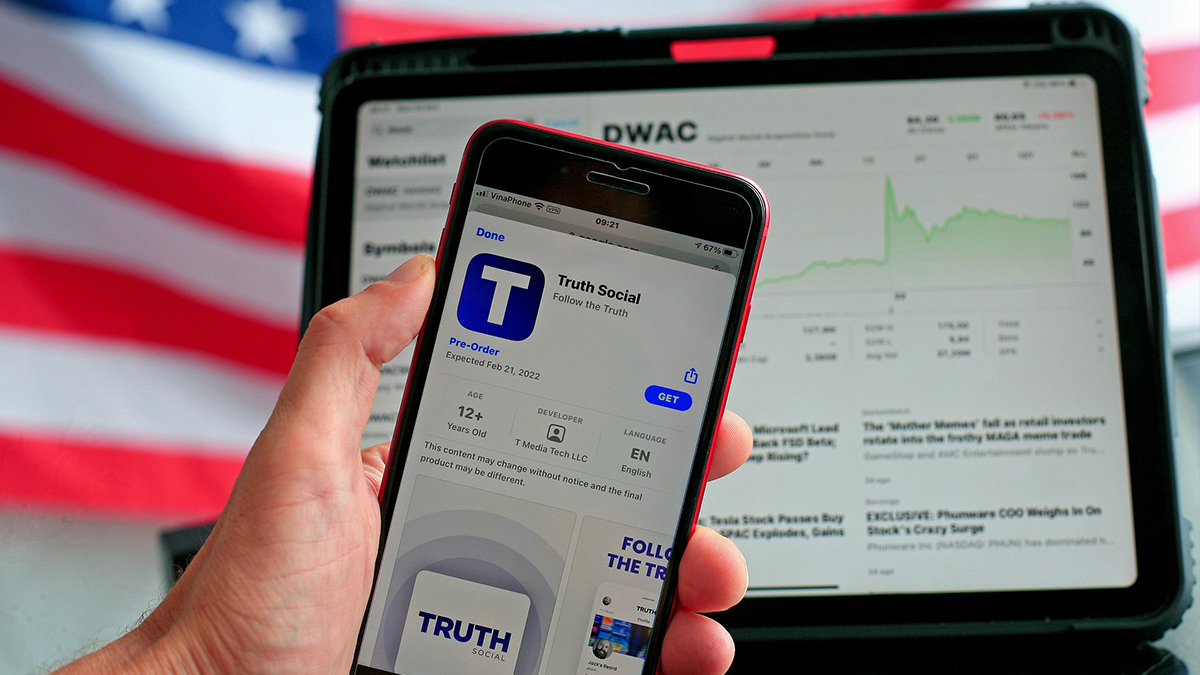

Donald Trump took a notably unconventional approach to informing the nation about the death of Iran’s supreme leader, Ayatollah Ali Khamenei, opting for written posts and videos on Truth Social and X instead of a traditional public address. This communication strategy marks a significant departure from how previous presidents have handled major international military actions.
Historically, presidents delivered solemn speeches from the Cabinet Room upon the completion of an operation. Trump, however, communicated the news of the attacks and Khamenei’s death primarily through social media posts and a pair of videos recorded at Mar-a-Lago.
Per the Washington Post, this unique strategy might be a clever play to give Trump more flexibility in the coming weeks. It seems designed to help him avoid what former Secretary of State Colin Powell famously dubbed the “Pottery Barn rule”: if you break it, you own it.
The lack of statements that don’t deflect into his ballroom has been a bit disconcerting
Trump has been careful to set limits around the U.S. attack. He stated that he wanted to overthrow the current regime but emphasized that it was up to Iranians to “seize the opportunity to write their country’s next chapter.” He directly called upon “all Iranian patriots who yearn for freedom to seize this moment to be brave,” adding, “I made a promise to you, and I fulfilled that promise. The rest will be up to you, but we’ll be there to help.”
Middle East experts believe that Trump’s strategy could be a political success because it allows the U.S. to control the pace and intensity of the conflict. Richard Haass, who served in Powell’s State Department, suggests that Trump is “calling for regime change, but is not assuming the responsibility for it,” giving him an “off-ramp” to claim credit if it succeeds without taking blame if it fails.
White House Press Secretary Karoline Leavitt stated that the Truth Social post was the most effective as Trump was “very busy yesterday in the situation room all day, monitoring it all night,” and communicating with allies. She suggested that a traditional, drawn-out approach would have tipped off adversaries.
This sweeping rhetoric and flexible definition of victory carries political risks. If the situation in Iran deteriorates or if U.S. troop casualties rise, the strategy could backfire. Concerns have also been raised in Congress that classified briefings provided no intelligence on an imminent threat from Iran, which is typically required for a preemptive attack.
It’s also worth noting that Trump rose to power partly on the back of supporters who were tired of U.S. wars in the Middle East. Recent polls show a growing number of his voters who don’t support the use of the military.








Published: Mar 3, 2026 06:04 am