


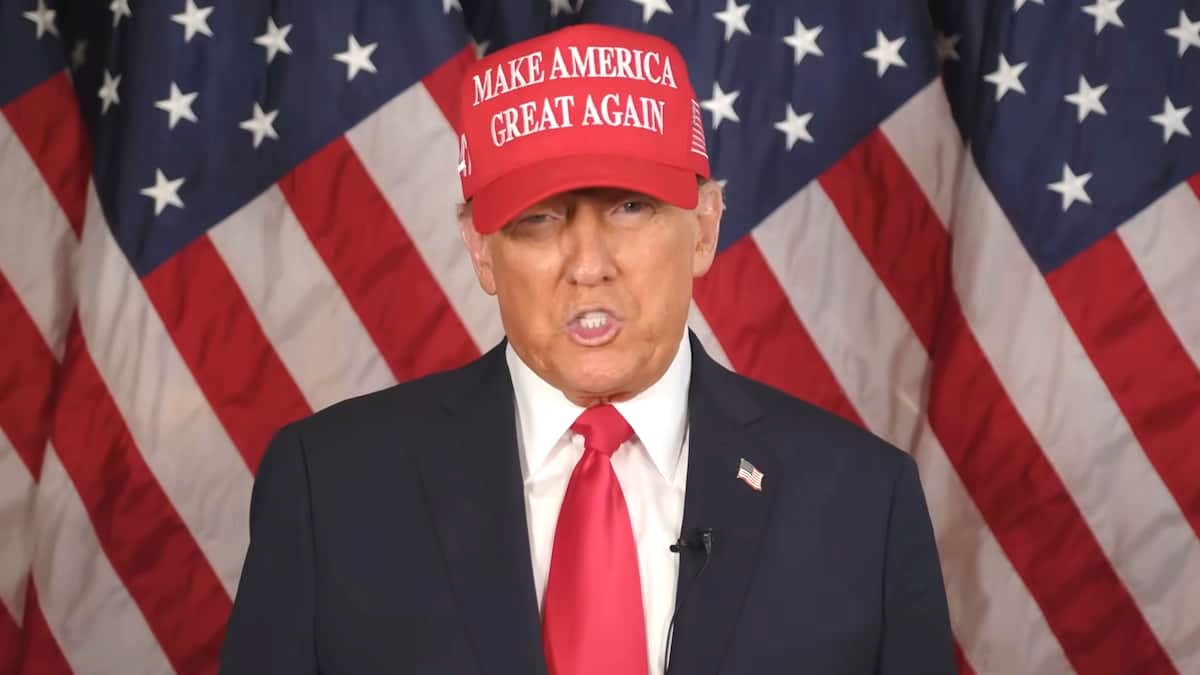

America’s relations with countries that are typically allies continued to deteriorate Tuesday, as President Trump shared a Truth Social post shaming many of them for not coming to the aid of the U.S. and Israel over the Strait of Hormuz after Iran effectively closed the major shipping route following attacks from the U.S. and Israel.
In his Truth Social post, reshared on the official White House account, Trump wrote in part,
All of those countries that can’t get jet fuel because of the Strait of Hormuz, like the United Kingdom, which refused to get involved in the decapitation of Iran, I have a suggestion for you.”
via The White House, X
Trump went on to say those countries, including the U.K. and France could buy oil from the United States, instead, claiming, “We have plenty.” He added, in part, “build up some delayed courage, go to the Strait, and just TAKE IT.”
What happened to the Strait of Hormuz?
The Strait of Hormuz is a narrow maritime chokepoint between Oman and Iran that links the Persian Gulf to the Gulf of Oman and the Arabian Sea. It is one of the world’s most important oil transit routes, handling about 20 million barrels per day of crude oil and liquefied natural gas, or as much as 25 % of global petroleum liquids trade before the crisis.
Iran’s move to threaten or block shipping through the strait has raised energy prices worldwide and endangered supplies for countries heavily reliant on Gulf oil, especially in Europe and Asia. Nations like China, India, Japan, and South Korea have historically sourced large portions of their oil via Hormuz, volumes that are now imperiled by the conflict.
European governments, including the U.K. and France, have resisted becoming entangled in the U.S.–Israeli efforts against Iran, even as energy markets tighten and domestic fuel prices rise. Trump’s social media tirade — telling these nations to “go get your own oil” — underscored sharp diplomatic rifts and frustration in Washington over what the president described as an absence of allied support.
Meanwhile, one consistent theme in Trump’s messaging is the assertion that the United States, as the world’s largest oil producer, can supply its allies if Hormuz remains dysfunctional.
While it is true that the U.S. produces significant volumes of crude and refined products, its refining infrastructure is specialized and still relies on certain heavier crude imports.
Moreover, oil markets are global: disruptions in one region typically push up prices everywhere, regardless of which country produces the supply.
American has its own oil problems
And despite Trump’s cheery outlook that America “has plenty” of oil, U.S. gas prices have surged to their highest levels in years. The national average price for regular gasoline has climbed to just over $4 per gallon, marking a roughly 35% increase in the past month, according to AAA data.
The spike reflects a sharp rise in crude oil prices, which have exceeded $100 per barrel as supply routes through the Middle East remain constrained. Prices vary widely by region, with West Coast states seeing the steepest costs—California nearing $5.90 per gallon—while some central states remain closer to the mid-$3 range.
The $4 threshold is considered a key psychological and economic pressure point for consumers, contributing to reduced discretionary spending and changes in driving behavior, according to Axios.
Federal efforts to ease the burden, including releasing oil from the Strategic Petroleum Reserve and regulatory adjustments, have had a limited impact as long as global supply remains tight








Published: Apr 1, 2026 09:33 am