


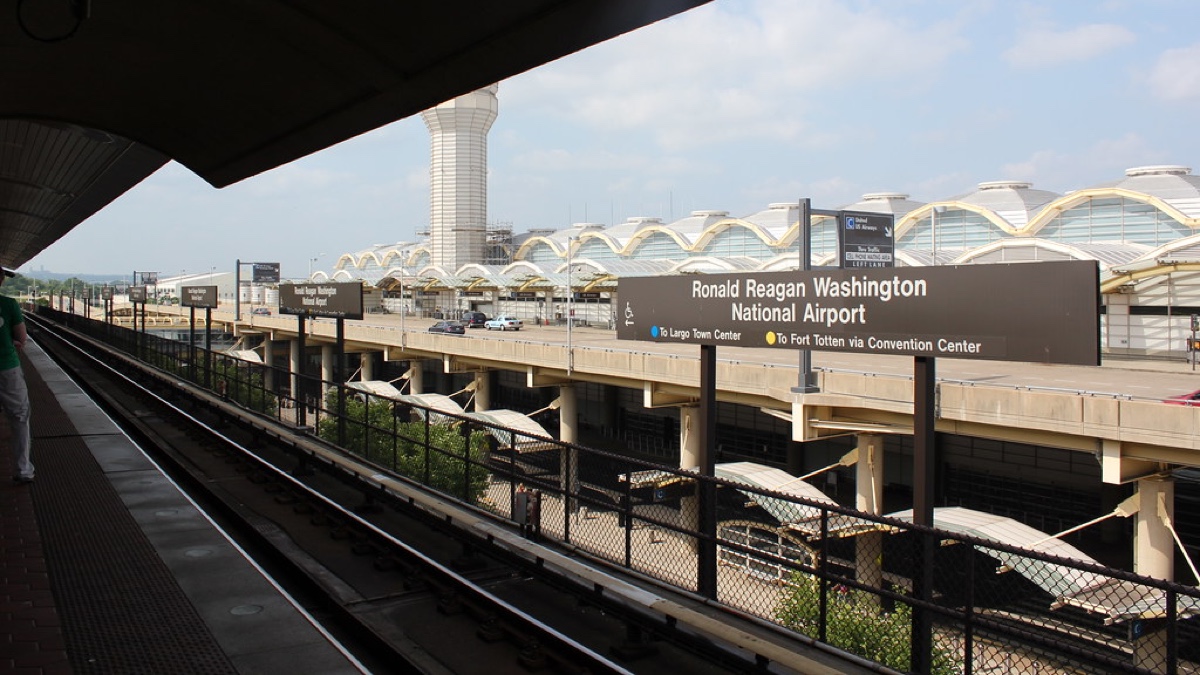

Air traffic control audio from Ronald Reagan Washington National Airport has drawn widespread attention after pilots were heard making animal noises over the radio, prompting an air traffic controller to admonish them to behave professionally.
The clip, recorded from communications at Ronald Reagan Washington National Airport outside Washington, D.C., on April 12, captures what appear to be pilots meowing and barking during radio chatter on a busy control frequency. The unusual exchange quickly escalated when another voice interrupted, telling the pilots to act like “professional pilots” and questioning one with the remark, “Why you still fly an RJ,” using aviation shorthand for a regional jet.
The roughly 15- to 20-second recording has since gone viral across social media platforms, prompting debate among aviation professionals and travelers over cockpit professionalism and radio discipline.
Pilots have not been ID’d
The identities of the pilots involved have not been publicly confirmed, and no airline has officially identified any crew members connected to the transmission. As of now, federal regulators have not announced disciplinary action or named any individuals under investigation.
It also remains unclear whether the pilots involved were operating for a regional airline. The controller’s reference to an “RJ” suggests at least one pilot may have been flying a regional jet aircraft.
It’s unclear whether the person who said “This is why you still fly an RJ” was actually the Air Traffic Controller or a third pilot on the frequency who was annoyed by the noise.
Some reports suggest the “meowing” may have occurred on 121.5 MHz (the Emergency/Guard frequency), where unprofessional “meowing” has been a recurring problem for years.
The potential fallout
The Federal Aviation Administration has not publicly detailed whether it has opened a formal investigation into the incident. However, cockpit and radio communications are subject to strict professionalism standards, and pilots are expected to maintain concise, operationally necessary communications while using FAA-controlled frequencies.
FAA guidance and long-standing aviation practice require pilots and controllers to limit radio traffic to operational matters, so frequencies remain clear for safety-critical communications, particularly at congested airports such as Reagan National. Unnecessary transmissions can create distractions, block important instructions, and interfere with situational awareness.
While the exchange may strike some listeners as harmless joking, the incident comes amid heightened scrutiny of operations at Reagan National, one of the nation’s busiest and most operationally constrained airports.
The airport has faced increased safety attention in recent years because of runway congestion, near-miss incidents, and the continuing fallout from the fatal 2025 midair collision over the Potomac River involving an American Eagle regional jet and a U.S. Army helicopter.
Though such conduct does not automatically result in enforcement action, pilots can face internal airline discipline, FAA counseling, remedial training, or more serious penalties, depending on the circumstances and whether regulators determine the conduct affected operational safety.
Neither the FAA nor airport officials have indicated that the meowing-and-barking incident disrupted traffic or created a direct safety hazard. While no pilots have been named, American and Delta have both reportedly stated they are “aware of the audio and looking into the matter internally.”








Published: Apr 15, 2026 01:49 pm