


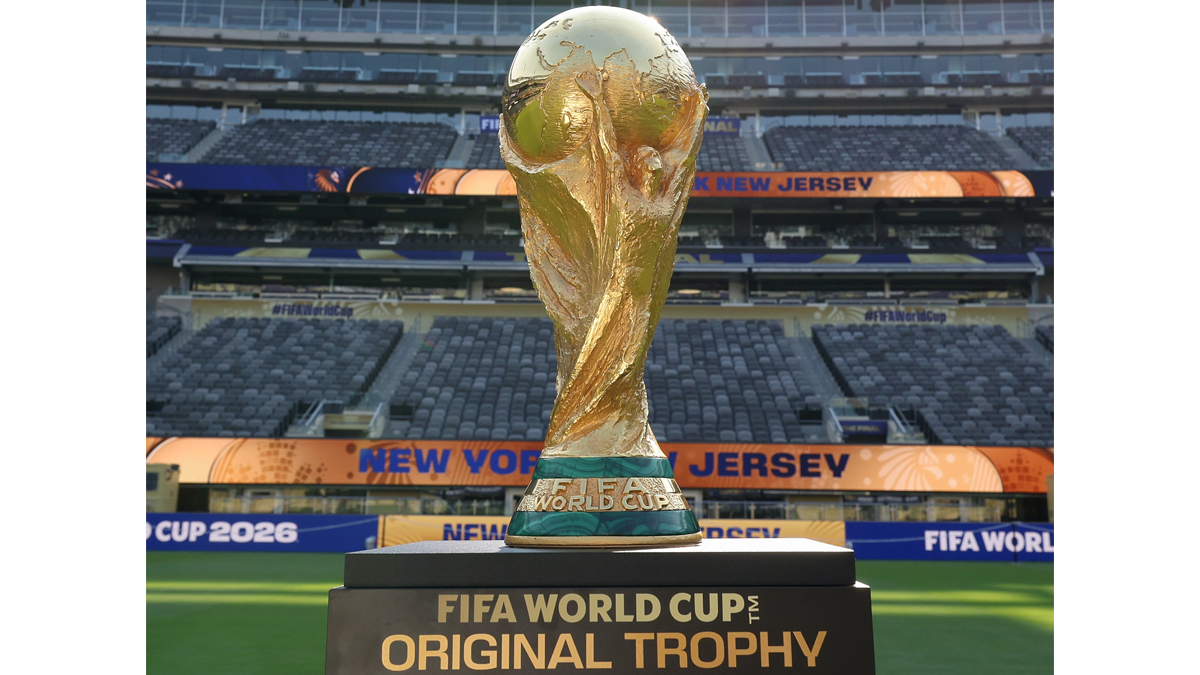

The biggest World Cup on record drew to a close Sunday. Barcelona forward Ferran Torres scored the only goal, and Spain defeated Argentina 1-0 in extra time to claim international football’s biggest prize. In doing so, he secured Spain’s second World Cup title. That is a big win, but the bigger winner from the past few months might be the organization itself. According to CNBC, FIFA is poised to net over $9 billion in revenue for 2026.
The outlet noted that this astronomical number is a result of the organization’s massive commercialization drive. It’s the first time 48 teams have competed on the world stage, up from 32 teams four years ago. This led to 104 matches instead of 64, all scheduled across six weeks rather than four. By adding more games, FIFA has effectively created more content for broadcasters, more tickets for fans, and far more commercial opportunities for advertisers.
Now, while CNBC reported the $9 billion figure, FIFA stated that it anticipates revenues for the entire 2023-2026 cycle could actually top $15 billion. Per The Guardian, this significantly exceeds targets set before the tournament, when FIFA had projected $11 billion in earnings. Ticketing, especially through the secondary market, reportedly accounts for a significant portion of this increase. FIFA takes 15% from the buyer and 15% from the seller on that market.
Not all the changes were welcome
Per CNBC, the half-time show got a lot of criticism. Madonna, Justin Bieber, BTS and Shakira were among those who performed at the World Cup’s first-ever half-time show. The performances stretched the break out to more than 27 minutes, drawing criticism from commentators and fans.
Despite the criticism, however, the financial model seems to be working. As Antonio Di Cianni, director of advisory at Football Benchmark, told CNBC’s “Squawk Box Europe” on Friday, “In the group stage, the utilization rate of stadiums was basically sold out, at 99%.” He added, “It showed people are willing to pay those prices.” Per the outlet, President Gianni Infantino has been the primary driver behind this strategy.
According to FIFA, Infantino explained that the success of the 2026 tournament has provided new “opportunities that we don’t use today” for investment in the game. He aims to “unleash the commercial potential and opportunity that FIFA has” to support global football development.
Regarding the future, he told 211 FIFA Member Association (MA) representatives, “I think I can say that this FIFA World Cup here in particular has opened a lot of doors, a lot of opportunities, a lot of possibilities.” Emboldened by strong ticket sales, Infantino reportedly had a suggestion for2030. “There are discussions about whether we should increase more (from 48) to 64 (teams), but this will be debated and this will be discussed,” Infantino said.
He told Swiss broadcaster Blue Sport on July 10, “These are all issues that we will be examining after the World Cup.” Kieran Maguire, an associate professor in football finance at the University of Liverpool, told CNBC that a 64-team tournament would see almost one-third of all eligible countries attending. He noted, “This is the opportunity for the World Cup to become the Olympics of football in the sense that it becomes open to far more nations.”
To meet these goals, the generated revenue is being funneled back into development. According to CNBC, FIFA plans to distribute $2.7 billion to aid in development between its 211 member states from 2027-2030 under “FIFA Forward 4.0.”
As a non-profit, FIFA invests these revenues to grow the game across its member associations. Infantino stressed the importance of this, stating, “We want to generate more revenues, and we have to generate more revenues, because in the vast majority of the world, in 80% of the world, if we don’t invest, if we don’t believe…nobody will.”
The tournament also saw significant involvement from President Donald Trump. Infantino’s relationship with the president reportedly faced scrutiny after Trump requested a review of a red card issued to USMNT player Folarin Balogun.
“I asked for a review because I didn’t think it was a foul,” Trump said. “I didn’t know what the hell a red card was.” Additionally, one of Trump’s envoys revealed that the president had tried to push FIFA into replacing Iran with Italy, even though the latter did not qualify.
Regarding future events, The Guardian reported that Trump confirmed his country’s interest in hosting again. He stated, “You should choose the United States of America again. This time we will leave Canada and Mexico out.”
For the 2030 tournament, FIFA has set aside a $6 billion budget to mark the 100th anniversary of the event. Whether the expansion continues to 64 teams remains a topic of debate.









Published: Jul 21, 2026 11:26 am