


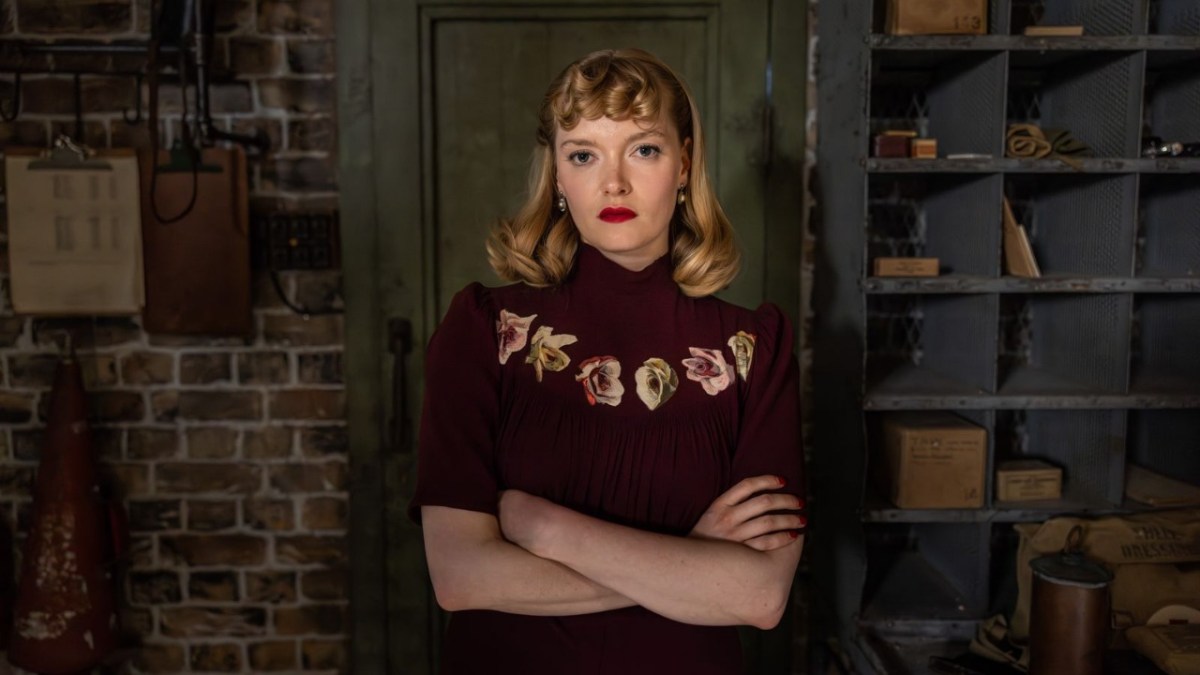

When I glanced over the plot summary, I assumed Think of England would be a knockabout comedy. A World War II movie about an oddball collection of actors and filmmakers tasked with making a series of morale-boosting erotic movies for the British government? Sounds hilarious.
It didn’t take long for me to realize that Think of England is absolutely not a comedy. It’s a tense, disturbing, and dark movie about people being forced to do things against their will and, despite the period setting, it’s an extremely relevant look at how the entertainment industry chews up and spits out talent.
I had the pleasure of speaking with stars Natalie Quarry and Ronni Ancona about their thoughts on the movie and the questions it raises. Quarry plays the lead role of Holly, a young and ambitious actor dragged unwillingly into an adult role that could ruin her reputation, while Ancona plays Agnes, a hair and makeup artist who appears to be an ally but proves to be something quite different. I asked them both if the subject matter surprised them and if they thought it might be a comedy.
“It turns dark pretty quickly”
Ronni: “I’ve been in the world of comedy for a very long time. And I presumed, is this going to be a Carry On? Is this going to be a knockabout satire? And it was quite clear from reading the script that Richard wanted to delve into something a lot more psychological and dark. It does have elements of satire and humor in it, but it turns dark pretty quickly.”
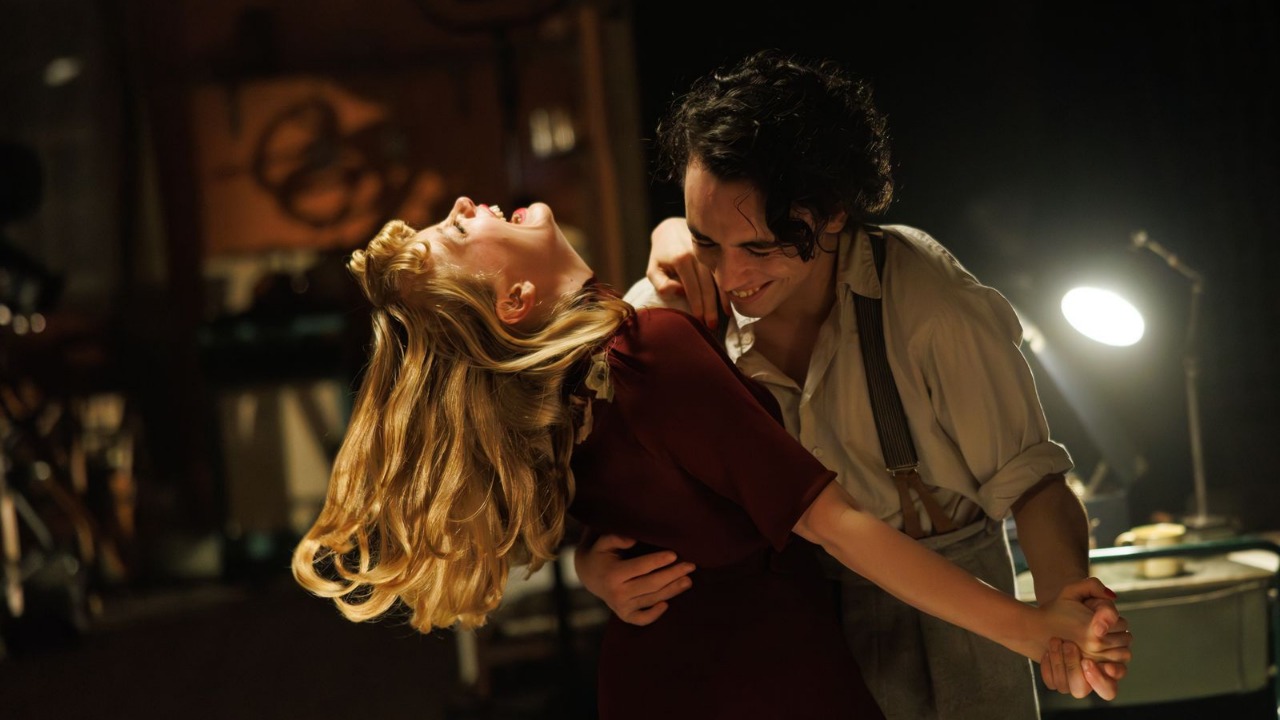
Natalie: “I got the pitch and the script at the same time. So I never really was under the illusion that it might be a comedy. So I mostly just really focused on the script and I remember thinking it was a very dramatic, as Ronni says, a psychological piece.”
Ronni: “It is. I suppose, when somebody says to you it’s about making porn films for the troops in the 1940s, there’s an element that you think, could this be a Full Monty vibe? But no.”
Quarry’s character is explicit about wanting to emulate golden age of Hollywood stars, so I was curious whether there were any specific actors she was inspired by.
Natalie: “She does talk about Marlene Dietrich quite a lot so I researched her a fair amount, then, I can’t remember who it was now, but she’s doing a specific impression of somebody (Ronni interjects that it’s Brief Encounter star, Celia Johnson). Yes, that’s it, Celia Johnson and Veronica Lake, I want to say, and a few other people like that. But yes, Celia Johnson is who she does.“
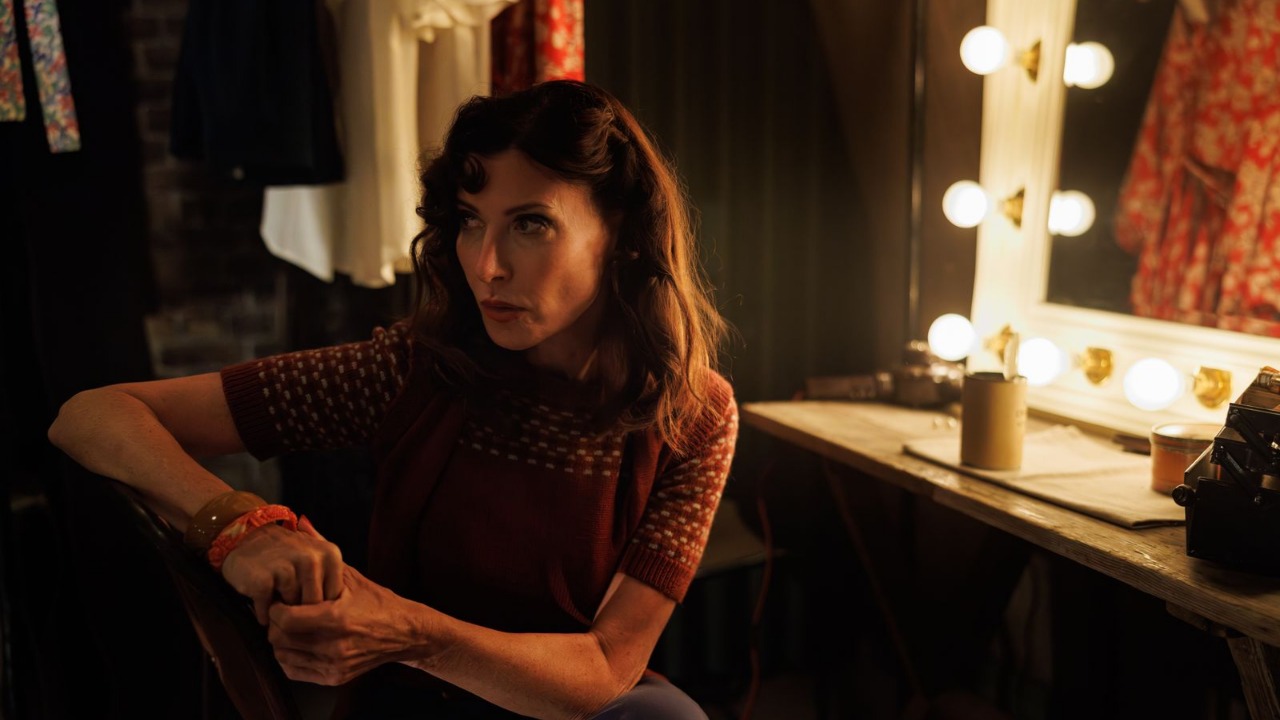
Without getting too deep into spoilers, I was also fascinated by what Ancona made of playing a character who acts like an ally but has her own agenda.
Ronni: “What’s really uncomfortable about Agnes is that she understands how vulnerable Holly is. She’s got the experience to recognize what’s happening, but she doesn’t necessarily do the right thing. So there was an element of affection, then when she realized she needs to get what she wants, she became a lot more overtly manipulative.”
We had some really interesting discussions about how Agnes is weathered, past her best and tired, but she’s trying to make the most of her appearance. I wanted to make her slightly bohemian and not just a classic fishwife character. It’s quite easy to go quite clichéd with older and middle-aged women. I find that’s a constant battle. So I was trying to make her a bit nuanced.”
“Everyone was so supportive”
This is a movie about a porn shoot, territory that comes with expectations of nude scenes. I wondered how it felt for Natalie to play a character visibly uncomfortable with doing them, and how that informed her performance?
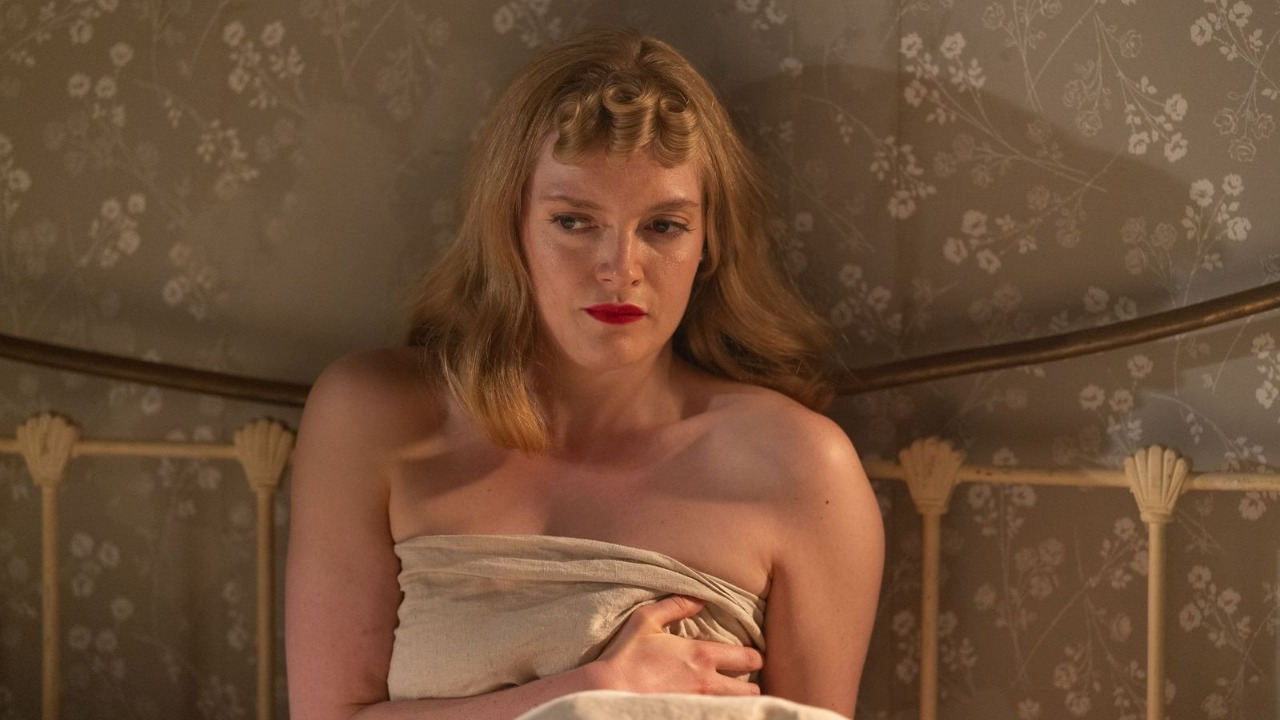
Natalie: “I definitely felt nervous and apprehensive. I tried to channel some of that rather than trying to pretend there weren’t any nerves attached because that is how Holly would have been feeling.
Obviously, it is a harder type of scene. [But] everyone was so supportive. It was really nice to have everyone there, and as we went on, I felt less and less nervous and it became kind of normal, weirdly normal, quite quickly.”
Think of England felt relevant to me because the pressure its older male characters put on Natalie’s character to do these scenes reminded me of modern actors – specifically young female actors – talking about similar pressures they’ve felt on set. I asked Natalie how hard it is to get full consent from actors for these kinds of scenes.
Natalie: “I can only speak for myself and I have been lucky enough to not have had anything but a supportive set, I have always felt able to advocate for myself and have really clear communication surrounding these more intimate scenes. I think in Holly’s situation, she isn’t able to give consent because she doesn’t really want to do what she’s being asked, she’s being coerced into it.”
“Times have changed a lot”
Holly’s male co-star in the film-within-a-film is overtly volatile and unpleasant, so I wondered if they had any thoughts on working with co-stars who aren’t so fun to be around?

Natalie: “That’s an interesting question. As I said, I have been lucky enough to have not experienced that but I am fully aware that this happens in our industry and every industry. I think it’s so important for there to be measures in place to protect everyone on set and that’s why we have intimacy coordinators so these things don’t happen. What do you think, Ronni?”
Ronni: “I’m very much a different generation from Natalie. So I’m thrilled and delighted that Natalie hasn’t had any [bad experiences]. But times have changed a lot. There weren’t intimacy coordinators on set when I was around. I don’t want to get too down on things, but in any showbiz scenario when people are making other people money, there are always situations where things are enabled.”
“I don’t know whether I necessarily approached it as a war movie”
I thought this subject matter being set against the backdrop of World War II adds another dimension. It’s said that you can’t make a true “anti-war” movie, because showing combat is inherently thrilling and entertaining, but I asked them if showing how characters become corrupted by the war around them makes this a rare, bona fide anti-war movie:
Ronni: What I think Richard [Hawkins, director] was trying to do was talk about the whole concept of war. Generally, in a lot of films about war, there tends to be a kind of wartime spirit, everybody coming together in this cohesive, upbeat, helpful movement. War obviously had a phenomenally different effect on different people and different characters. I think there were people who suddenly got a sense of purpose, a sense of adventure and the whole wartime spirit. And other people who were deeply, utterly traumatized by it.
You’ve got that situation where there’s no choice, and people of all sorts of different personalities are forced into this situation where they all have to fight, or they all have to dig the land, or they all have to do this. So, Think of England is a study of the effects that war had on different people and how people’s lives can be sort of blown apart by it.”
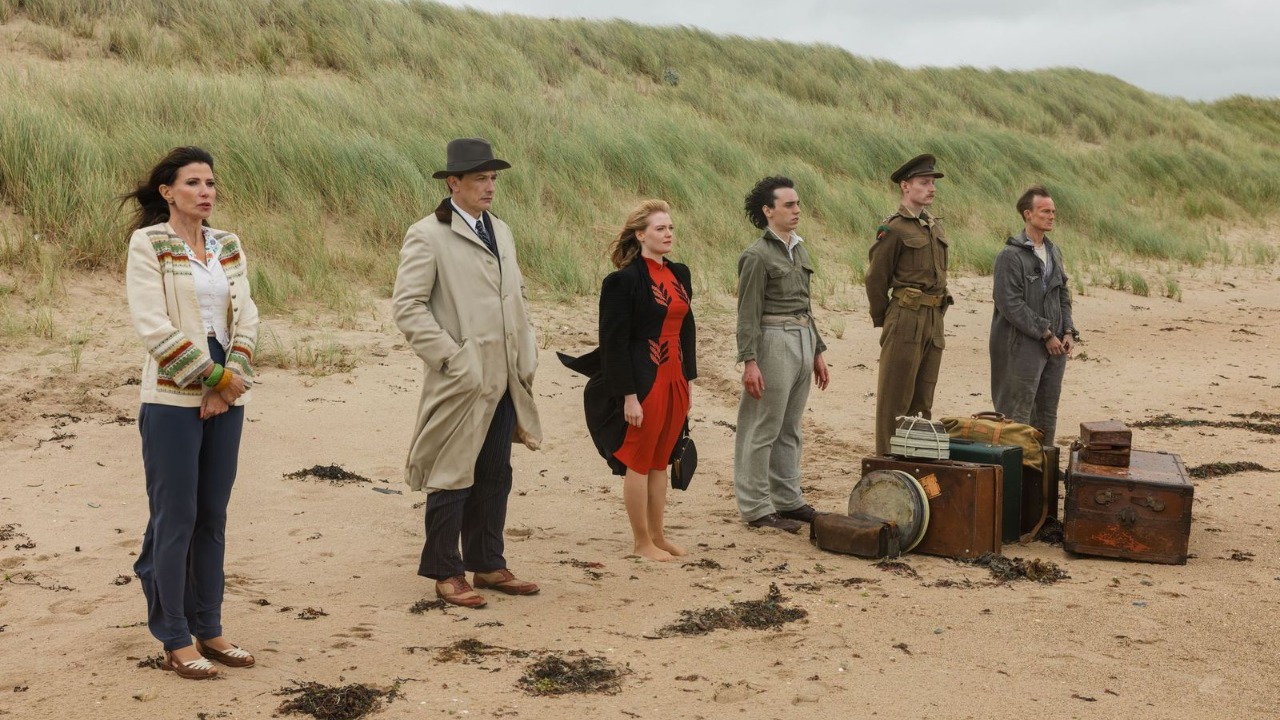
Natalie: “I don’t know whether I necessarily approached it as a war movie. In my research, I thought about what her life might have looked like before we enter the film, but I think it’s very encapsulated in its own little world.
I guess I think of it as a film set during World War II, but I think it’s more about, as Ronni said, the effect the war has had on these characters that led them to this point. Then they are making decisions with these pressures around them about contributing to the war effort, how that might affect their lives once the war is over, whether it would be good or bad. That is what Holly is trying to decide, whether it could help her or whether it really won’t, but also with lots of pressure from a lot of different people around her and her being as naive as she is. I don’t know whether I thought of it as a war film – I think it’s a film that’s happening during the war.”
“Go and support more independent film”
And, to wrap things up, I wanted to know what Natalie wanted audiences to walk away from the movie thinking about.
Natalie: “Aside from the questions that the story brings up, I hope that it makes [people] feel that they want to go and support more independent film about slightly more unusual subjects with actors that they’ve never heard of before. Lots of projects want huge names and it’s quite hard to get things made if you’re not those people. I hope that if someone watches it and sees something that they like, it makes them feel excited about other indie work or making their own work.
I do hope that those conversations happen because we made this in such a short time on a pretty short budget for an indie, and we put our whole selves into it. That means a lot when people feel that they’ve seen something interesting and want to be involved in or support more indie work. So that’s what I hope.”
Think of England is on release now, for screenings go to https://thinkofengland.co.uk/



Published: Nov 13, 2026 02:00 pm