


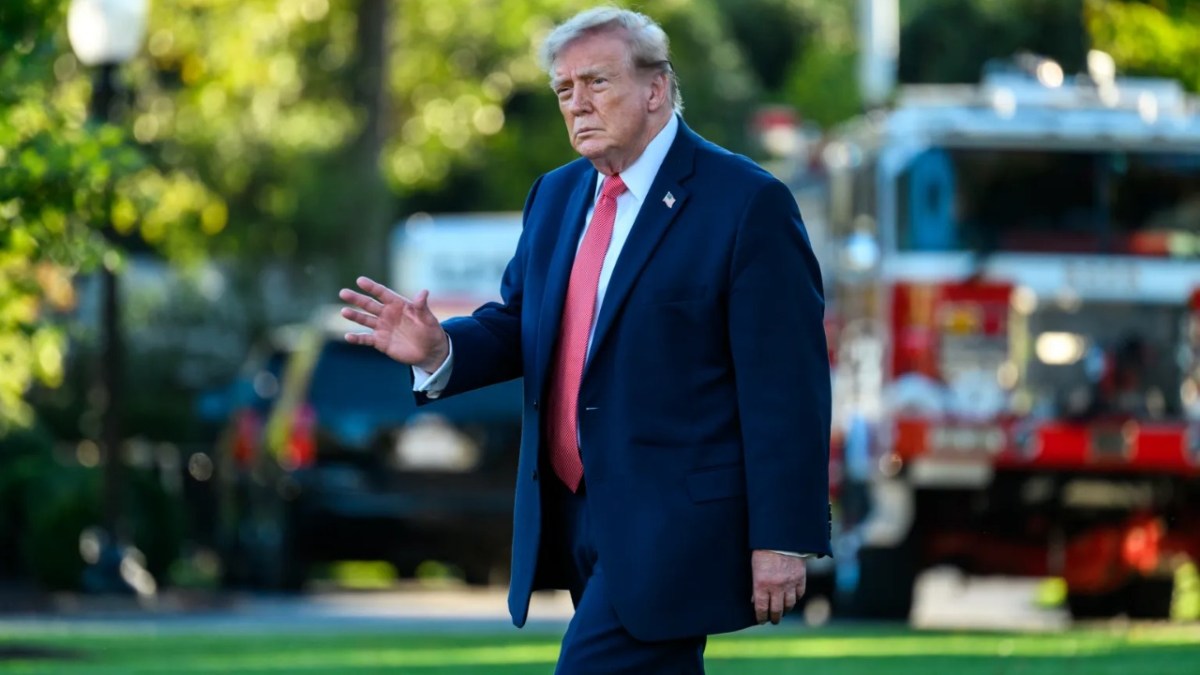

Donald Trump has reiterated that the Iran war will end “whenever I want it to.” Meanwhile, the cost to American taxpayers has risen to $47.1 billion, according to a new Pentagon estimate provided to Congress which is reported by The Federal Network. The conflict shows no sign of waning, with Trump declaring he will soon decide whether to “make a deal” with Iran or “finish it off.”
At a rally in Lubbock, Texas, Trump said, “Somebody asked me before, ‘When will the war in Iran end?’ I said, ‘Whenever I want it to end.’” He added that it “would be very quick, but we have to have an end properly,” with a “total statement” that Iran would never have a nuclear weapon. His remarks come as he faces near-record low poll numbers—with his approval rating now stands at 32%, according to a Reuters/Ipsos poll, driven by surging energy costs and affordability concerns ahead of the Nov. 3 midterm elections.
The last confirmed U.S. strikes on Iran occurred on Sept. 1. Trump had previously stated that attacks would not resume until after the Nov. 3 midterm elections. In response, Tehran says it is preparing a military counter to any U.S. strikes, according to Mohsen Rezaei, secretary of Iran’s Supreme National Security Council secretary Mohsen Rezaei in a post on X.
The cost of the Iran war keeps getting higher
An Oct. 16 estimate by U.S. Central Command, cited by The Hill, showed the cost of the Iran war has surged to $47 billion—about $3 billion more than previous figures. This price tag does not include $184 million in damages to U.S. military bases in the Middle East, as of June 29, according to a lead inspector general report to Congress. That figure accounts for damage to U.S. diplomatic facilities in four countries—Iraq, Kuwait, Saudi Arabia, and the United Arab Emirates—caused by Iranian strikes.
In a report by the Associated Press, Republican strategists acknowledge the conflict is significantly hurting the party’s efforts to retain Congressional power during Trump’s final two years in office, as the rising fuel costs push up prices across nearly every sector. Mark Zandi, chief economist at Moody’s Analytics, stated on Oct. 12 that the war has cost American families an average of $2,000 so far: $1,100 from higher energy costs, $540 from higher interest rates, and $360 from increased military spending.
Higher energy costs and public fatigue over the nearly eight-month conflict—one Trump originally predicted would wrap up within weeks—are putting considerable strain on Republican candidates, regardless of the outcome of the November 3 elections. Despite this, Trump continues to downplay the war’s economic impact while rallying his supporters in a bid to preserve the Republicans’ control of both houses of Congress. He has repeatedly insisted the conflict’s end is near, yet cautions that a new, intense bombing campaign could begin soon after the midterm elections.







Published: Oct 29, 2026 01:45 pm