


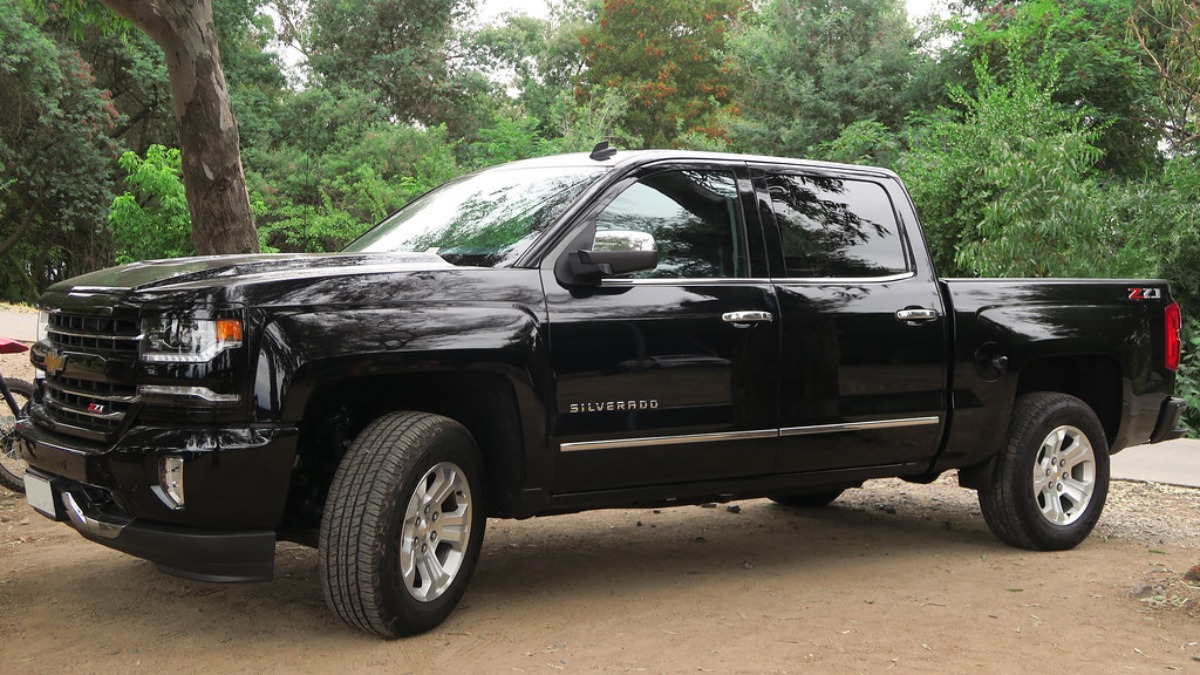

When buying a used car from a dealership, consumers expect an accurate service record and for any issues to be fixed before the sale. Unfortunately, one man’s recent experience with a 2018 Chevrolet Silverado has left him questioning the dealership that sold it to him.
In a TikTok video that has gathered over 998,300 views, mechanic Mattie (@mattieflips) shows the many problems with a truck his friend bought just one week earlier for $30,000. Mattie says he could tell something was wrong even before he started inspecting the vehicle.
He first noticed that the panels were a different color, which is a clear sign of past collision repairs that were never noted on the Carfax. “This is a big red flag,” Mattie says. “If they didn’t report it, what else are they hiding?”
Used car buyers are often left dealing with hidden damage and safety risks that dealerships should have caught before the sale
Looking closer at the truck, Mattie finds that the front bumper had been poorly repainted, with chips already showing up. The front fender has been pushed back, and the headlight has condensation inside, which points to a crack that will eventually need to be replaced.
“It’s only a matter of time,” Mattie warns, “and when it does, it’s gonna cost him $2,000 to replace.” The problems go further. Mattie finds that the rear brakes are almost down to metal, which is a serious issue that the dealership missed. After replacing the rotors and pads, he discovers that the axle seals are leaking oil, which is a potential fire hazard.
This kind of oversight is not uncommon, as getting conflicting service advice from two different Toyota dealerships on the same car shows just how inconsistent dealership standards can be. “The worst-case scenario is your entire car could catch fire due to the oil reacting with the high-temperature brakes,” Mattie explains. “Extremely dangerous and something a GM dealership should have definitely replaced before selling it.”
Mattie also points out that the dealership used a Napa Gold oil filter instead of a dealer-issued one, which he sees as a clear cost-cutting move that put his friend’s safety at risk. Dealerships have also been caught lowballing customers on their trade-in car values, which is another way buyers end up on the losing end of a deal. The comments section on his video was filled with advice, ranging from “sue the dealership” to “return the car immediately.”
For people in similar situations, lemon laws may offer some relief. These are consumer protection laws that require car makers to repair or replace vehicles with defects that cannot be fixed after a fair number of attempts. However, the rules differ from state to state. According to Kelley Blue Book, all 50 states have lemon laws, but most of them mainly cover new vehicle purchases.
A few states, including California, Texas, and New York, also extend those protections to used cars. The Magnuson-Moss Warranty Act, a federal law, also offers some protection. It covers both new and used products worth more than $25 that come with a written warranty. If a maker has been unable to fix a defect after a fair number of attempts, the buyer may be entitled to a replacement or a full refund.
To file a claim, it is important to document everything, including repair attempts, communications with the dealer, dates, and costs. According to Chase, the time limit for lemon law claims typically runs from one to four years from the date of purchase or the date of the first repair attempt, depending on the state.







Published: May 5, 2026 10:09 am