



German authorities are investigating a massive cache of weapons discovered in the woods near Berlin. The find sparked serious concerns regarding potential assassination plots linked to foreign intelligence operations.
According to the BBC, German intelligence officials suspect the firearms were intended for carrying out targeted killings on behalf of Russia, though officials are maintaining a cautious approach during the investigation.
Per the outlet, Germany’s domestic intelligence agency received information about a possible weapons cache on the outskirts of the capital in October 2025. Working alongside the Berlin State police, authorities successfully located the hidden stash, which contained two handguns and corresponding ammunition. Authorities decided to disable the weapons rather than seize them and placed the site under surveillance for several months.
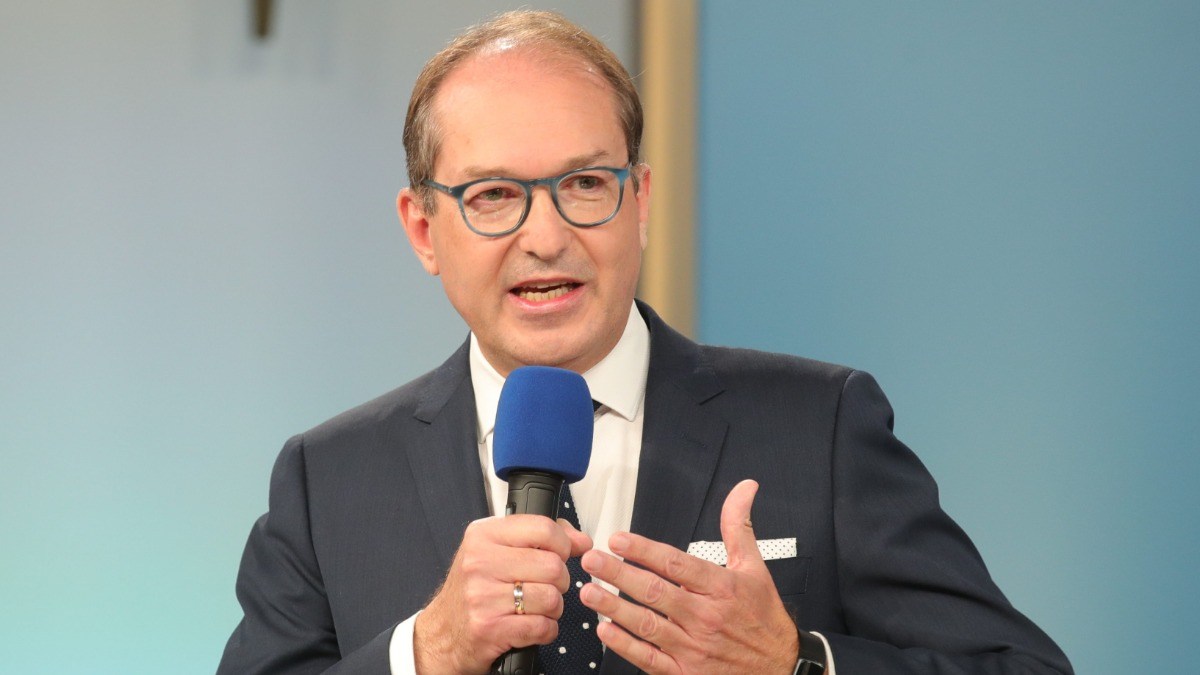
There was no activity, however, suggesting that those responsible likely realized the cache was compromised. AP News reported that Interior Minister Alexander Dobrindt confirmed that federal prosecutors have launched an investigation into the discovery. In a press conference, he stated, “The investigation is directed against intelligence agency activity and against the preparation of a serious state-endangering crime,” while also characterizing it as a “high-risk situation.”
A continuous threat
The investigation has led to a suspect currently being held in Romania. According to the German outlet DW, this individual is being looked at for their potential role in planned parcel bomb attacks in that country. Dobrindt confirmed that German authorities are in contact with their Romanian counterparts regarding the possibility of extradition. He said, “We will then determine, in the course of the investigation, what measures can be taken against this person.”
He reportedly described the suspect as a “low-level agent” who likely remains unaware of the broader command structure behind the operations. This fits a trend of similar detentions throughout the year, including an operative from Kazakhstan who also appeared to have little insight into the larger network they served.
The BBC reported that Dobrindt declined to confirm direct Russian involvement in the specific Berlin cache officially. However, he acknowledged that the possibility of foreign powers being behind such actions cannot be ruled out.
“This case demonstrates that we are operating under a high threat level,” Dobrindt explained to reporters. Per DW, the minister has previously stated, “Espionage, sabotage, cyberattacks, or covert operations by foreign powers aimed at destabilizing Germany or inflicting direct harm are a constant reality.”
These concerns aren’t isolated. According to the BBC, in 2024, political figures in Germany reacted with significant anger following reports that Russia had plotted to kill the head of Rheinmetall, the country’s largest arms manufacturer, Armin Papperger. Furthermore, this is not the first time a court has found evidence of state-sponsored violence on German soil. Last year, Germany’s military aid package to Ukraine brought on concerns of WW3.
In 2021, a German court reportedly sentenced a Russian national, Vadim Krasikov, to life imprisonment for a murder carried out in a Berlin park, concluding that the act was ordered by Moscow. Krasikov was later released as part of a prisoner swap. Covert attacks have occurred in other parts of Europe too. A woman in Salisbury ended up as collateral damage after an alleged assassination when her boyfriend found and gifted her a perfume bottle filled with nerve agent.
The Russian government has consistently denied these accusations. According to DW, regarding other recent incidents, such as the discovery of an explosives-laden drone at Leipzig Airport, the Russian embassy in Berlin dismissed the allegations as a “hastily fabricated provocation” intended to fuel anti-Russian sentiment. Despite these denials, the ongoing investigation into the Berlin weapons cache remains a top priority for German prosecutors.








Published: Aug 24, 2026 07:39 am