


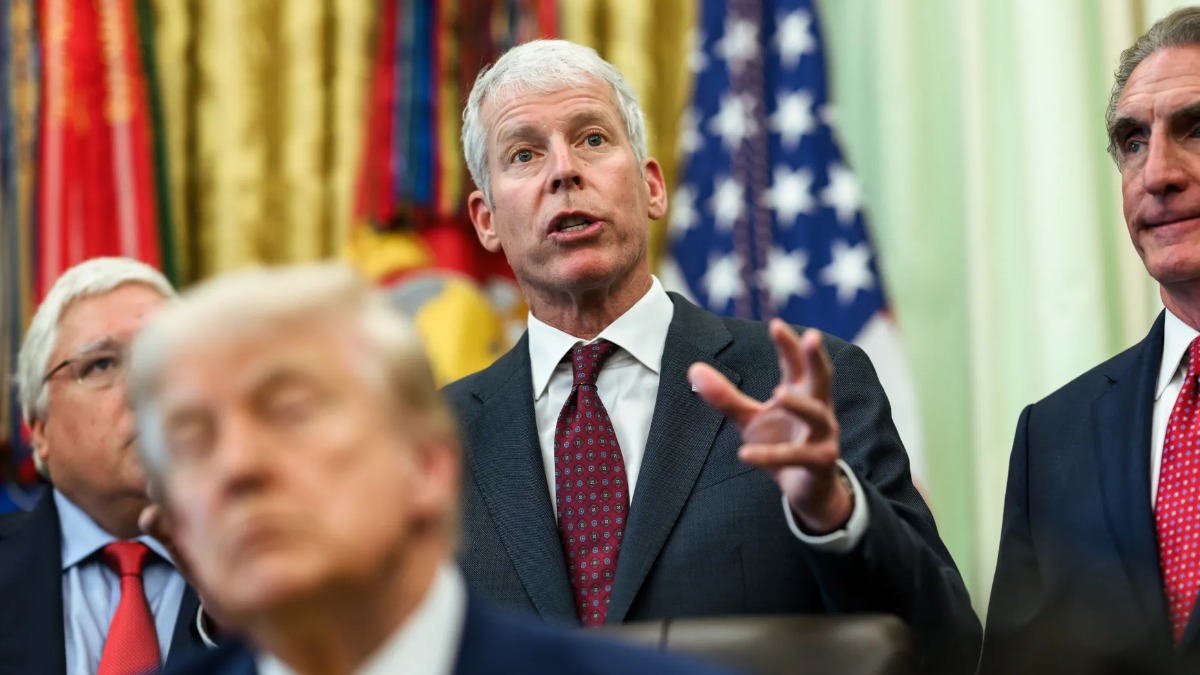

The Trump administration has officially signed a nuclear cooperation agreement with Saudi Arabia. It will reportedly allow American companies to operate commercial nuclear power plants within the kingdom. According to NPR, the deal was signed by Energy Secretary Chris Wright and Saudi Arabia’s energy minister, Prince Abdulaziz bin Salman. The agreement includes a separate pact regarding safeguards, and now heads to Congress for a 90-day review process.
The deal is expected to last for a decade. It will reportedly bring billions of dollars into the U.S. energy sector by giving American companies priority access to the Saudi nuclear energy program. They will supply the country with nuclear reactors and fuel. Per the BBC, the Saudi government described the deal as an extension of existing cooperation between the two nations. The Saudi leader visited Washington last November.
“These agreements reflect our two nations’ shared commitment to strengthening U.S.-Saudi commercial relations, delivering prosperity at home and security to our allies abroad,” Energy Secretary Chris Wright said in the announcement. He added, “Rest assured, these agreements uphold the highest standards of nuclear safety and nonproliferation, while relying on the world’s best nuclear technology and scientists, designed right here in the United States.”
The administration is confident, but there is skepticism
The Guardian reported that much of the deal remains unclear. As a result, there are concerns on whether Saudi Arabia will eventually possess the capability to enrich uranium domestically. While the U.S. has justified the move by claiming it will maintain oversight of enriched uranium and spent fuel to ensure it isn’t used for weaponry, critics are pointing to a lack of what is known as the “gold standard.”
This standard, which was included in a 2009 agreement with the United Arab Emirates, would have explicitly prohibited the kingdom from enriching uranium or reprocessing nuclear fuel. The absence of these specific restrictions has triggered alarms among nonproliferation experts.
According to the memo seen by NPR, the current agreement does not require Saudi Arabia to adopt terms that would lead to greater oversight from the International Atomic Energy Agency. This is a big deal because the IAEA’s “Additional Protocol” involves rigorous inspection and verification processes to ensure nuclear materials remain for peaceful use. Without those guardrails, many are worried about the regional implications.
Crown Prince Mohammed bin Salman has previously stated that if Iran were to develop a nuclear weapon, Saudi Arabia would follow suit. They have also previously indicated that if they had to enter the Iran war, they would activate a defense pact with Pakistan that potentially draws on the latter’s nuclear arsenal.
This puts the U.S. in a tricky spot. After all, the war with Iran is partially justified by the goal of stopping nuclear proliferation. “I think it may make negotiating a reasonable deal with Iran more difficult,” said Matthew Bunn, in an interview with NPR. He is a nuclear proliferation expert at Harvard’s Kennedy School of Government. Bunn noted that Iran is likely to be less interested in signing agreements that involve intrusive inspections if Saudi Arabia isn’t being held to the same standard.
Congressional reaction has been swift and polarized. Rep. Brad Sherman, D-Ca., posted on X on Tuesday evening, “Congress should approve only if the deal has the same gold-standard safeguards as our deal with the UAE. A President waging war to prevent nuclear proliferation in the Middle East should not facilitate proliferation just because U.S. companies stand to make a profit.”
Senator Chris Murphy also voiced opposition, suggesting the agreement would “set off a nuclear race in the region, further disincentivizing Iran from limiting its own program.” On the other side, Secretary of State Marco Rubio has pushed back against these concerns.
“The US is not going to reach any agreement with any country in the world that leads to the risk of proliferation,” Rubio told reporters. Some lawmakers are expected to oppose the deal, but they may not be able to override the potential presidential veto. The current political landscape suggests that opponents may struggle to secure the two-thirds majority required for it.
The timing is certainly notable. Fighting between the U.S. and Iran has escalated. Despite denying previous attacks, Iran has reportedly been targeting U.S. bases in Saudi Arabia recently. Additionally, the Houthis, who are allies of Iran, recently announced a maritime blockade against Saudi Arabia.
While the U.S. Department of Energy maintains that the deal advances regional security and strengthens America’s competitive edge, the path ahead looks complex. Whether this leads to a stable energy future or a new era of regional tension remains to be seen.



Published: Jul 23, 2026 11:16 am