


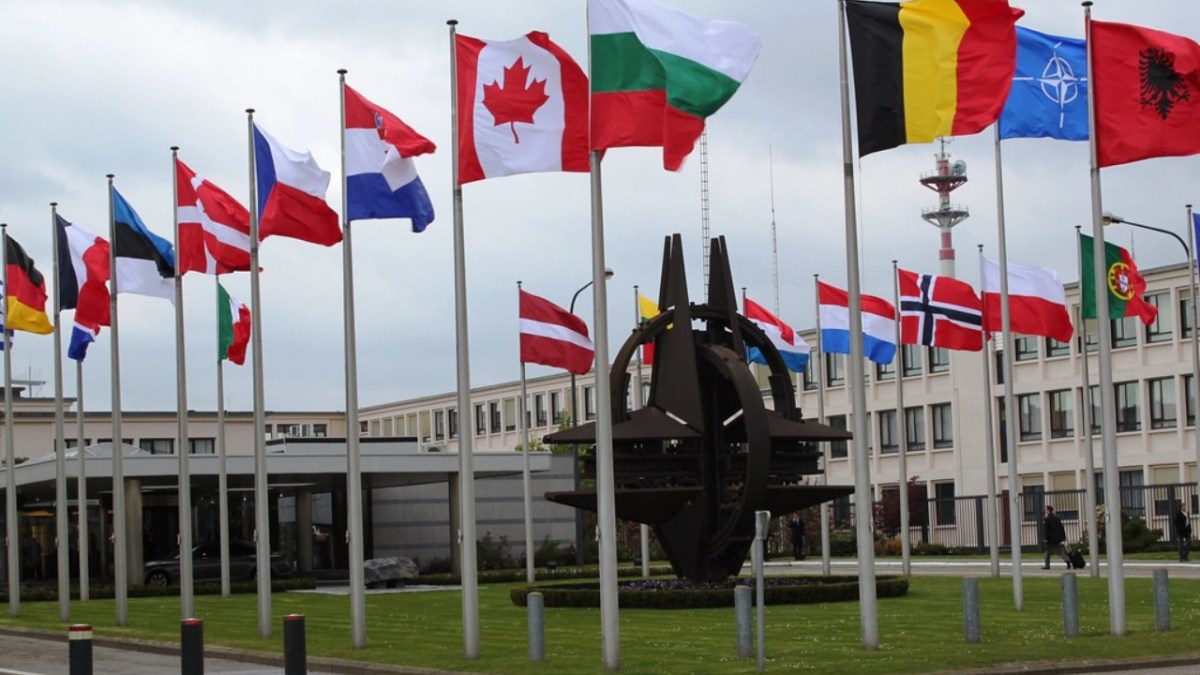

NATO was created to counter the Soviet Union invading Europe, with one of its core principles being that an attack on one member is considered an attack on all members. After the Soviet Union fell, NATO’s role was reevaluated in what then felt like it could be the beginning of a lasting peace in Europe.
That didn’t work out. Now, against the backdrop of Russia’s attempted invasion of Ukraine, NATO has had to draw up plans on how to respond to a full-scale Russian invasion. The plan was unveiled yesterday in Warsaw by U.S. Air Force Gen. Alexus Grynkewich, NATO’s supreme allied commander in Europe and head of U.S. European Command, and is titled “Theory of Victory.”
Via Stars and Stripes, Grynkewich acknowledged widespread fears about a Russian invasion, but hoped NATO’s plan would reassure people that the alliance is strong and knows how to defend them: “What I want to do is assure the 1 billion citizens of our alliance that we’ve got this. We know what we need to do. We know how we would do it, and it’s going to take all of us working together.”
“We’ve got this”
At the core of the plan are three actions: block, blunt, and break. Grynkewich said NATO ground forces would intercept Russia’s troops at the point of attack, preventing them from seizing territory. While they’re doing that, air, naval, space and cyber forces would control the wider battlefield and deliver what Stars and Stripes billed as “overwhelming firepower.”
Once that’s dealt with, NATO would then dismantle the military systems supporting the invasion, then presumably send whoever’s left back to Moscow with their tail between their legs.
Grynkewich did underline that NATO’s focus would be on stopping the invasion, not defeating Russia and enforcing some kind of regime change upon them: “In executing what I’ve outlined above, we are not seeking to impose a strategic defeat on our adversary. Nor do we need to do so.”
He also warned Russia that NATO is ready to “fight tonight,” pointing out, “Look, we have American troops here in Poland today. We have American troops that are arrayed across the eastern flank.” All this may sound frightening, but Grynkewich added that he doesn’t think conflict is “imminent or inevitable,” and said he wanted to reveal what NATO’s plans are to the Russians to avoid any “misunderstandings.”
It should also be said that Vladimir Putin himself has repeatedly said, “We are not threatening and have no intention of threatening European countries,” and that the only reason Russia would take military action would be if Europe/NATO made “a direct attack on the Russian Federation.” That said, he also said any deployment of European troops in Ukraine would mean “war with Russia.”






Published: Oct 13, 2026 11:05 am