


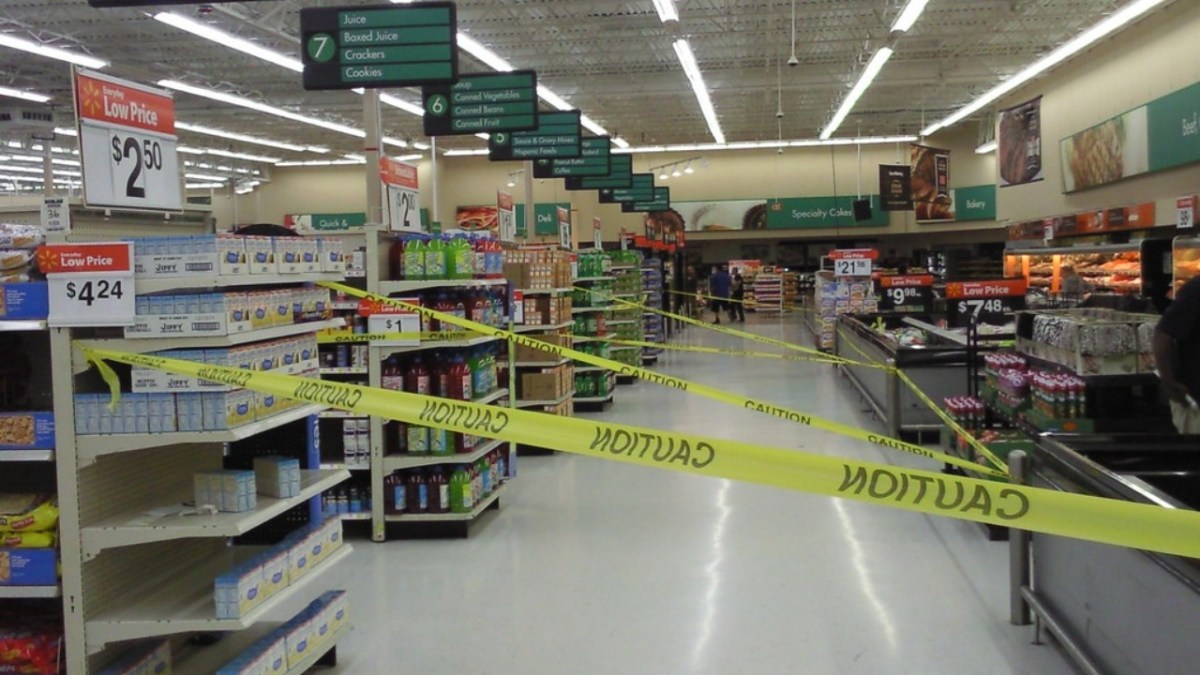

Are mysterious hackers attacking the US military’s food stores? The Department of Defense is reportedly taking this prospect seriously, with Stars and Stripes reporting that its cyber experts have launched an official investigation into a spate of unexplained incidents involving freezers.
Last week, the story broke (per The Guardian) that hackers had taken control of internet-controlled freezers in European supermarkets, raising the temperatures overnight and successfully destroying about $300,000 of frozen food.
A similar incident happened to US military commissary stores on at least six bases in late August (per Military Times), with unexplained refrigeration glitches reportedly preventing the sale of meat, dairy, produce and frozen foods. At the time, the Department of Defense was quick to downplay the seriousness of the incident, with officials claiming (via Stripes) that the issues were the result of run-of-the-mill equipment failures and maintenance delays.
Does an army still march on its stomach?
However, multiple commissary freezers across six bases developing faults simultaneously would be an extraordinary coincidence. Now, according to a Pentagon official, the Defense Cyber Defense Command is on the case and is working in concert with other international law enforcement partners to figure out if there’s a link between what happened in August and what happened to European supermarkets.
The report quotes Robert Norton, a professor of biosecurity and public health at Alabama’s Auburn University, who points out that the more appliances that are controlled online, the more vectors America’s adversaries have to attack. As he explained: “What we’ve got now are highly sophisticated adversaries. These are going to be very challenging. It’s trying to keep in front of them, so you find one vulnerability that they may have exploited. You shut that one down, and two others pop up.”
Napoleon famously said that an “army marches on its stomach” and, even in 2026, food supply is critical for morale and mental and physical health. Prof. Norton points out that the US Military’s food supply is an enormously complicated system of transportation, storage, and delivery to troops, each stage of which comes with potential vulnerabilities.
Stripes points out that some branches of the military are trying to harden themselves against attacks on food supplies, noting that Marines are being taught how to forage for their own food in the wild. Prof. Norton did identify one silver lining: “It’s never good to have these things happen, but at least when you have them happen in times of peace, it gives you a little bit of breathing room to fix the problem.”






Published: Nov 6, 2026 10:30 am