



On March 2, Donald Trump told the world that the war with Iran would last “four to five weeks“ and a few days later said, “I think the war is very complete, pretty much.” In late March, he said it would be over “very soon… within two to three weeks,” and in early April, promised victory “shortly, very shortly.”
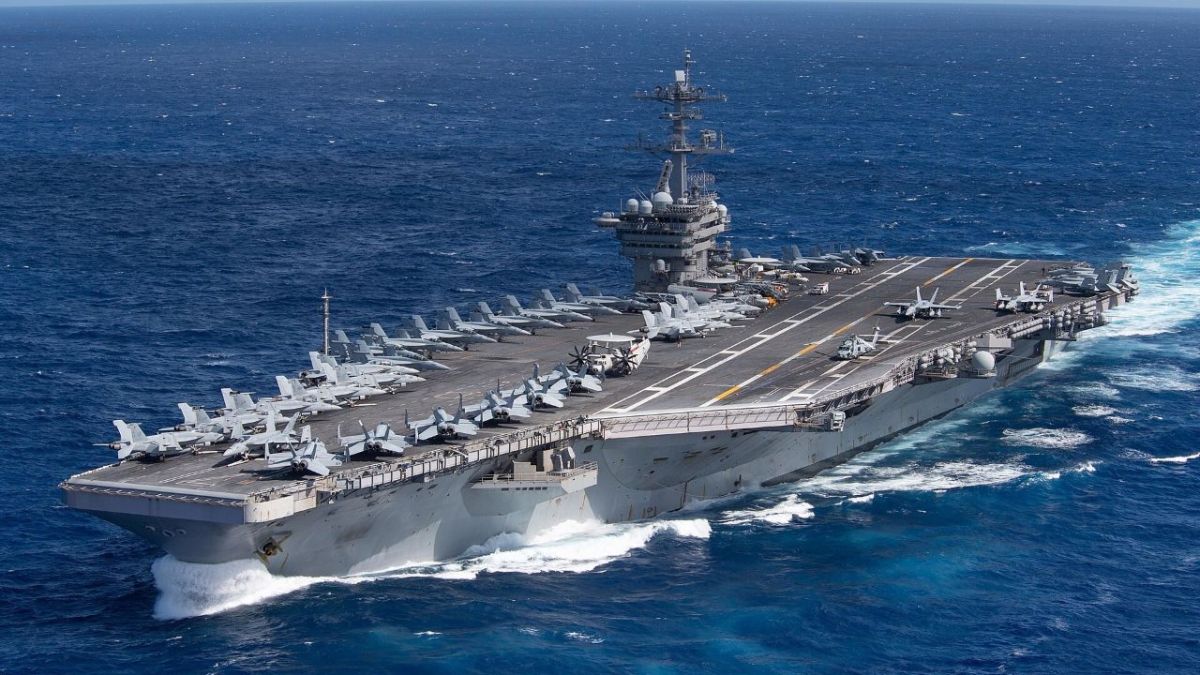
Yesterday Trump again promised an imminent victory, telling reporters he allowed into the Oval Office “We’re going to win that war very soon” and “It’s going to go pretty quickly.” Over in San Diego, the US Navy has dispatched the USS Theodore Roosevelt carrier to the Middle East on a deployment that Stars and Stripes projects will “last more than seven months.”
The carrier’s mission will be, as the report puts it, “to sustain its presence in the Middle East as the war with Iran continues.” The departure comes as hopes for a diplomatic resolution to the conflict fade once again, with Trump rejecting Iran’s peace deal that’d allow for the opening of the Strait of Hormuz and bring down prices for regular Americans.
The war continues…
Tensions were further increased by a newly publicized incident in the Strait in which 8 Marines were injured by an Iranian anti-ship cruise missile. As per NBC News, the Marines were operating as a landing team on a vessel, and suffered smoke inhalation and potential traumatic brain injuries. None of this bodes well for imminent peace in the Middle East.
Of course, just because the Roosevelt is being sent on a 7-month deployment to the Middle East doesn’t necessarily mean the war with Iran will last that long. Conversely, the vast cost of sending a carrier to the other side of the world on extended deployment means it’s a decision that won’t have been taken lightly.
If Trump’s war with Iran stretches on until Christmas and beyond, expect pain for the average American. Economists predict sustained higher costs linked to lowered fuel exports from the region, which will consequently boost inflation, and drive the price of goods and transportation up.
It’s also important to remember that even if the war ended tomorrow, the economic grip on the American economy doesn’t immediately resolve itself. Analysts say it could take half a year for a “full normalization” of gas prices, so if the war does drag on into 2027 it could be as late as 2028 before things return to pre-war levels.
None of this will make for positive reading for Republicans anxiously eyeing the November midterms. After all, for all the Trump administration’s bluster and bravado, regular folk finding it increasingly difficult to fill their gas tank isn’t something that can be resolved with a late-night post on Truth Social.








Published: Sep 29, 2026 08:23 am