


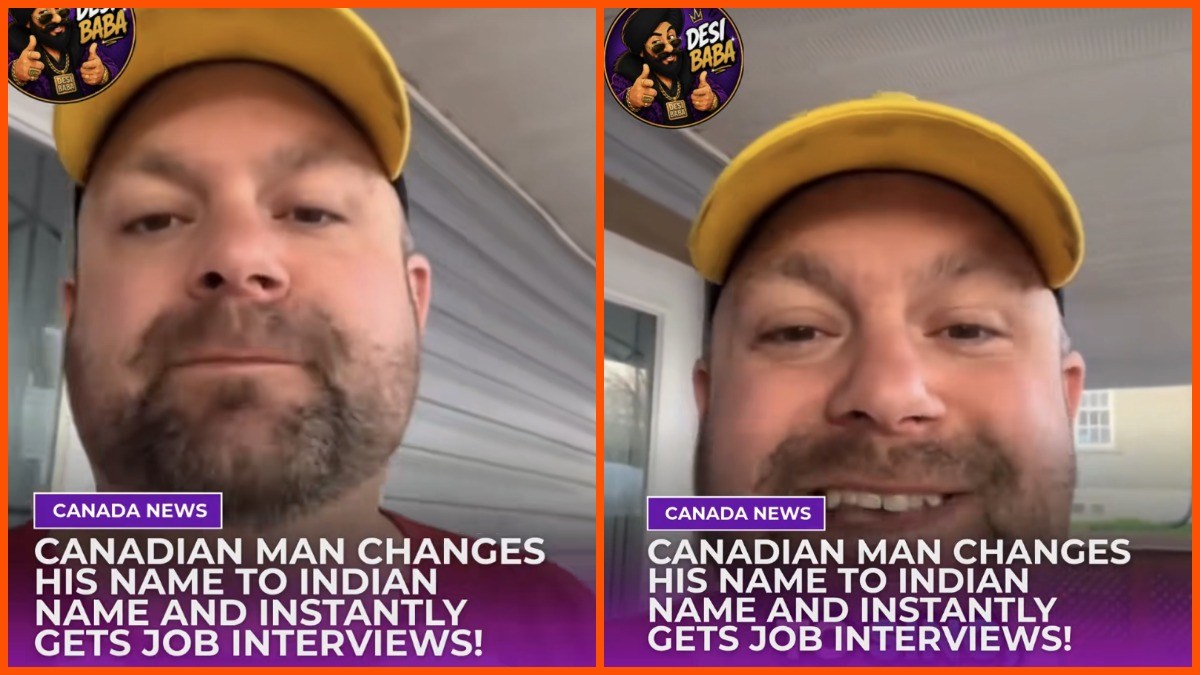

A video featuring a man claiming he only landed interviews after faking a resume with an Indian-sounding name has triggered a debate on TikTok. Reposted by TikToker Desi Baba, it showed an unidentified man who alleged, “I’ve applied for over 300 jobs, not a single callback, nothing.” He claimed that he made “a fake resume and change my last name to Singh, different email address, different job qualifications, but all in the same line, same everything. And I’ve gotten three emails in 24 hours. Figure that out.”
The video has reached over 559K, with Desi Baba identifying it as Canadian news. However, not only is the actual poster unknown, but the video has been making the rounds on other platforms for months. In May, it was shared by a conservative creator, where the assumption was that the man was American. Every reshare had triggered discussions about anti-white bias and diversity, equity, and inclusion (DEI) initiatives.
Since there is no way to verify the claims made in the video, it remains unclear if this is a genuine social experiment or simply content designed to trigger a response. Commenters across all platforms fell into similar categories, some making racist comments, others sharing conflicting personal experiences, and a minority asking for evidence.
The question of discrimination
On TikTok, one user commented, “Reverse Racism.” However, another argued, “He’s lying. I am Indian and still looking for a job but did not get hired yet.” Frustrations came through in comments like, “Canada absolutely sucks. I hate it here, and I used to be the proudest Canadian.”
A person who believed the post noted, “F**king unreal. You should start naming the stores you apply for so everyone will know the stores. We need to start calling out the stores on TIKTOK.” One user shared an anecdote, “I went for an interview and they asked about my status in Canada. When I told them I’m a citizen by birth, they said, Oh, sorry sir, we’re not hiring.”
Then there were the political statements on TikTok, X, and Instagram. One user remarked, “Vote liberal everyone and this is what we get.” Another told X, “Bro, systemic anti-white bias is real and it’s about time people acknowledge it.” A third wrote, “DEI = Didn’t. Earn. It.”
It wasn’t all anger towards minorities. One user applauded this potential reality on Instagram, stating, “This how it should be white people wouldn’t hire minorities in the 80s and early 90s half of our fathers were turned away from capable positions due to skin color smh ngl this is a beautiful thing.”
Workplace discrimination has been a topic of research for a long time. According to the University of Toronto, a 2023 study by Quan D. Mai examined how geography and race intersect in the labor market. By submitting nearly 12,000 fictitious resumes across 50 major U.S. metropolitan areas, the study found that racial minorities face significant disadvantages at the hiring stage.
Interestingly, the study revealed that for Black applicants, the disadvantage actually grew in areas with higher Black populations, challenging the idea that diversity automatically leads to fairer outcomes. However, the study noted that this specific pattern did not hold for Asian or Latino applicants, proving that discrimination is not a one-size-fits-all issue.
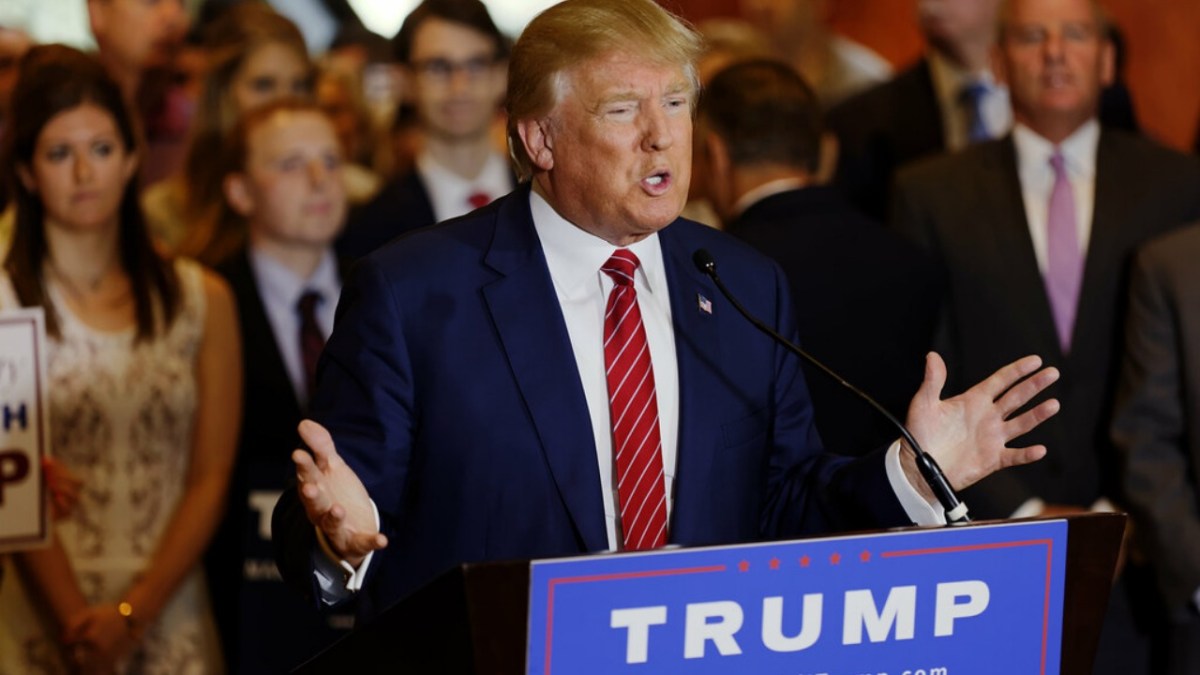
Sadly, the institutional landscape for tracking such discrimination is currently undergoing a radical transformation. According to The Guardian, the Trump administration has moved to destroy the collection of demographic data by the Equal Employment Opportunity Commission (EEOC). For six decades, the EEO-1 reports have reportedly been used to identify trends in hiring and promotions based on race, ethnicity, and sex.
By terminating this data collection, experts warn that the agency will struggle to identify systemic workplace discrimination. However, Trump-appointed EEOC commissioner Andrea Lucas has described the data collection as unconstitutional and burdensome, suggesting it encourages DEI programs that incentivize discrimination against white workers.
The Guardian reported that EEOC has shifted its strategic goals under the current administration. It has begun prioritizing claims from white men while dropping cases related to transgender workers and investigating workplace diversity practices. Interestingly, recently, the administration sued Coca-Cola over a women-only event.
Critics, such as Katie Sandson of the National Women’s Law Center, argued, “Getting rid of this data collection is part of a larger effort to weaponize civil rights enforcement and flip the laws that we have on their head.”
One thing is clear. The removal of these federal datasets will make it harder for researchers and the public to separate viral anecdotes from the structural realities of the modern labor market. However, more than that, this post highlights a very real concern about unemployment and what might be exacerbating it.




Published: Sep 7, 2026 03:24 pm