


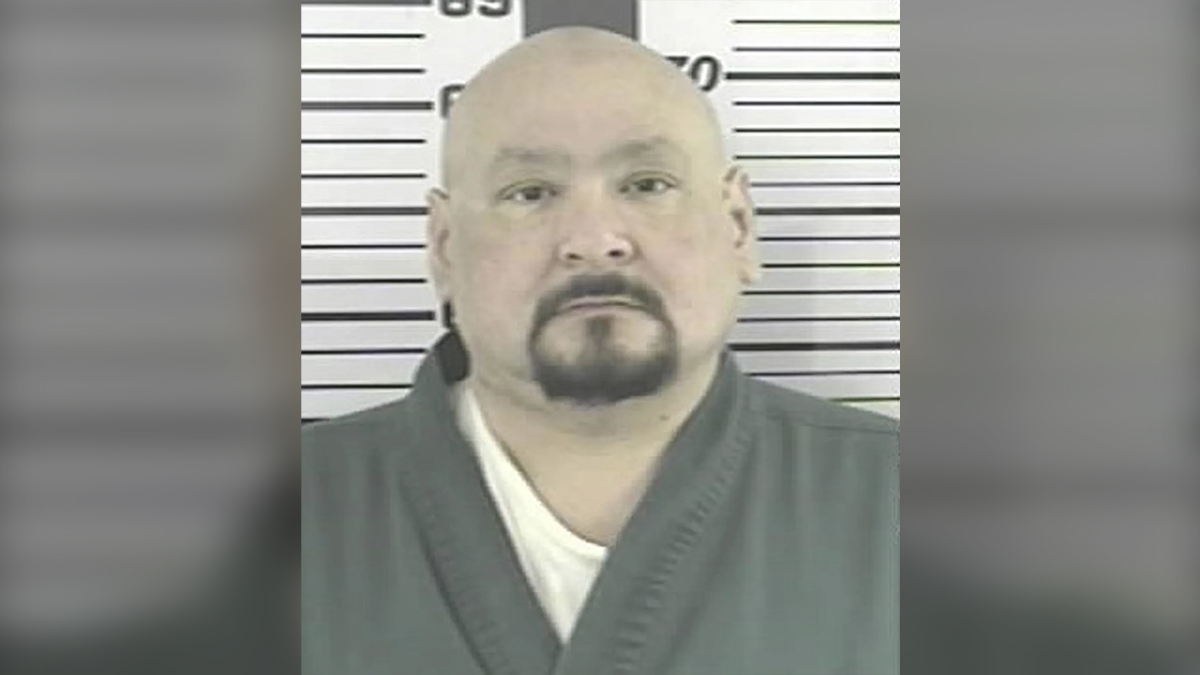

After spending 26 years behind bars for a crime he maintained was an accident, Stephen Martinez of Denver has officially been exonerated. People details how Martinez, who was convicted of first-degree murder in the death of his then-girlfriend’s infant daughter, Heather Mares, is now a free man following a major legal breakthrough. The reversal of his conviction is a significant moment for Colorado’s legal system and those who fought for his release.
In 1998, Martinez called 911 to report that the infant was choking. When emergency responders arrived at the scene, they found the child suffering from a skull fracture. Investigators later discovered bloodied sheets inside a washing machine, which added a layer of suspicion to the case.
During questioning, Martinez admitted to shaking the baby while she cried and hitting her head against the crib. At the time, he insisted these actions were accidental, but he was still charged and subsequently convicted of first-degree murder. Following the trial, he was sentenced to life in prison without the possibility of parole.
Hurting the baby is still inexcusable, but so was his sentence
Things shifted dramatically on April 21, when Denver Judge Andrew Luxen overturned the conviction after the Korey Wise Innocence Project (KWIP) presented new evidence to the court. KWIP, which focuses on providing legal and investigative services to those who may have been wrongfully convicted, argued that the baby likely died from complications related to pneumonia rather than physical abuse. It was enough to cast doubt on the original conviction.
The legal path to this exoneration was complex. In 2000, a Colorado statute allowed the court to pursue a first-degree murder charge instead of a charge for child abuse resulting in death. Typically, first-degree murder requires evidence of premeditation and deliberation, involving an intentional killing where the perpetrator has reflected on their actions before committing the act.
Per Cornell Law School, the legal definition often hinges on factors like the history between the parties, the nature of the wounds, and whether there was any planning involved. In this instance, the initial conviction was built on the premise that Martinez was responsible for the child’s fatal injuries, a conclusion that has now been medically challenged.
Denver District Attorney John Walsh played a pivotal role in the dismissal of the case. In a press release, Walsh stated that his office was presented with multiple credible medical experts who challenged the original determination regarding the cause of death. He noted that his office consulted with independent experts who largely confirmed the findings brought forward by the defense.
Furthermore, the Denver medical examiner who performed the original autopsy in 1998 recently acknowledged that there is now a reasonable doubt regarding how Heather died. Because the district attorney’s office could no longer meet the legal burden of proof beyond a reasonable doubt, they were obligated to dismiss the case.
Walsh emphasized that this outcome was not the result of misconduct by those involved in the original 1998 investigation. Rather, it is an example of the criminal justice system’s ability to reassess cases when new information comes to light.
KWIP has a deep history tied to the pursuit of justice. It was founded by Korey Wise, who is famously known as one of the Exonerated 5. Wise, along with Yusef Salaam, Raymond Santana, Kevin Richardson, and Antron McCray, spent years in prison for a crime they did not commit in New York City in 1989.
After his own exoneration, Wise dedicated his efforts to supporting others in similar situations. The project at the University of Colorado Law School screens cases carefully, selecting those where they can turn over every stone to seek the truth.
While the court has moved forward with the exoneration, the family of Heather Mares, including her parents, Kim Estrada and Chris Mares, remains firm in the belief that Martinez was responsible for her death. During the proceedings, Estrada expressed her pain, stating, “My life was stopped 27 years ago along with our family’s.” Although you have to wonder why a sick child was neglected and left behind by the parent, in the hands of someone not equipped to handle her.
Despite these objections from the family, Judge Luxen chose to dismiss the case and order the release of Martinez. It is a stark reminder of how complex these cases can be, even decades after the initial events occurred. The process of exoneration is rarely straightforward, but for Martinez, the legal system has finally reached a conclusion that allows him to walk free.









Published: Apr 27, 2026 02:28 pm