


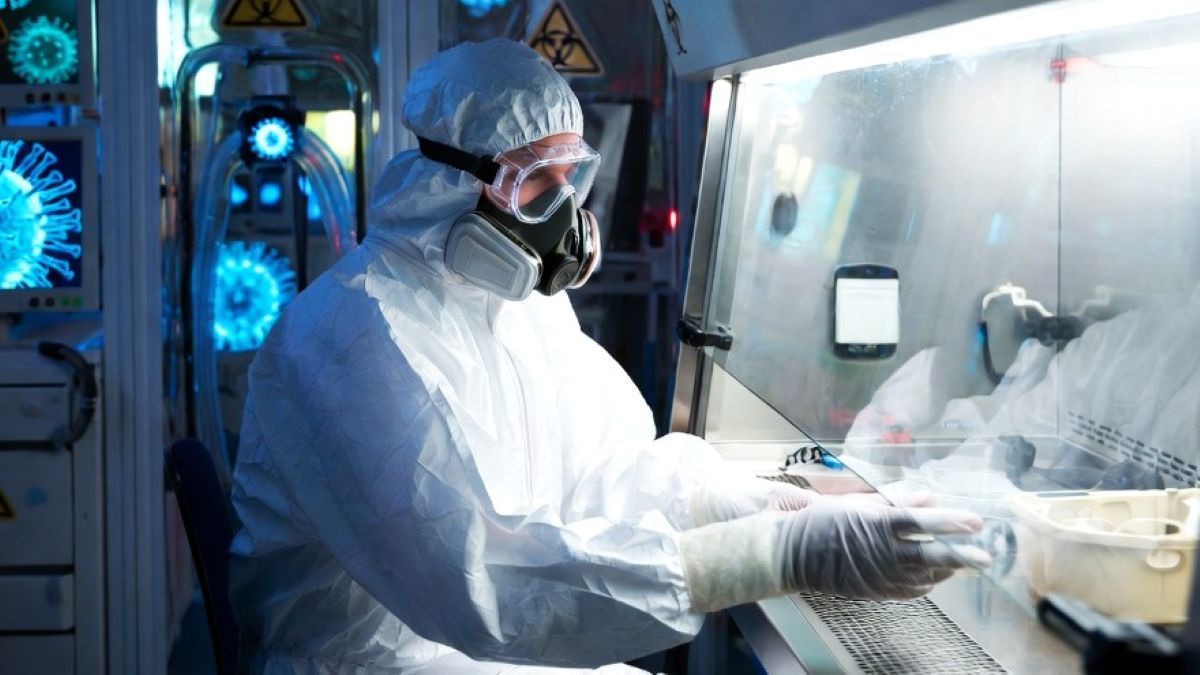

The National Institutes of Health laboratory in Montana is embroiled in controversy as two of its researchers have been charged by federal law enforcement with conspiracy to smuggle deactivated monkeypox virus into the United States.
A Department of Justice press release names Dutch national Vincent Munster (53) and Cameroonian national Claude Kwe (38) as violating the law after they smuggled “monkeypox into the United States” and gave “false statements to federal law enforcement.” Munster is the Chief of the Virus Ecology Section at Rocky Mountain Laboratory’s Laboratory of Virology, and Kwe works under him as a research fellow.
The DOJ press release explains that on Jan. 25, 2026, the pair arrived at the McNamara Terminal at Detroit Metropolitan Airport after having traveled from Brazzaville, Republic of Congo, where a monkeypox outbreak was occurring.
On arrival in the United States, they were interviewed by Customs and Border Protection (CBP) officials, who observed that they were carrying a large black plastic case. They were asked what was inside, and told the officers it contained “diagnostics and testing equipment.”
The DOJ claims that it actually contained 113 vials and, after 20 of them were tested by the FBI, that 17 of them contained “deactivated monkeypox virus” (another contained the chickenpox virus, and two contained human DNA).
“A breach of the public’s trust”
2 Researchers Accused of Trying to Smuggle Mpox Virus Through U.S. Airport https://t.co/2vJfoaIBfZ
— People (@people) June 3, 2026
In the press release, US Attorney for the Eastern District of Michigan Jerome F. Gorgon Jr said: “These NIH experts apparently broke our laws by smuggling viral pathogens on a packed commercial airplane from an outbreak in the Republic of Congo. Let that sink in.”
Jennifer Runyan, Special Agent in Charge of the FBI Detroit Field Office, underlined that these are serious allegations, saying, “They involve the dangerous and unlawful smuggling of deactivated Mpox virus into the United States and alleged efforts to mislead our federal agents.”
Special Agent in Charge Marcus L. Sykes of the U.S. Department of Health and Human Services Office of Inspector General echoed that, saying:
“The arrest of these individuals on serious federal charges sends a clear and unmistakable message that no one—including HHS employees who have an obligation to safeguard our federal programs—is above the law. Any deliberate effort to conceal and smuggle biological materials into the United States without proper authorization is a breach of the public’s trust and could have placed the public at risk.”
The National Institutes of Health has said that they’re cooperating with law enforcement and that they’re conducting an audit and inventory assessment “to verify that all materials were appropriately accounted for, documented, and maintained in accordance with all relevant biosafety policies, requirements, and procedures.”
The DOJ says Munster and Kwe face a maximum sentence of five years in prison if convicted.








Published: Jun 3, 2026 03:15 pm