


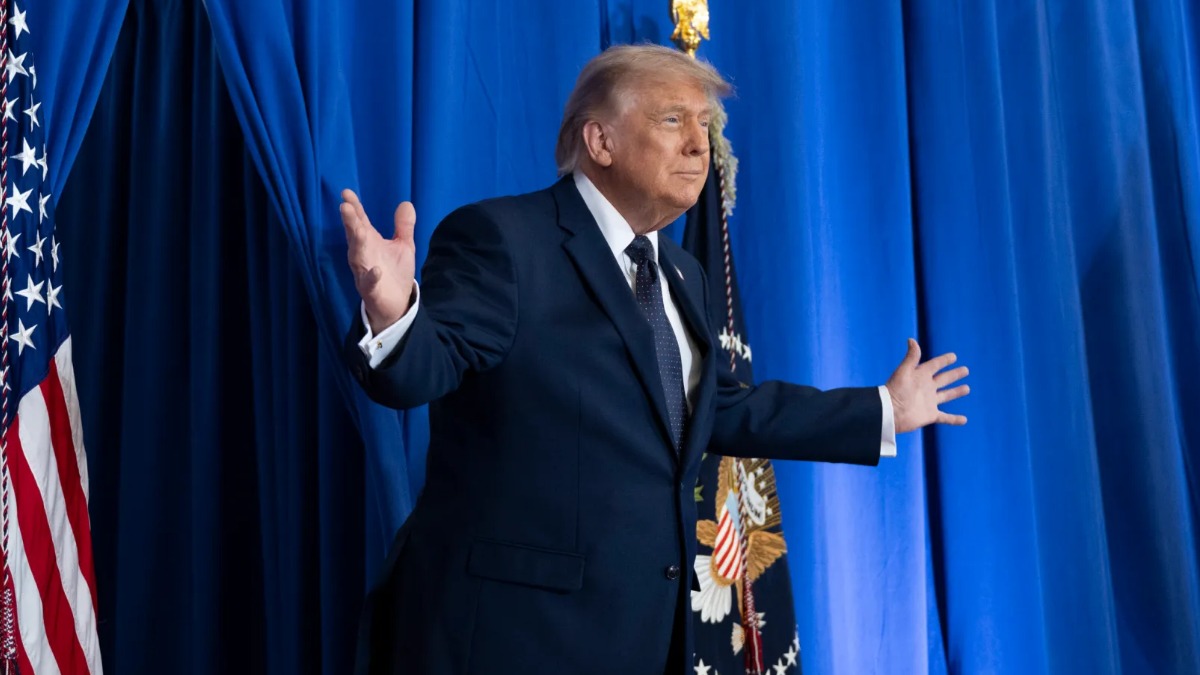

A profound disconnect often exists between executive legal maneuvers in Washington and the consequences felt by everyday citizens. That tension came into focus when President Donald Trump pardoned a controversial white-collar fraudster. For John Long, an 80-year-old retired pig farmer from Colorado, the decision was particularly painful because he was one of the fraudster’s victims. It was made even more complicated by the fact that Long once identified as a proud Trump voter.
To understand Long’s frustration, it is necessary to go back to 2006, when Marian Morgan and her husband, John Morgan, targeted rural investors through a Ponzi scheme. The couple operated under the banner of Morgan European Holdings and presented themselves as elite financial advisers to vulnerable investors who had few ways of independently verifying their claims.
The investors were promised extraordinary returns of 200% and 300% within just three months of putting their money into the scheme. To ease the concerns of cautious investors, the Morgans falsely guaranteed that all principal funds would remain completely secure in an escrow account in Denmark.
They fled to Sri Lanka
Believing the venture could be a pathway to generational financial security, Long and his family invested $500,000. The promised returns never materialized. When Long began questioning the delays, Morgan sent curt emails from Florida, which became the first major red flag. Long had previously been led to believe that the company was based in Europe.
Behind the scenes, federal prosecutors were building a case that ultimately showed the Morgans had siphoned more than $10 million from investors to finance an opulent lifestyle. Like many people who commit white-collar crimes, the couple allegedly used the money to purchase luxury waterfront mansions and high-end vehicles. During the investigation, the two fled to Sri Lanka but were eventually arrested and extradited to the U.S.
In a 2011 trial, Marian Morgan was convicted on federal charges including wire fraud and money laundering. She was sentenced to 34 years in prison and ordered to pay nearly $20 million in restitution.
Then came Trump’s second term, which started a string of controversial clemency decisions. On May 28, 2025, the president commuted her sentence to time served and erased her fines and restitution obligation.
According to People, Long told the media that he feared Morgan would use her newfound freedom to target more victims. That does not mean, however, that he believes Trump was personally involved in subverting justice.
He believes it was a rare act of “bad judgement” from the president
Long described the president’s decision to grant clemency as a rare act of “bad judgment.” To him, the issue was bigger than Trump. Instead, the experience made him question whether the executive branch of the government should have the power to pardon people in the first place.
“Our justice system would be a much better system if we took the pardoning power out,” Long said. He continued, “No matter who is in that power circle, it is just a corrupt system.”
Democracy is a knife that cuts both ways. It gives people the power to make decisions that can sometimes have consequences they never anticipated. The good thing is that voters eventually get another opportunity to learn from those decisions. But even that is a choice.




Published: Aug 18, 2026 02:21 pm