


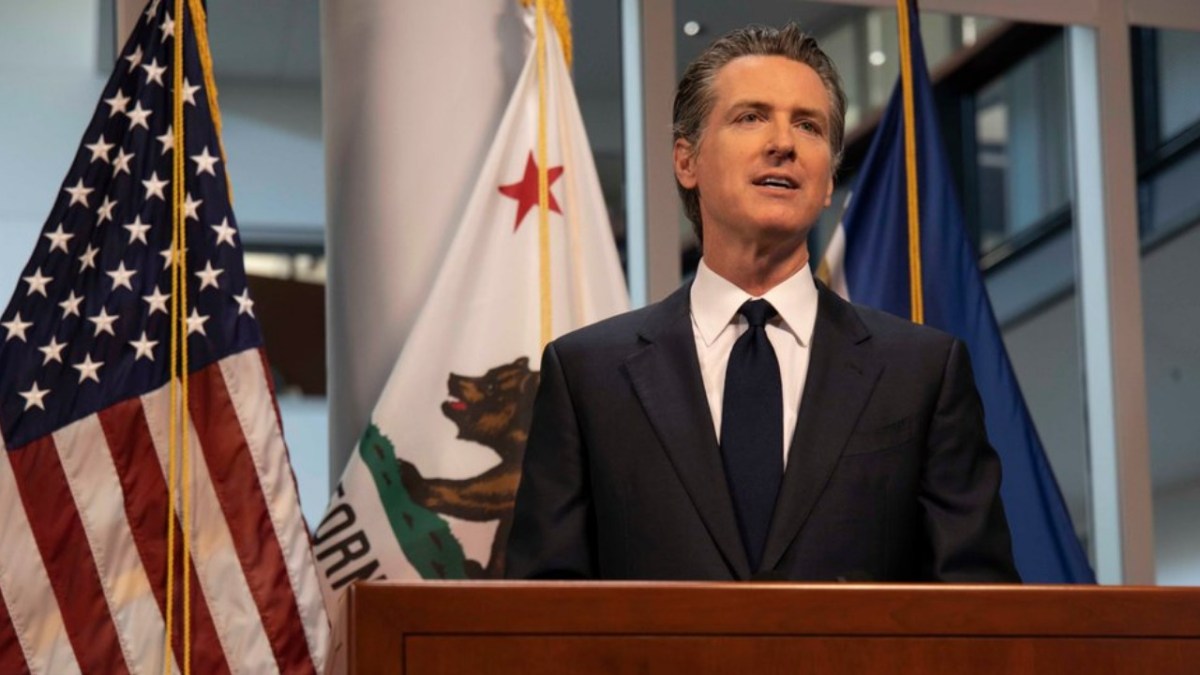

California has officially become the 18th state to ban child marriage after Governor Gavin Newsom signed Assembly Bill 1267 into law on Wednesday, The Mercury News reported. This new legislation sets the minimum age for marriage at 18, effectively closing a previous loophole that allowed people of any age to marry with the permission of a parent and a judge.
For Sara Tasneem, a 45-year-old resident of El Sobrante, this moment was the culmination of a nine-year journey. Tasneem was forced into marriage at 15 to a man nearly twice her age, and she spent years traveling to Sacramento to share her story with legislators. She often met with up to 20 lawmakers a day, hoping to convince them of the necessity of this change. Standing behind the governor as he signed the bill, Tasneem found the experience to be overwhelming.
“Frankly, it’s surreal,” Tasneem said. “To have the governor actually sign the bill in front of me was a bit shocking. … After he signed it, I just broke down crying because it was such an impactful moment for me and just a huge moment for all of the survivors who have been fighting for this.”
The bill was authored by Assemblymember Gail Pellerin, D-Santa Cruz, and received support from 38 coauthors
The bill passed through the legislature without a single dissenting vote in the California Senate or State Assembly. Pellerin noted that the persistence of survivors like Tasneem was essential to the bill’s success. She also highlighted the legal inconsistency that the state finally addressed.
“We also really pointed out the hypocrisy, most notably that the age of sexual consent in California is 18 without exception, meaning that any individual who engages in sexual intercourse with a minor can be charged with statutory rape — unless that individual is the spouse of the minor,” Pellerin said.
Getting the bill to the governor’s desk was no small feat. Similar efforts had stalled in previous years due to opposition from organizations like the ACLU California Action, the National Center for Youth Law, and Planned Parenthood Affiliates of Northern California.
These groups had argued that an age restriction might limit the rights of minors who wished to marry or could drive abusive relationships underground. In 2024, the bill stalled in a committee led by Assemblymember Ash Kalra, D-San Jose, who urged advocates to engage in discussions with those groups.
This year, however, the landscape shifted when Planned Parenthood agreed to remain neutral. Pellerin noted that this decision helped open the window for the bill to move forward. Tasneem credited Kalra for his role in passing the bill through his committee this session.
Organizations like Unchained at Last and the California Commission on the Status of Women and Girls co-sponsored the bill, and the Girl Scouts helped advocate for its passage. Fraidy Reiss, the co-founder of Unchained at Last, emphasized the broader implications of the law.
“This is a huge victory. We have banned a human rights abuse that destroys girls’ lives here in the Golden State, and this sets us up well to do the same in states around the world,” Reiss said. “Health, education, economic opportunities, physical safety, sexual rights, reproductive rights — almost every aspect of a girl’s life is destroyed or undermined by a marriage before the age of 18.”
Governor Newsom praised the move, noting that it is a long overdue measure to protect young Californians. While the law is a massive win, Tasneem remains focused on the future. She pointed out that there is still more work to be done to support communities where this practice occurs and to prevent predators from traveling to other states to obtain marriage licenses with minors.
“I never intended to be an advocate,” Tasneem said. “It’s difficult because you share your story and you hope that the laws will change to protect minors from the abuse and sometimes it’s not enough, and that’s where it gets really difficult for the folks who have to really share their trauma.”








Published: Oct 5, 2026 05:16 pm