


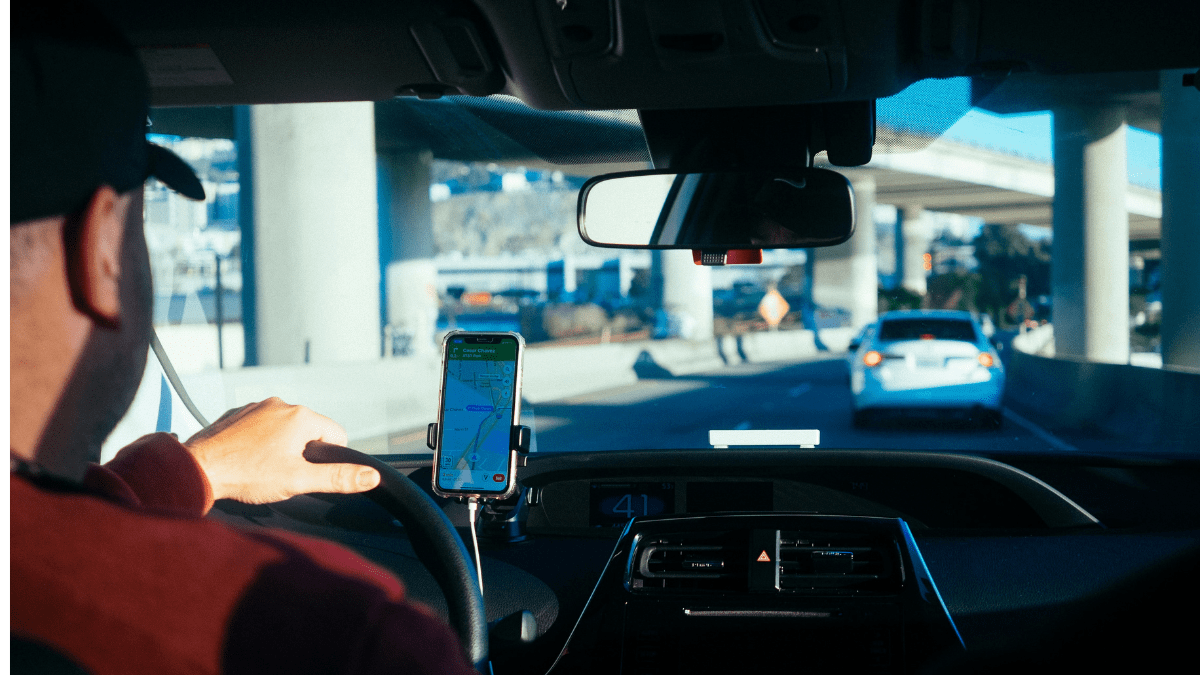

A video shared by X account Wall Street Apes purported to expose all the ways Big Tech uses your data to determine how much more it can charge you. In a hidden-camera experiment, a man set out to prove that smartphones do more than just help us communicate and show us our favorite memes.
The man believed that most people don’t realize smartphones are sophisticated data-gathering tools that corporations can use to build detailed profiles of consumers — potentially influencing the prices they are shown on Uber and other platforms.
Proving that, however, would be a huge feat for one person. So he decided to build his case using strict parameters that he believed would isolate the effect of a person’s digital footprint. Using Wyoming’s LLC privacy laws, he had a registered agent set up a limited liability company under a fabricated name, and the LLC qualified for its own credit card.
He even hired an improv actor on Craigslist
He then bought a cheap prepaid smartphone on the LLC’s credit card and activated it in a low-income zip code in Minnesota, opting into every tracking permission it offered. He also hired an actor to carry out the next part of the experiment: spending several hours behaving like someone with very limited financial flexibility.
Armed with the new phone, the actor rode the bus without paying, stopped at a McDonald’s to ask for a free cup of water, and spent hours searching for the cheapest items he could find, at one point buying a single banana through the Target app and giving it away to strangers.
Afterward, the two met up to compare Uber fares for the same trip. The actor’s price came back about 11% lower, the creator said. The video prompted users to share their own suspicions about Big Tech and question whether personalized pricing is becoming a bigger problem.
One user wrote, “Uber is not a good example. I have seen prices go up in a non-hot area with each subsequent search. It’s like the app was giving the best price on the initial search.”
Uber is not a good example. I have seen prices go up in a non-hot area with each subsequent search. It's like the app was giving the best price on the initial search.
— He Multiplied Us (@hemultiplyus) August 6, 2026
Another user described a similar experience with YouTube subscriptions. They wrote, “My son wanted a YouTube subscription. It offered one to him for less than what my phone offered me one for. At the time, we thought maybe it was cause he was using an Android and I have an iPhone.” They added, “I was going to check my laptop and see if it offered different prices.”
My son wanted a YouTube subscription. It offered one to him for less than what my phone offered me one for. At the time, we thought maybe it was cause he was using android and I have an iPhone. I was going to check my laptop and see if it offered different prices
— Christina Jewell (@cjworks29) August 7, 2026
Another user’s comment was more philosophical. The user wrote, “We keep inventing new technologies to make our lives easier then using those technologies to betray the planet and betray us too. How long can this continue until we destroy everything on Earth? If only we weren’t behaving like virus.”
We keep inventing new technologies to make our lives easier then using those technologies to betray the planet and betray us too. How long can this continue until we destroy everything on Earth? If only we weren’t behaving like virus
— ceylan ozgul (@ceylanozgul2017) August 6, 2026
Another user suggested that perceived price gouging could eventually backfire on retailers, writing, “Shoplifting will just become evermore present.”
Shoplifting will just become evermore present…
— drΞnfx (@DrenFX) August 7, 2026
FAFO 🤷♂️
Public trust in Big Tech is at an all-time low
Silicon Valley has gone from representing the hope and face of technological progress in America to having a reputation more traditionally associated with finance and banking.
Public trust in what these companies are planning for the future is at an all-time low. And whether this experiment can ultimately be explained away may not matter much to consumers who increasingly believe Big Tech’s primary goal is no longer to make life easier, but to track them closely enough to squeeze a few more dollars out of every purchase.







Published: Aug 8, 2026 01:15 pm