


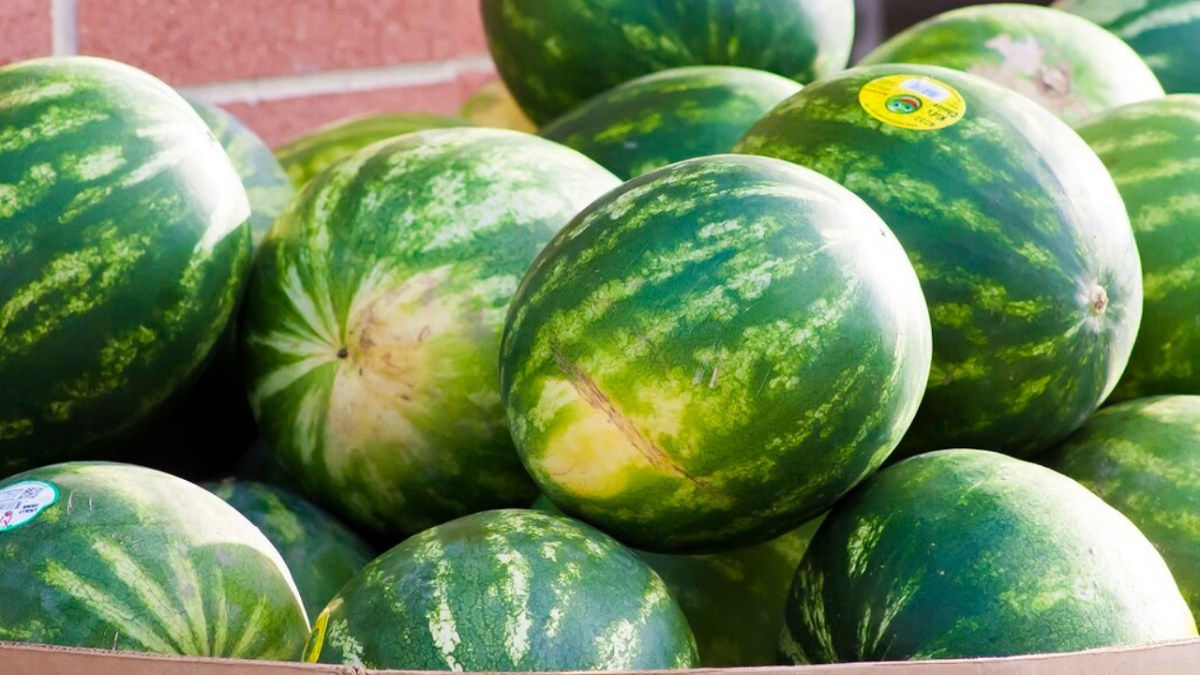

Watermelon isn’t exactly the kind of food you’d expect to see covered in an allergen warning. It’s a fruit that grows on a vine, after all. TikTok creator Georgia Oakley shared a clip of one with a “may contain” warning on the sticker. The video has since passed 1.6 million views and picked up more than 700 comments.
The sticker names the product as “WATERMELON” and lists “Watermelon” as the ingredient. Below that sits a “May contain” line. It names wheat, milk, egg and soy first. Tree nuts, mustard, sesame seeds and sulphites follow, bringing the list to eight. Shoppers have spotted odd allergen details on store food before, though this one is unusually long for a single fruit.
Oakley reads the list out and gives a short verdict. “F***n hope not. It’s a watermelon.” The clip doesn’t name a store or a brand. It also doesn’t show where the fruit was cut or packed.
Why does a watermelon have a “may contain” warning?
A “may contain” warning is known as precautionary allergen labelling. According to the UK’s Food Standards Agency (FSA), a business uses it when a food could pick up an allergen by accident. That’s known as cross-contact, rather than the allergen being an ingredient. So the label isn’t necessarily saying the melon contains wheat or milk. It appears to point to how the fruit was handled.
Several commenters had the same explanation. One of the top replies, with more than 53,000 likes, reads, “It was cut in a factory that processed those same things, so cross contamination is possible.”
Not everyone was sold. One commenter wrote, “If its cross-conamination they legit cant sell that.” The FSA guidance says otherwise, at least in part. It describes these warnings as a way to flag a risk that cleaning and separating foods can’t fully remove. The presence of a “may contain” warning doesn’t automatically mean the product can’t be sold. Stores and restaurants also tend to take a cautious line when allergies are involved.
The FSA adds a limit, though. It says businesses shouldn’t use precautionary warnings when there’s no real risk, because they can mislead people and needlessly narrow their choices. Whether this label meets that standard can’t be confirmed from the video alone. Whether this label meets that standard can’t be confirmed from the video alone.
The thread also drifted well away from labelling rules. A Wikipedia account used the comments to share a completely different watermelon fact: “Fun fact, wild watermelon seeds were found in Uan Muhuggiag, a prehistoric site in Libya that dates to approximately 3500 BC.”





Published: Sep 30, 2026 12:25 pm