



A lot can be asked of the luxury fashion industry. Is it worth it? Is it truly luxurious? And what does it actually represent? Those questions are often easy to ignore because luxury’s appeal has never just been quality — it’s exclusivity. If very few people can have what you have, then the product has already done half its job.
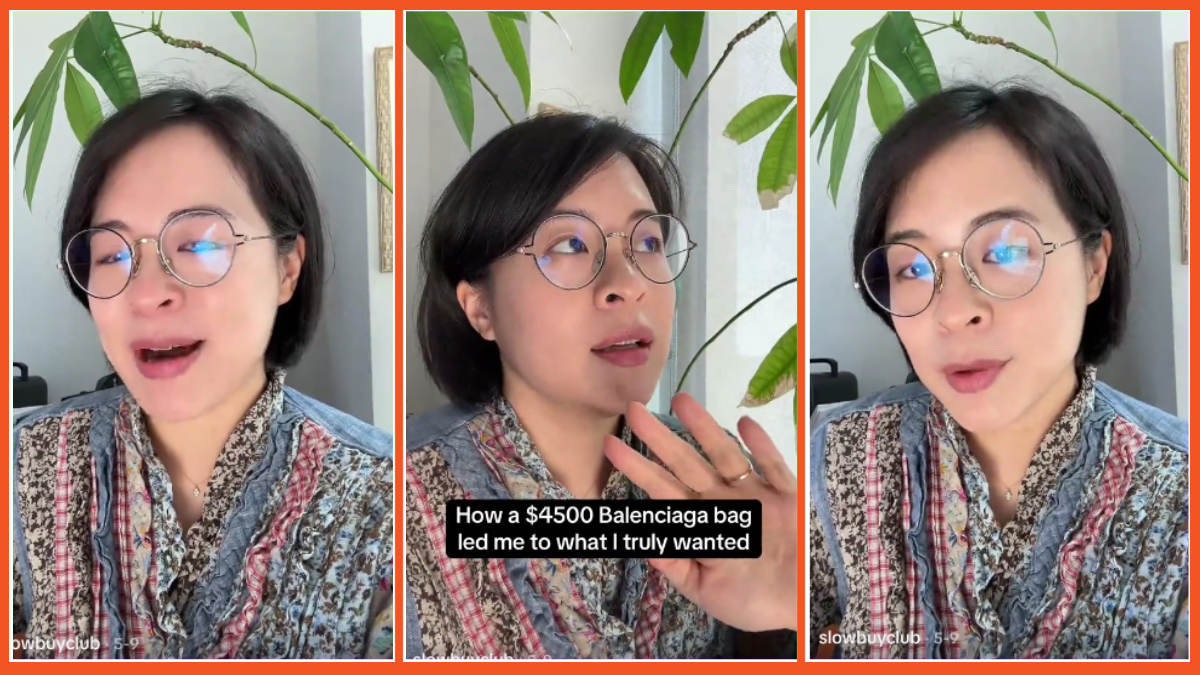
But for one Bay Area marketing executive, a $4,500 Balenciaga bag that turned out to be less unique than she imagined became a lesson that luxury fashion is often more about fitting in than standing out.
Crystal admits that long before she began questioning what luxury meant to her, she was a self-described shopaholic. Her social media page is now dedicated to people with unhealthy shopping habits, where she shares strategies for understanding — and resisting — the urge to buy things they don’t need.
She asks herself uncomfortable question
She jokingly refers to herself as a “de-influencer.” Before she even mentions the handbag, Crystal explains that whenever she now wants something expensive, she asks herself a series of uncomfortable questions about why she wants it. She says that process usually “obliterates” the desire before she ever reaches the checkout page.
Her method begins with identifying the object of desire. In this case, it was a green Balenciaga Rodeo bag retailing for around $4,500. But instead of stopping there, she now forces herself to ask a second question: Why do I want this?
According to Crystal, luxury purchases often point to something deeper that’s missing in our lives. She readily admits the bag is beautiful, but says that wasn’t the real reason she wanted it. To her, the Rodeo bag—with its deliberately half-open design—symbolized a kind of financial security she didn’t feel she had. Owning it, she believed, would project stability and success.
Once she identified that feeling, she says the bag slowly lost its emotional grip on her. What remained wasn’t the desire for leather—it was a need to address the insecurity beneath it.
Crystal traces those feelings back to her time at a prestigious university, where she constantly felt like an imposter. Graduation didn’t make those feelings disappear. While working as a marketer in Hong Kong, many of her friends worked in finance and earned far more than she did. As she describes it, she was shopping at Zara while they were shopping at Cartier. The gap felt impossible to ignore.
Later, after moving back to the United States and earning more money, she suddenly found herself able to participate in luxury fashion. Balenciaga, with its reputation for challenging traditional luxury, appealed to her because she also saw herself as someone who never quite fit the establishment.
Interestingly, she says she never compared herself to friends who had inherited wealth. The comparison that affected her most was with one self-made millionaire friend, a relationship she now describes as “toxic.”
Eventually, that friend also moved to the Bay Area and invited Crystal to a housewarming party in an affluent neighborhood. Wanting to feel like she belonged, Crystal finally gave in and bought the Balenciaga bag.
The lesson extends far beyond shopping
But the experience didn’t end the way she expected.
What Crystal hadn’t fully considered was that Balenciaga’s Rodeo bag is widely viewed as a reinterpretation of the iconic Hermès Kelly. When she arrived at the party, her friend was carrying exactly that—the Hermès Kelly.
Instead of feeling like she had finally caught up, Crystal realized she was still comparing herself to someone else. The expensive purchase hadn’t solved the insecurity that motivated it.
That’s the lesson she now tries to share with her audience. Luxury goods, she argues, can be beautiful objects, but they cannot resolve feelings of inadequacy or heal insecurities that have gone unaddressed. In that sense, she believes the lesson extends far beyond shopping.






Published: Jul 17, 2026 09:19 am