


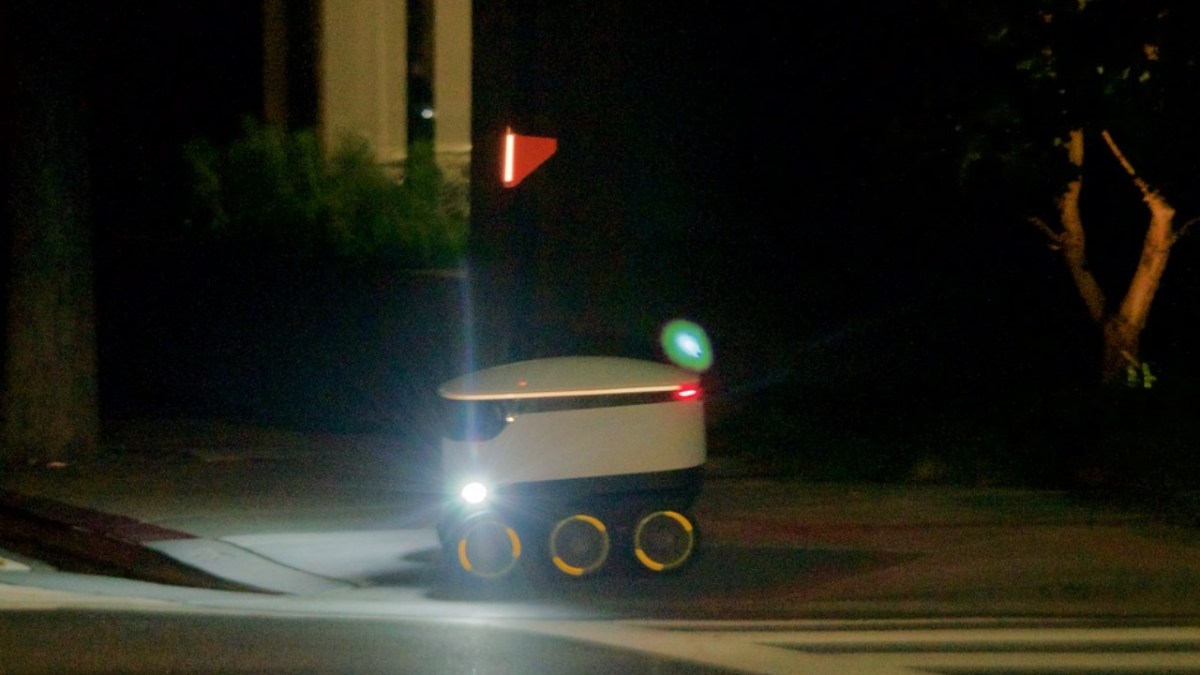

Carolyn Marvin was not about to make way for a delivery robot. The 78-year-old retired University of Pennsylvania professor was standing in its path on a Philadelphia sidewalk when police arrived. She refused to move, even after officers told her several times to step aside. The encounter ended with a disorderly conduct citation.
According to People, it happened on October 14, 2026, near Reading Terminal Market in Center City. Philadelphia police were called to the 1200 block of Filbert Street at around 1:16 p.m. following a complaint involving an AVRIDE delivery robot.
Marvin later explained that she had been blocking delivery robots on purpose. The former communications professor sees it as a form of protest against companies increasingly putting automated machines on public sidewalks. She believes residents are being left out of decisions about how their neighbourhoods are used.
Disability advocates have started raising concerns about these robots
Her frustration is not just about having to share the pavement with a machine. Marvin worries that delivery robots will take jobs away from people who depend on the work to make a living. Replacing low-wage delivery workers with automated vehicles, she argues, comes at a human cost that companies should not ignore.
The machines also take up space on sidewalks that are already busy. For wheelchair users and people with other mobility needs, an unattended robot can become more than a minor inconvenience. Disability advocates in places like Chicago have raised concerns about whether these vehicles leave enough room for pedestrians to move freely.
Then there are the cameras. Delivery robots record their surroundings as they travel through residential streets and public areas. Marvin questions who has access to that footage and how it is used. Residents, she argues, should not have to accept constant surveillance simply because a company wants to expand its delivery service.
After receiving the citation, Marvin defended her actions, arguing that people have greater rights to public spaces than corporations do to their machines. She maintained that she had not blocked anyone from getting through. “I was under the impression that I had more rights than the robot did,” Marvin said, according to CNN. “I wasn’t impeding any persons. I was impeding a machine.”
She doesn’t want robots to dominate public streets
Marvin has invoked her First Amendment right to protest. She also compared the spread of delivery robots to the rise of automobiles, arguing that society once allowed cars to dominate public streets. She does not want sidewalks to go the same way.
Police, meanwhile, issued her a criminal violation notice for disorderly conduct after she refused to follow their instructions. Marvin’s protest has made those questions difficult to ignore, even if the immediate dispute began with a robot she simply refused to let pass.





Published: Nov 4, 2026 04:30 am